Every monsoon, the same argument restarts in Dhaka households. One person points at the water sitting knee-deep on the road outside and says the next car has to be an SUV. Someone else points at the parking space at home, barely wide enough for the car already there, and says a sedan is the only sensible answer. Both are right, depending on the week.
The market has picked a side. SUV and crossover registrations reached 10,732 units in 2025 against 9,387 for sedans and small cars, the first time SUVs have outsold small cars in Bangladesh (BRTA figures reported by tob.news, January 2026). Is that shift sensible for the average buyer, or are people paying for clearance they use twice a year?
Quick Answer
- SUVs and crossovers outsold sedans in Bangladesh for the first time in 2025: 10,732 units against 9,387 (BRTA via tob.news)
- Around 35% of Dhaka sits in high or very high waterlogging-vulnerability zones (IPS News, August 2026)
- A sedan at roughly 140mm of ground clearance hits its limit fast in standing water; a crossover at 185–195mm has real margin
- Hybrid crossovers close the fuel gap: the Honda Vezel e:HEV 2WD returns 25.0 km/L on the WLTC cycle (Honda Japan spec)
- Your answer depends on three things only: where you drive most, how many people you carry, and your budget
How Do Bangladesh's Roads Actually Change This Decision?
Road quality here is not one thing, it's three. Dhaka recorded 196mm of rain in 24 hours during the 2025 monsoon and 130mm in just six hours on 12 July 2024, according to IPS News (August 2026). That's the environment your car actually lives in, not the showroom floor.
The three environments most buyers blur together are narrow Dhaka city lanes, national highways like Dhaka to Chittagong or Sylhet, and rural upazila roads where the surface changes with the season. A buyer picturing only the first one will shop very differently from a buyer who is honest about the other two.
The waterlogging problem is structural, not just seasonal. IPS News reports that Dhaka has lost 3,440 of its 9,556 acres of designated flood-retention land since 1995, and that roughly 35% of the city now falls in high or very high vulnerability zones. Less land to absorb water means more water on the road.
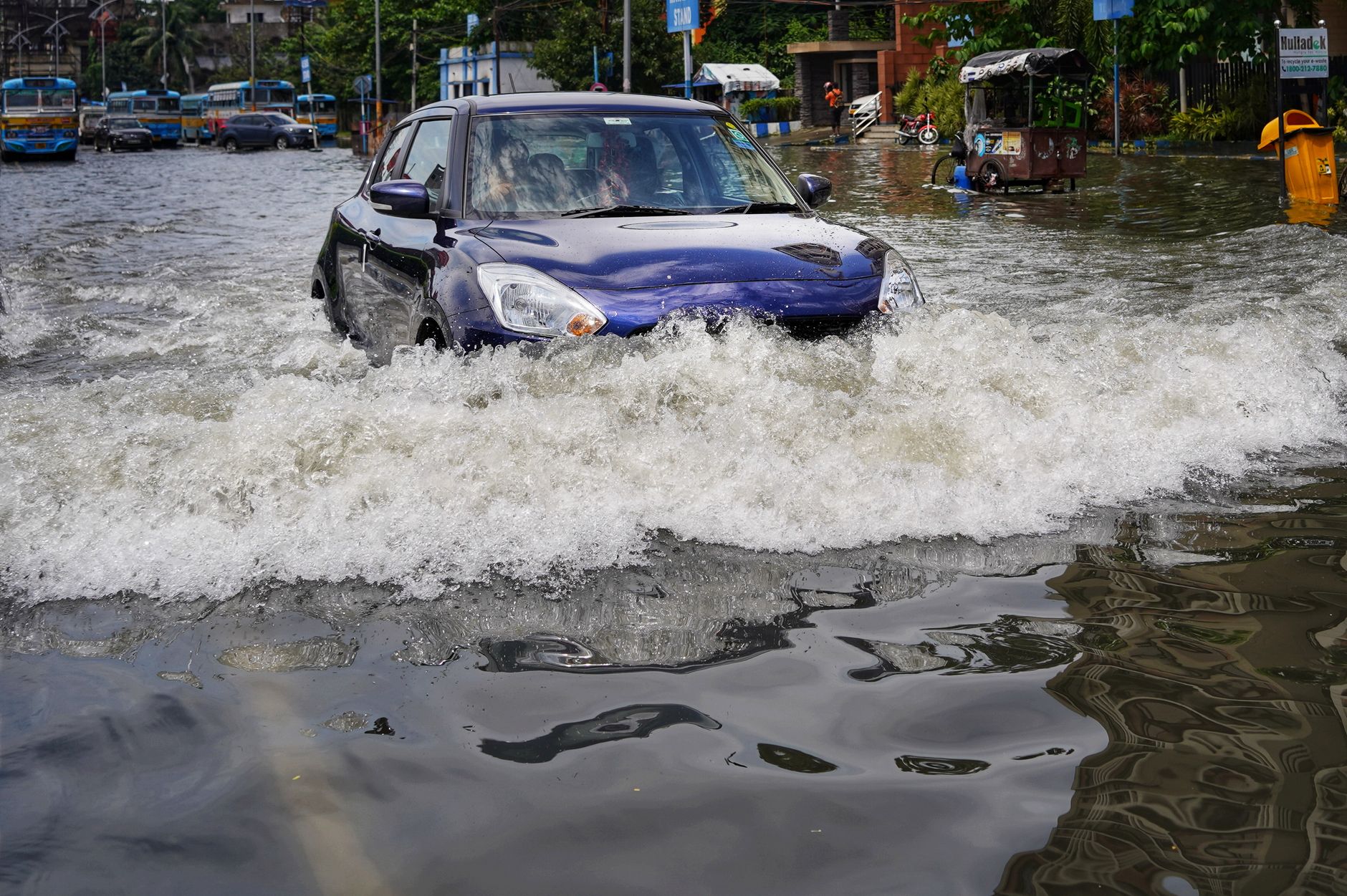 A car pushes through floodwater on an urban street.
Ground clearance is the practical translation of all this. At around 140mm you can cross a few centimetres of surface water carefully. At 160mm your margin improves noticeably. At 185mm and above, moderate flooding becomes something you drive through rather than turn around from.
Then there's the everyday grind: speed bumps, broken edges and stop-start congestion that punishes low bumpers and heavy cars alike. If your commute is mostly that, our guide to hybrid models in Dhaka traffic covers the fuel side in more depth.
What Changed: Duty Equalisation and the Market Shift
Part of the swing is policy, not preference. SUVs and sedans of the same engine displacement now face equivalent import duty treatment, removing the price penalty that historically held SUV demand back (reported by tob.news and Prothom Alo). Reconditioned SUV imports climbed from 1,209 units in FY2019–20 to 5,392 in FY2024–25, a 346% increase (BARVIDA figures via Prothom Alo, October 2025).
Where Sedans Still Make Sense
Sedans have not stopped being good cars, and 9,387 of them were still registered in 2025 (BRTA via tob.news). For a buyer who genuinely lives inside Dhaka, the sedan case is strong and it starts with money: in the same model year and condition bracket, a sedan usually lands in a lower price band than an equivalent crossover.
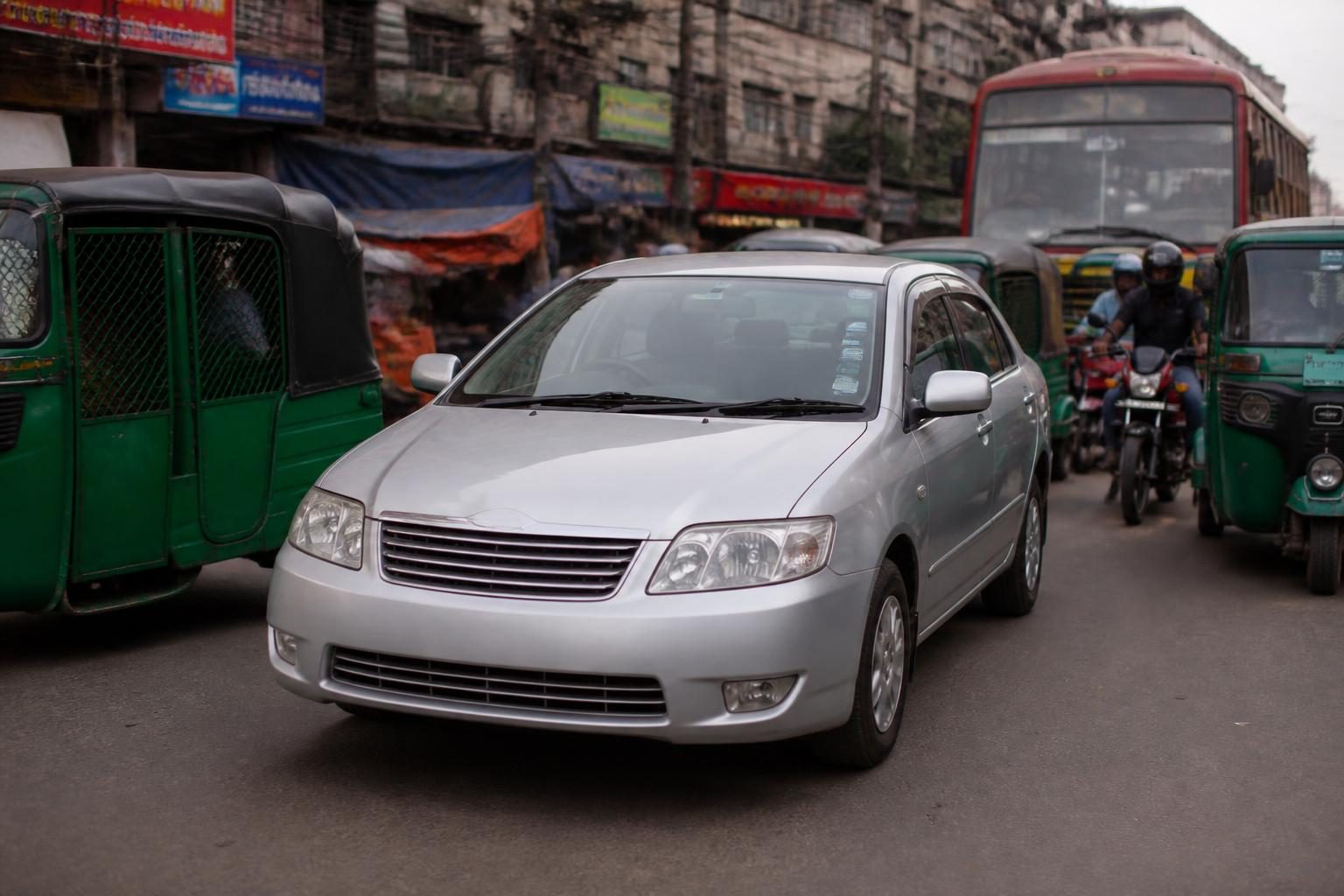 A silver sedan moves through crowded traffic alongside rickshaws and a red bus.
Lighter weight means less fuel burned in the stop-start crawl that defines a Dhaka commute. A lower centre of gravity makes the car feel planted on smooth tarmac. And a shorter, narrower body is simply easier to reverse into a tight residential bay or thread past a parked truck in Old Dhaka. Models in the Toyota Corolla family are the obvious category reference here, popular for exactly these reasons.
The honest trade-off is clearance. Most Bangladesh-popular sedan variants sit in the 130–140mm range. That's fine for light surface water and awkward the moment the road properly ponds.
A sedan suits you if: you drive in the city almost all the time, your parking is tight, budget is your first constraint, and you're carrying two to four people.
A sedan does not suit you if: you run regular Dhaka–Chittagong or Dhaka–Sylhet trips, or your neighbourhood floods every season.
How Do Sedans and Crossovers Compare Side by Side?
Here's the short version of the trade-off, category against category rather than model against model. Ground clearance and running cost are where the two diverge most; parking and highway comfort pull in opposite directions.
| Factor |
Sedan |
Compact Crossover / SUV |
| Ground clearance (typical) |
130–140mm |
160–210mm |
| Monsoon waterlogging |
Risky above ankle depth |
Handles moderate flooding |
| Fuel economy (hybrid) |
Strong |
Gap narrows sharply with hybrid |
| Parking in Dhaka lanes |
Easier |
Tighter |
| Highway comfort |
Good |
Better, higher ride height |
| Cargo space |
Fixed boot |
More flexible |
| Import price band (same year) |
Generally lower |
Generally higher |
| Body size |
Compact footprint |
Taller, usually wider |
Where Do SUVs and Crossovers Earn Their Price?
The clearance advantage is the headline, and it's measurable. The Honda Vezel e:HEV sits at 185–195mm of ground clearance in Japanese 2WD specification depending on trim — 185mm for the entry-level X, 195mm for the flagship Z and PLaY — roughly 45–55mm more than a typical sedan. In a city where around a third of the area is flood-vulnerable (IPS News, August 2026), that gap decides which routes stay open to you.
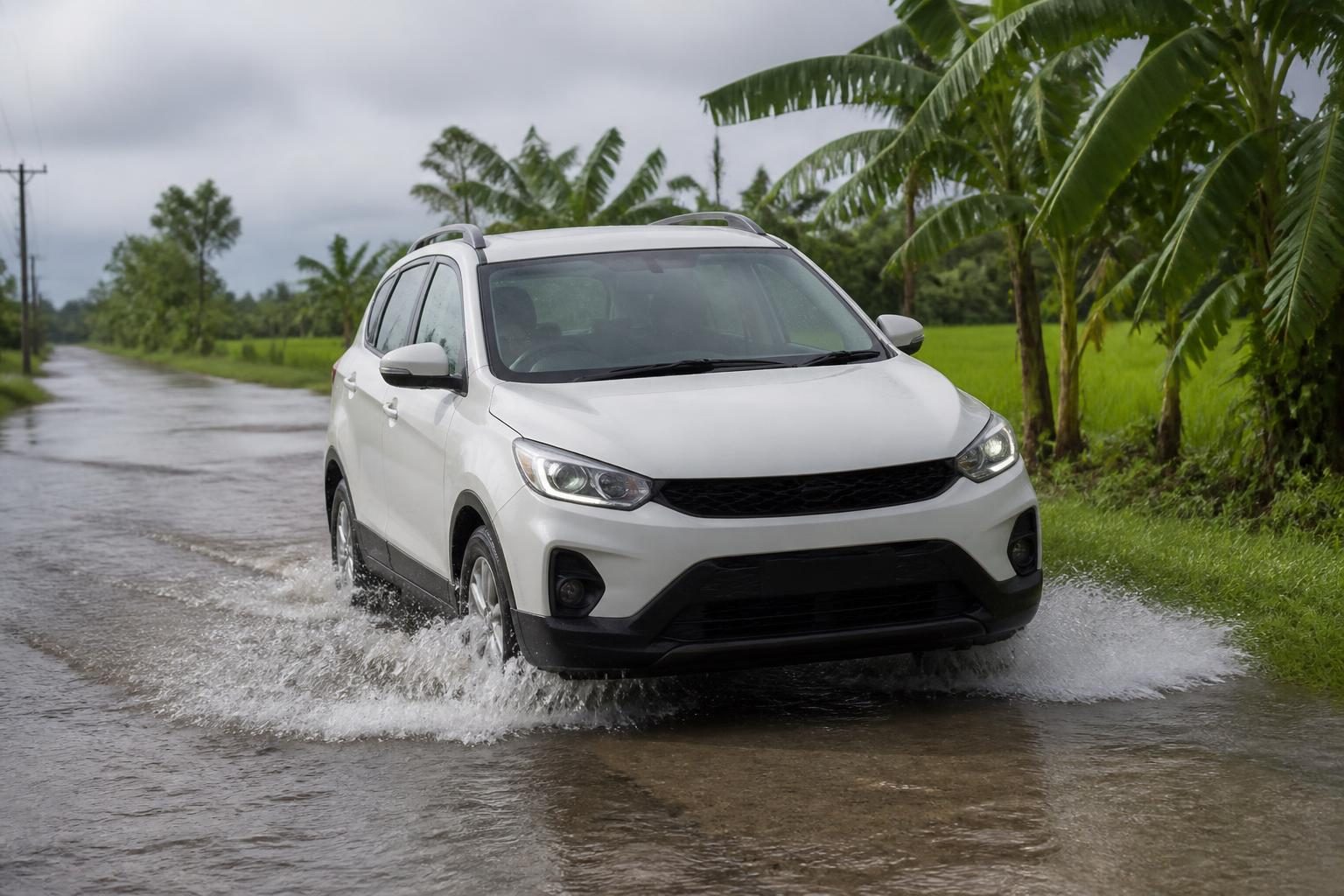 A white SUV drives through flooded rural road water under grey skies.
Highways are the second argument. Higher seating gives better sightlines over the truck traffic on the Dhaka–Chittagong corridor, and the taller body copes better with rough surface repairs. Space is the third: a sedan boot is a fixed box, while a crossover cargo area folds and adapts around luggage, a pram or a market run. Our SUV budget-tier guide breaks that down by price band.
Rural roads finish the case. Unpaved sections, agricultural tracks and seasonal village bridges are simply less stressful with extra clearance under you. The compact crossover class, represented by cars like the Honda Vezel, delivers most of this without full mid-size bulk.
An SUV or crossover suits you if: you travel between divisions regularly, carry four or more people with luggage, live somewhere the roads pond, or want long-term versatility over the lowest entry price.
It does not suit you if: you're a purely urban commuter with tight parking and a tight budget.
Why Is the Compact Crossover Winning?
Because it refuses to choose. Compact crossovers now deliver near-sedan fuel figures with genuine ride height: the Honda Vezel e:HEV returns 25.0 km/L in 2WD and 22.0 km/L in 4WD on the WLTC cycle (Honda Japan spec), while the Toyota Corolla Cross Hybrid is rated up to 26.4 km/L (2WD) on the WLTC cycle (Toyota Japan specification).
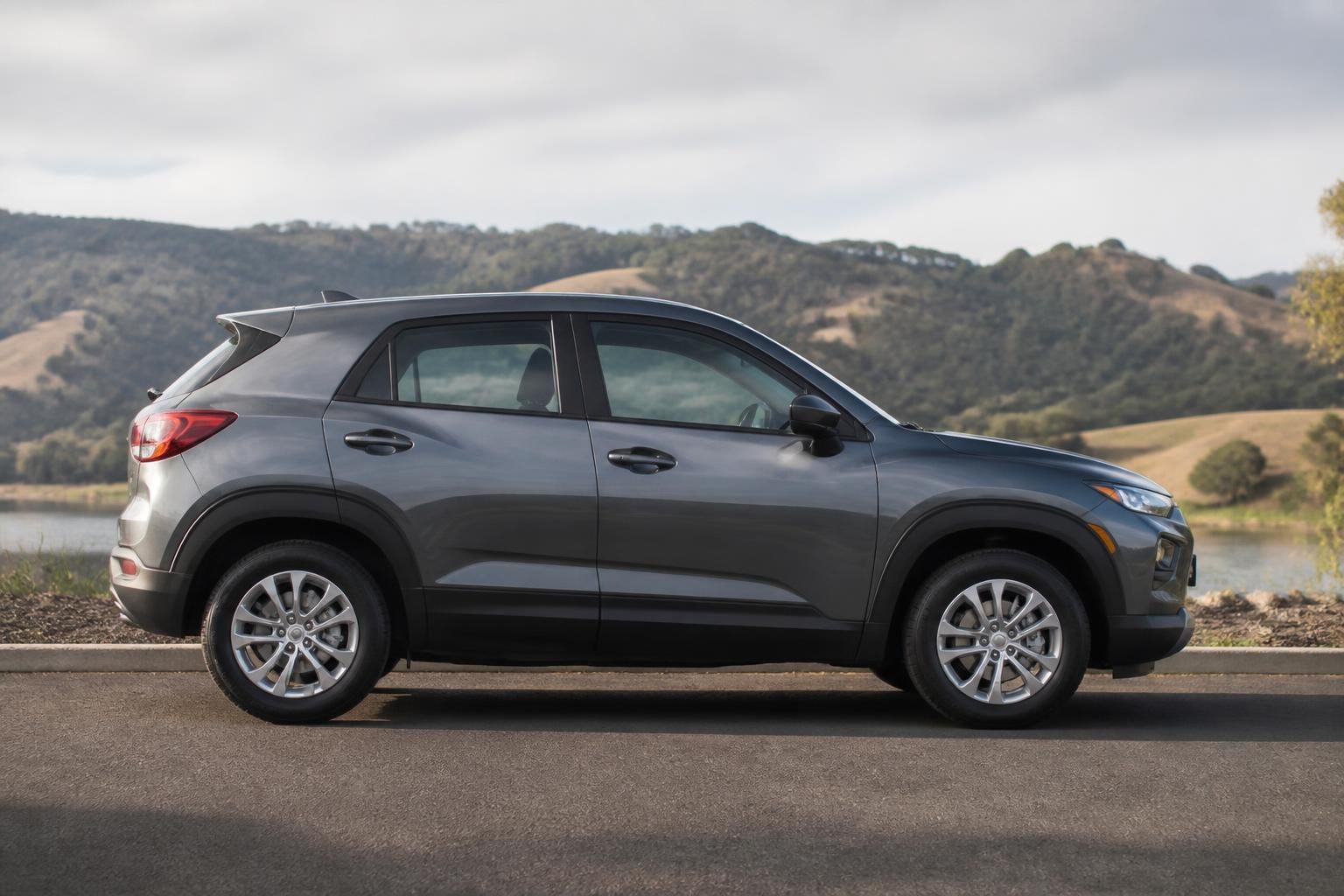 Gray compact crossover SUV in profile against a hilly landscape.
Those are test-cycle numbers, not Dhaka numbers, but they're measured the same way across models so the comparison holds. Pair that efficiency with 160–195mm of clearance and flexible seating, and you can see why this class, not big off-roaders, is driving the registration growth.
We should be honest about the cost of that balance. Crossovers price higher than comparable sedans, and in the narrowest lanes a taller, wider body is more work to park than a 4.5-metre saloon.
Which One Is Right for You?
Use your driving pattern, not the market trend. With SUV registrations up 346% in reconditioned imports over five years (BARVIDA via Prothom Alo, October 2025), it's easy to follow the crowd into a car that doesn't match your week. For families importing a car to Bangladesh, these three questions — where you drive most, how many you carry, and what you have to spend — usually settle it.
Pick a sedan if you're doing 95% city driving, your area drains reasonably well, parking is limited, and budget leads the decision.
Pick a compact crossover if you mix city and highway, carry three to five people, or your commute route floods during monsoon.
Pick a mid-size SUV if you travel to Chittagong, Sylhet or Khulna regularly, carry a large family, and spend real time on rural roads.
One cost note before you compare anything. A higher-value vehicle carries a higher CIF value, which feeds directly into your duty calculation, so two cars that look close on listed price can land very differently. Run both through the duty calculator before you decide, because listed prices cover the vehicle, shipping and inspection only.
How Carbarn Sources Both Types Direct from Japan
Carbarn Bangladesh imports both sides of this comparison, sedans and crossover/SUVs, and owns every unit it lists. The inventory is curated for Bangladesh eligibility only: under five years old and right-hand drive, sourced at Japanese auctions and shipped direct.
Verification comes before payment, not after. Each vehicle carries its official Japanese auction sheet, which is the independent grading document from the auction house, plus Carbarn's own in-house inspector report and pre-shipment inspection certification. You see the defects and the grade before you commit.
On cost, the listed price covers the vehicle, shipping to Bangladesh and the pre-shipment inspection. Customs duty, VAT, port clearance and BRTA registration are separate and paid by you, so estimate them with the duty calculator before budgeting.
The process runs about four to six weeks from order to pickup, with 20–25 days of that at sea and vessels departing Japan weekly. Payment is full payment only, by international bank transfer, secure online card, or in person at the Banasree office in Dhaka, Monday to Saturday. No financing, and no warranty is offered in Bangladesh.
Browse sedans on the Toyota Corolla pages, crossovers on the Honda Vezel pages, and family people-movers under Toyota Noah. The full step-by-step is on How to Buy.