Dhaka traffic has a way of exposing the gap between paper efficiency and real commuter cost. Two hybrids can look close on a spec sheet, then feel very different once your week is mostly signals, slow crawls, tight U-turns, and long waits with the air conditioning on.
So this comparison keeps things simple. We use official Japanese-market figures from Toyota, Nissan, and Honda, then turn them into taka using current Bangladesh retail fuel pricing. If you want a broader shortlist first, you can also read our guide to the best hybrid cars in Bangladesh. Here, the question is narrower: Prius, Note, or Vezel, which one is actually cheaper in heavy Dhaka use?
Quick Answer
| Model |
Official WLTC km/L |
Official city-mode km/L |
Fuel type for this comparison |
Approx. Tk / 100 km |
Approx. Tk / year at 15,000 km |
Best for |
| Toyota Prius in Bangladesh |
32.6 |
29.9 |
Regular gasoline basis |
Tk468 |
Tk70,234 |
Lowest fuel spend |
| Nissan Note in Bangladesh |
28.4 |
28.3 |
Regular gasoline basis |
Tk495 |
Tk74,205 |
Small, easy city hatchback |
| Honda Vezel in Bangladesh |
25.3 |
27.7 |
Regular gasoline basis |
Tk505 |
Tk75,812 |
Higher seating and family crossover shape |
The Vezel figures here use Honda's current 2026 e:HEV Z FF spec set consistently: 25.3 km/L WLTC and 27.7 km/L city mode.
Which one is actually cheaper in Dhaka traffic?
In 2026, Toyota lists the Prius X at 29.9 km/L in city mode, Nissan lists the Note E13 at 28.3 km/L, and Honda lists the current Vezel e:HEV Z FF at 27.7 km/L in city mode (Toyota Prius X Grade Specifications PDF, 2026; Nissan Note Environmental Information, 2026; Honda Vezel Specifications PDF, 2026). On fuel alone, that still makes the Prius the cheapest Dhaka commuter of the three.
Why lead with city mode instead of headline WLTC? Because Dhaka use is rarely balanced. Nissan's own environmental information explains that city mode assumes lower-speed driving affected by signals and congestion, while WLTC blends city, suburban, and highway use (Nissan Note Environmental Information, 2026). If your week is mostly Mirpur Road, Pragati Sarani, or school-run traffic, city mode is the sharper comparison.
The fuel-type point matters more than many buyer discussions admit. Toyota's Prius specifications, Nissan FAQ for the E13 Note, and Honda's Vezel e:HEV owner's manual all specify regular gasoline. For a current Bangladesh retail working basis, this article uses petrol at Tk140/L from the August 2026 update reported by Bangladesh Sangbad Sangstha, while keeping in mind that local fuel-grade naming does not perfectly mirror Japanese terminology.
The formula is straightforward: 100 ÷ city-mode km/L × petrol price. That gives you a transparent answer instead of vague claims about a car being "good on fuel". And isn't that what most buyers actually want before they start worrying about trim names?
[CHART: Horizontal bar chart - official city-mode fuel economy comparison: Prius 29.9 km/L, Note 28.3 km/L, Vezel 27.7 km/L - sources: Toyota Prius X Grade Specifications PDF 2026, Nissan Note Environmental Information 2026, Honda Vezel Specifications PDF 2026]
Is the Toyota Prius the fuel-cost benchmark?
The Toyota Prius in Bangladesh is still the easiest answer if your first filter is the lowest petrol bill, because Toyota's 2026 Prius X grade sheet lists 32.6 km/L WLTC and 29.9 km/L in city mode (Toyota Prius X Grade Specifications PDF, 2026). In plain terms, it wins this three-way test on official efficiency.
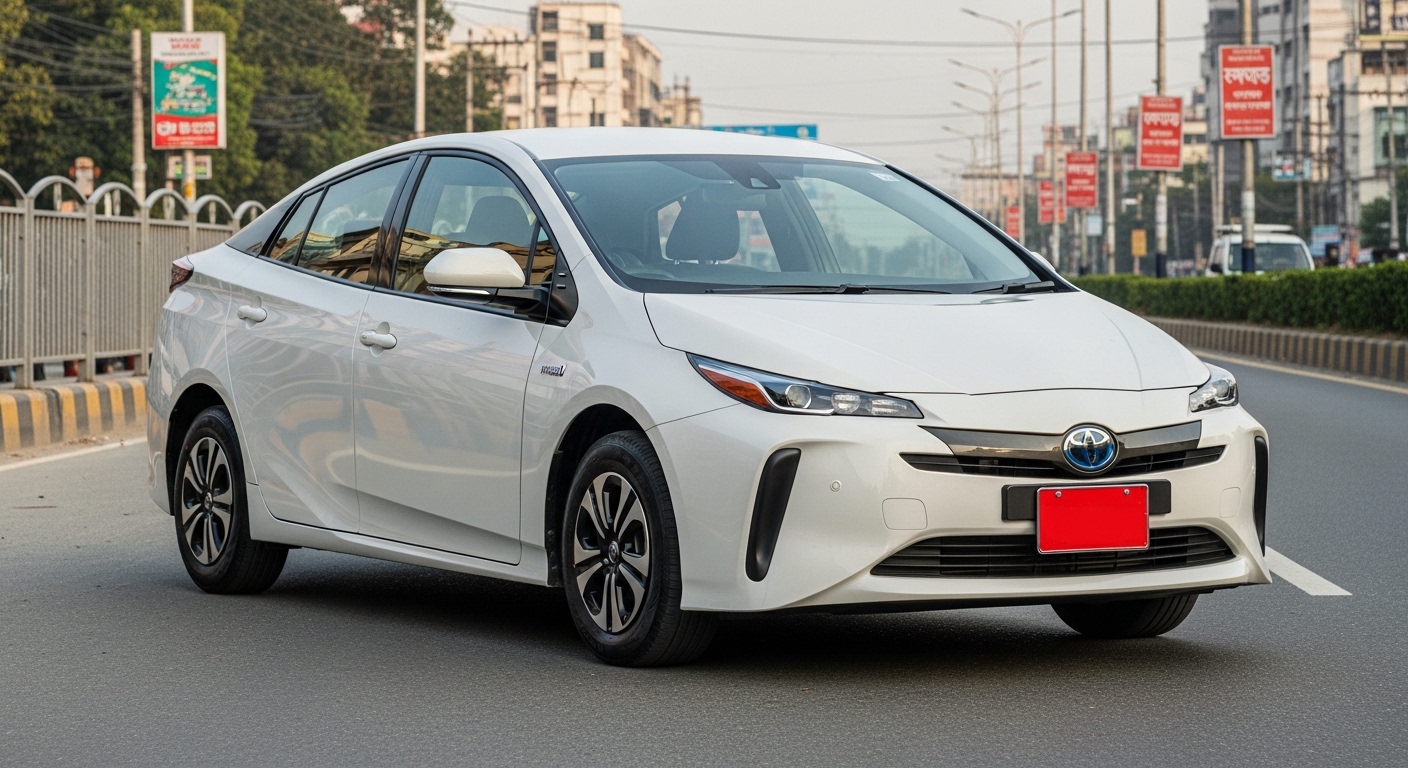 2023 TOYOTA prius
A representative 2023 Prius example shows why the model feels so relevant for Dhaka buyers: 63,877 km, auction grade 3.5, a 1,800 cc hybrid setup, engine code 2ZR-FXE, FWD, automatic transmission, and five seats. Toyota's official X grade page also confirms regular gasoline, so the Prius sits in the same fuel category as the other two cars in this comparison (Toyota Prius X Grade Specifications PDF, 2026).
The trade-off is simple. The Prius suits buyers who care most about fuel spend, quiet hybrid behaviour, and Toyota's strong parts and resale comfort. It is less convincing if you want a higher seating position or a crossover feel. If battery anxiety is still in the back of your mind, our guide to hybrid battery life in Bangladesh is worth a look.
Nissan Note: the closest city-friendly compromise
The Nissan Note in Bangladesh comes surprisingly close to the Prius, with Nissan's official 2WD E13 figure at 28.4 km/L WLTC and 28.3 km/L in city mode (Nissan Note Environmental Information, 2026). That means the Note is not miles behind. It is the closest challenger here.
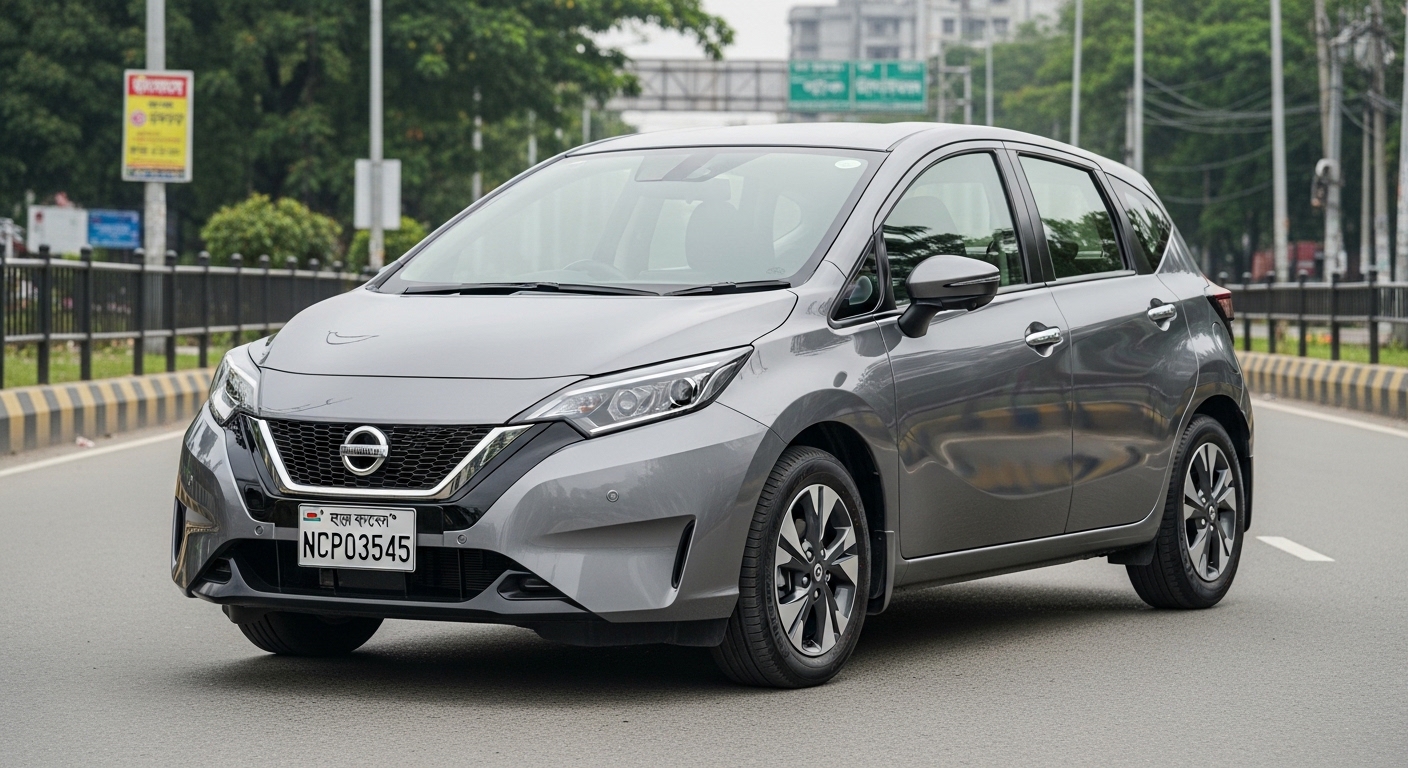 2022 NISSAN note
A representative 2022 Note example adds the practical detail Dhaka buyers usually care about: 105,000 km, auction grade 4, E13 model code, HR12DE engine code, 1,198 cc hybrid system, FWD, automatic transmission, hatchback body, and five seats. Nissan's fuel FAQ says the E13 uses unleaded regular gasoline and about a 36-litre tank for most grades (Nissan FAQ, Note E13 fuel type and tank capacity, 2024).
What do you get for choosing the Note instead of the Prius? A smaller footprint, easier parking, and an e-POWER driving character many buyers find very natural in slow city traffic. What do you give up? A little efficiency, and some of the Prius's stronger reputation as the default hybrid answer. If you're comparing this against other Nissan options too, our Nissan cars price in Bangladesh buying guide can help.
Honda Vezel: paying more for crossover practicality
The Honda Vezel in Bangladesh makes sense for a different reason, because Honda's current e:HEV Z FF figure is 25.3 km/L WLTC and 27.7 km/L in city mode (Honda Vezel Specifications PDF, 2026). It is not the cheapest on fuel, but it is easier to justify if you value height and family shape.
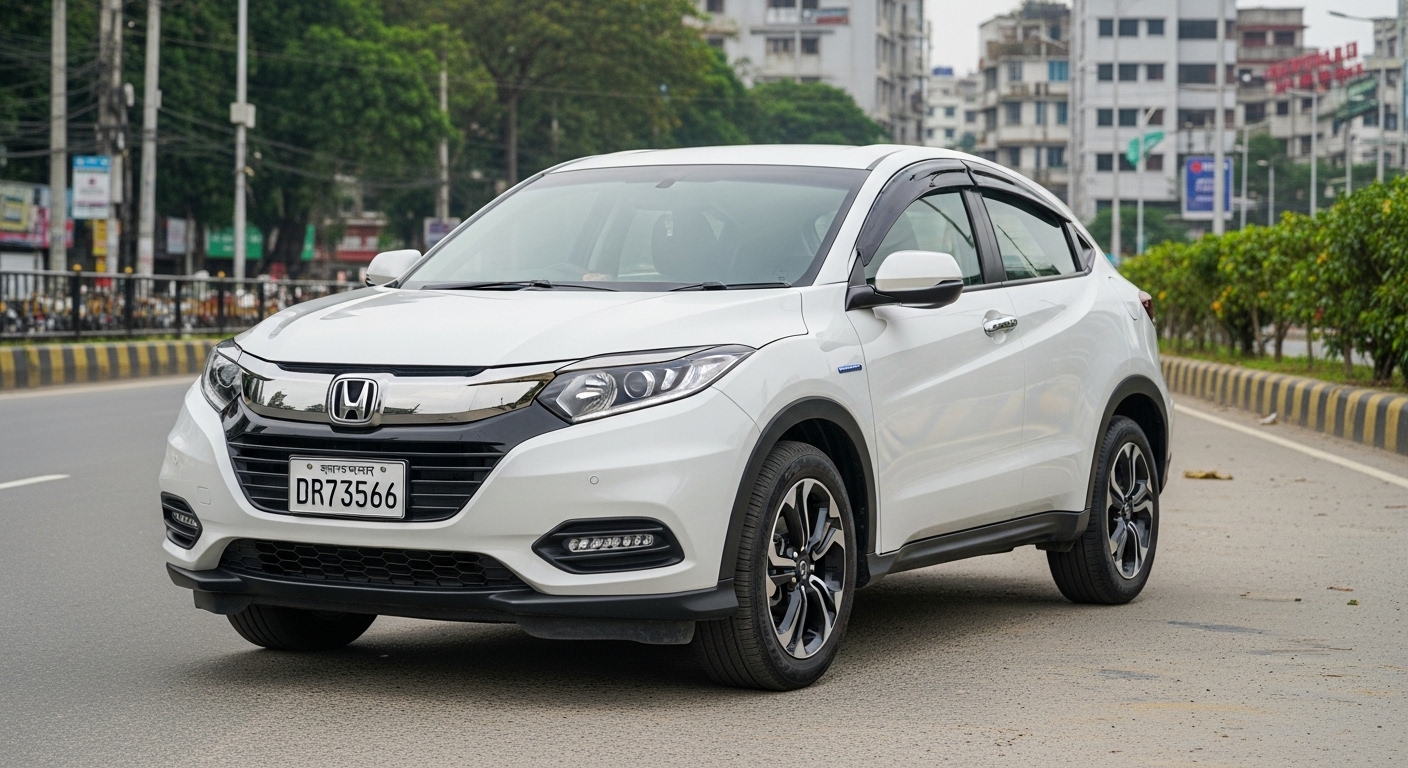 2022 HONDA vezel
A representative 2022 Vezel example on the site is a grade 4, 111,000 km, 1,496 cc hybrid, 4WD car. The Vezel specifications page shows current-generation e:HEV Z variants under RV5 and RV6 model codes, all using regular gasoline. Honda's owner's manual confirms the e:HEV takes unleaded regular fuel, not premium, with a 40-litre tank (Honda Vezel e:HEV owner's manual, specified fuel, 2025).
A lot of Vezel chatter in Bangladesh mixes old and new drivetrains, and that muddies the decision. The Business Standard's August 2024 review was specifically about a 2019 Vezel RS Hybrid with a 1,500 cc Atkinson-cycle engine, 150 horsepower, 190 Nm, and a 7-speed DCT. It reported shuddering after roughly 40 minutes of bumper-to-bumper traffic, which is useful context for that older setup, not a blanket verdict on newer e:HEV cars (The Business Standard, 2019 Honda's Vezel RS Hybrid: Fun and functional until it hits traffic, 2024). That distinction matters, doesn't it?
What does that difference look like in taka and over a year?
As of August 2026, the current Bangladesh retail basis used here is Tk140 per litre for petrol and Tk145 per litre for octane, as reported by Bangladesh Sangbad Sangstha (2026). Using the petrol line as the working comparison basis, the city-use fuel bill comes out to roughly Tk468 per 100 km for the Prius, Tk495 for the Note, and Tk505 for the Vezel.
That means the Vezel costs about Tk37 more per 100 km than the Prius on this city-mode model. The gap to the Note is very small. In practice, the Vezel's fuel penalty is real, but it is much narrower than it looked on the older price basis.
[CHART: Bar chart - fuel cost per 100 km at Tk140/L petrol: Prius Tk468.23, Note Tk494.70, Vezel Tk505.42 - sources: Toyota Prius X Grade Specifications PDF 2026, Nissan Note Environmental Information 2026, Honda Vezel Specifications PDF 2026, Bangladesh Sangbad Sangstha 2026]
Here is the simple Dhaka-use calculator table for three common annual distances:
| Annual driving |
Prius |
Note |
Vezel |
| 10,000 km |
Tk46,823 |
Tk49,470 |
Tk50,542 |
| 15,000 km |
Tk70,234 |
Tk74,205 |
Tk75,812 |
| 20,000 km |
Tk93,645 |
Tk98,940 |
Tk101,083 |
At 15,000 km a year, the Prius saves about Tk3,971 versus the Note and about Tk5,578 versus the Vezel on fuel alone. That is not life-changing money for every buyer, but it is enough to matter if your commute is relentless and predictable. It is also enough to make the Note look like a smart compromise rather than a weak second place.
[CHART: Column chart - annual city-use fuel spend at 10,000 km, 15,000 km, and 20,000 km: Prius Tk46,823 / Tk70,234 / Tk93,645; Note Tk49,470 / Tk74,205 / Tk98,940; Vezel Tk50,542 / Tk75,812 / Tk101,083 - sources: official city-mode figures plus Bangladesh Sangbad Sangstha petrol price]
Are buyers mixing up fuel cost with full import cost?
In 2026, fuel is the cleanest comparison, but it is not the whole Bangladesh ownership picture. The Prius specifications page includes current-generation 1,797 cc and 1,986 cc references, the Note specifications page shows 1,198 cc, and the Vezel specifications page shows 1,496 cc variants. Engine size can change the bigger maths.
That is why the fuel winner and total landed-cost winner are not always identical. Year, auction grade, drivetrain, and condition also matter. A 2023 Prius with the 1.8-litre setup is a different duty conversation from a 2.0-litre Prius, just as a 4WD Vezel is a different conversation from a front-wheel-drive one. If you also want the bigger hybrid versus EV picture, our hybrid and electric cost-efficiency guide is a useful next read.
Bangladesh eligibility matters too. The import rules and regulations guide says imported cars must be right-hand drive and within five years of manufacturing. So don't copy a duty figure from another model or another year. Use the tool that is built for this job and calculate your import duty for the exact engine size, year, and vehicle details.
Which one should you shortlist, and how do you compare real examples safely?
On the 15,000 km city-use model, the Prius lands at about Tk70,234 a year, the Note at Tk74,205, and the Vezel at Tk75,812 (Toyota Prius X Grade Specifications PDF, 2026; Nissan Note Environmental Information, 2026; Honda Vezel Specifications PDF, 2026; Bangladesh Sangbad Sangstha, 2026). So the honest shortlist verdict is simple: Prius for lowest fuel spend, Note for near-Prius economy in a smaller package, Vezel for height and family practicality.
| Model |
Pick it if |
Skip it if |
| Prius |
You want the lowest fuel spend and the clearest hybrid answer |
You want higher seating or crossover shape |
| Note |
You want city-friendly size with very little efficiency penalty |
You want the outright fuel winner or more family-crossover feel |
| Vezel |
You want easier entry, higher seating, and more crossover practicality |
You are chasing the lowest running cost above all else |
Your next step should be comparing real examples by year, kilometres, auction grade, drivetrain, and inspection history, not by generic mileage chatter. Start with Prius, Note, and Vezel examples, then move to the duty calculator and the guide on how to buy a car from Japan to Bangladesh.
Carbarn Bangladesh owns every vehicle it lists, shows only Bangladesh-eligible right-hand-drive cars under the five-year rule, gives you two inspection reports before payment, the official Japanese auction sheet and an in-house inspector report, includes the pre-shipment inspection or certification shown on the listing, and shows an all-inclusive listed price covering the vehicle, shipping, and that listed inspection or certification only. Duty, VAT, registration, and port clearance stay separate, and you can track the shipment through the dashboard during the roughly 4 to 6 week import process.