The Bangladesh Road Transport Authority (BRTA) recorded 5,014 microbus registrations between January and August 2026, in its table "Number of Registered Motor Vehicles in Bangladesh (Yearwise)", row "Microbus", column "Up To Aug-26". The BRTA page carrying that table was last updated on 21 September 2026.
Is 5,014 a busy market or a quiet one? If you're weighing a seven-seater for the family, or a van for staff runs, the number feels like it should tell you something. On its own, it doesn't. This post explains what the count includes, what it can't tell you, and how it should shape a people-mover import decision.
Quick Answer
- BRTA recorded 5,014 microbus registrations from January to August 2026, per its yearwise registration table.
- That's eight months, so don't set it beside a full-year column.
- It counts registrations, not microbuses on the road today.
- The table has no model split, so it can't say which vans or MPVs were registered.
- Reconditioned people-movers must be right-hand drive and no more than 5 years old, counted from build month.
What does BRTA's 5,014 actually count?
The 5,014 figure is the number of vehicles BRTA entered into its records under the "Microbus" class between January and August 2026. It sits in the table titled "Number of Registered Motor Vehicles in Bangladesh (Yearwise)", in the "Up To Aug-26" column.
"Microbus" here is a registration class, not a model name. BRTA's table lists vehicle types such as Microbus, Private Passenger Car and Jeep (Hard/Soft), each with its own count. It publishes no footnote defining what each class covers, and it gives no model breakdown. So you can't pull a Noah, Voxy or Hiace number out of the 5,014.
The table also doesn't separate new vehicles from reconditioned imports. A reconditioned car, the usual Bangladeshi term for a used Japanese import, is registered the same way as a new one. Both land in the same row.
If you want the same table read through the Private Passenger Car row, the companion post on 5,458 private cars registered in Jan–Aug 2026 covers that.
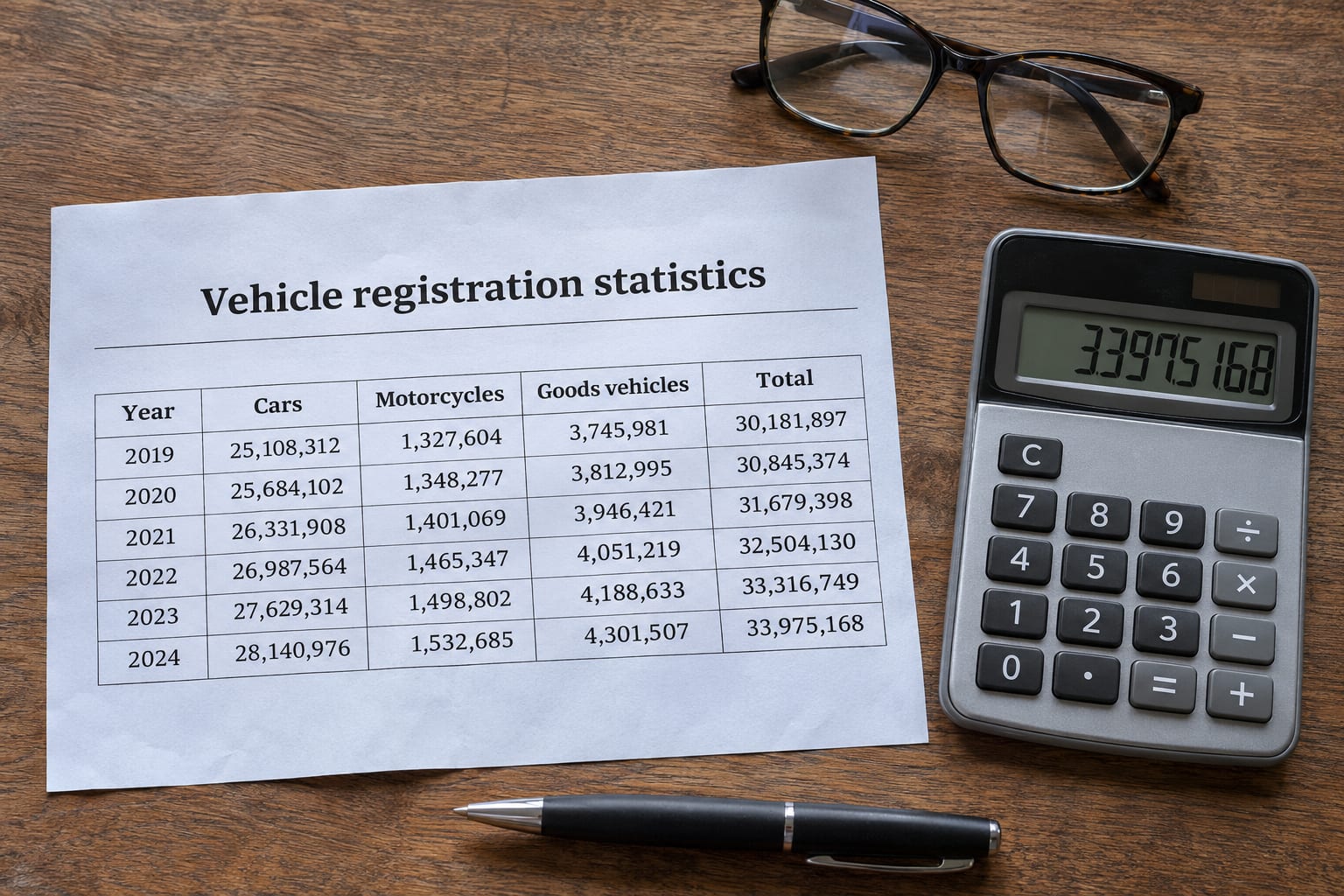 Illustration: A registration table answers one narrow question: how many registrations happened, in which class, in which period.
How do eight months sit beside full years?
They don't line up, and the table shouldn't be read as if they do. The "Up To Aug-26" column covers January to August, eight months. Every yearly column beside it covers twelve. Putting them side by side is fine for context, but a direct comparison would mislead you.
Here are the Microbus figures from BRTA's table for the last four full years, with the 2026 partial period beside them.
| Period |
Microbus registrations (BRTA table) |
Period length |
| Full year 2022 |
7,399 |
12 months |
| Full year 2023 |
5,072 |
12 months |
| Full year 2024 |
5,660 |
12 months |
| Full year 2025 |
5,879 |
12 months |
| January to August 2026 |
5,014 |
8 months |
Does 5,014 mean 5,014 microbuses on the road?
No. A registration is an event recorded at a point in time. Once it's in the table, it stays there, whether the vehicle is still running, sold on, scrapped or parked in a garage. The table counts registration history, not vehicles in use.
The same logic applies to the Grand Total column. BRTA's table shows 137,393 microbus registrations across all years up to August 2026. That's a cumulative record, not a census of microbuses on Bangladeshi roads today.
The count also says nothing about age. Some of the 5,014 may be brand-new vehicles, and some may be reconditioned imports built a few years ago in Japan. For an import buyer, age matters more than the headline number. Bangladesh accepts reconditioned vehicles no more than 5 years old, counted from the build month, and right-hand drive only. The import rules and regulations page sets this out plainly.
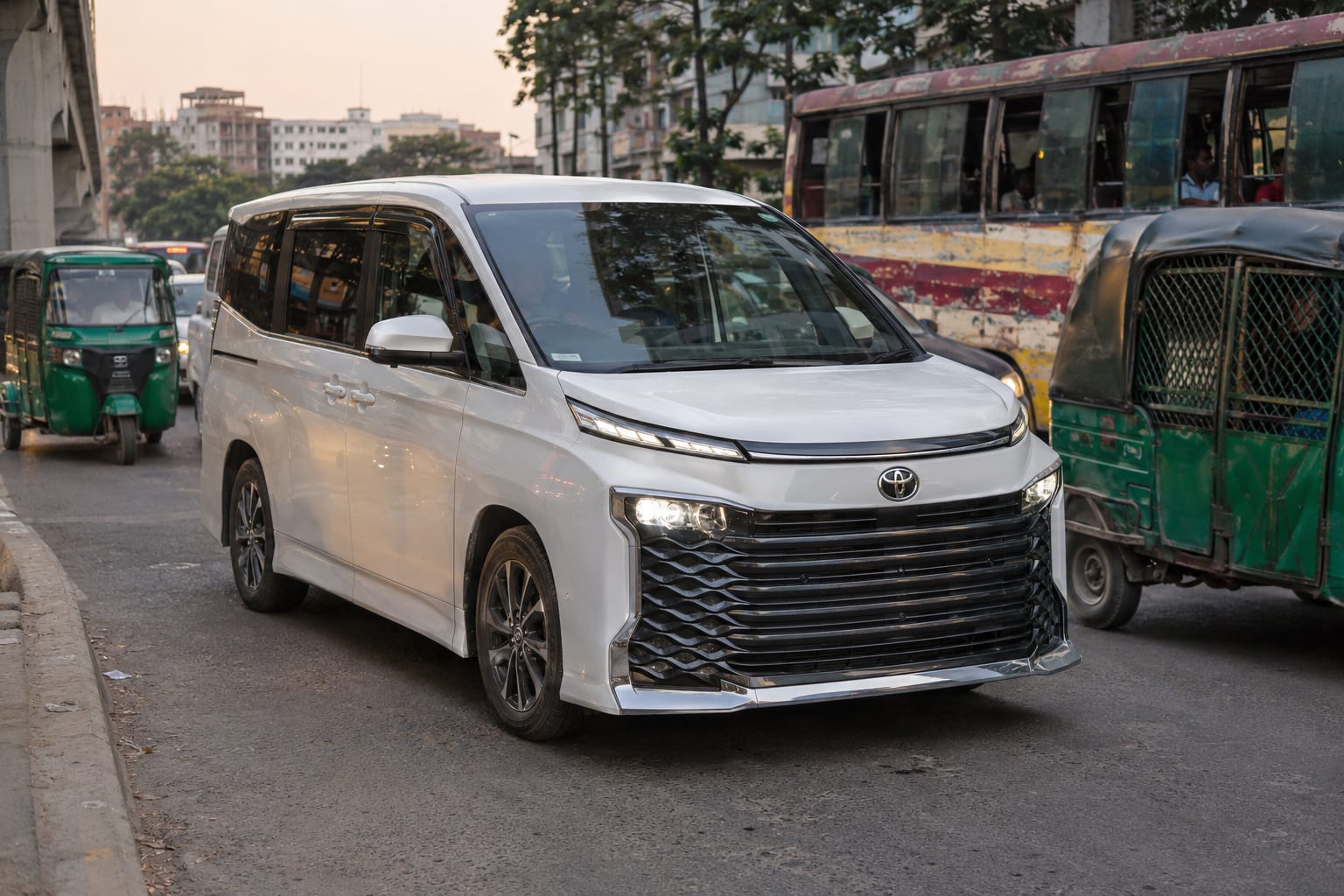 Illustration: a registration count cannot tell you how many microbuses are in daily use in Dhaka traffic like this.
What can a buyer take from the number?
Two things, and neither is a model recommendation. First, demand for people-movers in Bangladesh is real and ongoing. Thousands of registrations in eight months is not a niche. Second, the number doesn't pick a vehicle for you. It can't tell you whether a hybrid MPV or a diesel van suits your household or your business.
For context, here is how the Microbus row sits beside two other classes in the same BRTA column.
| BRTA vehicle class |
Registrations, January to August 2026 |
| Microbus |
5,014 |
| Private Passenger Car |
5,458 |
| Jeep (Hard/Soft) |
9,019 |
Read each row by its own label. These are BRTA's registration classes, not body styles a showroom would use, so don't treat them as three slices of one market.
Judge a people-mover on the things the table can't see: seats and layout, running costs in stop-start traffic, parts availability, and whether the build date clears the 5-year rule. The guide to 7-seater people-movers for Bangladesh works through model choice. The Noah vs Sienta hybrid comparison looks at running costs.
On cost, one point needs saying early. The listed price of an imported vehicle covers the car, shipping and pre-shipment inspection. Customs duty, VAT, registration and port clearance are separate and paid by you. Rates change with each national budget, so use the vehicle duty calculator for the vehicle you're considering rather than relying on a figure you read somewhere.
Which people-movers can you import?
Carbarn lists passenger cars that meet Bangladesh's right-hand-drive and 5-year build-date rules. Three common people-movers are the Toyota Noah, Toyota Voxy and Toyota Hiace. Here's how they compare on the facts that matter for eligibility.
| Model |
Typical seats |
Hybrid option |
Eligibility |
| Toyota Noah |
7 or 8 |
Yes, 1.8-litre hybrid |
Eligible if built within 5 years |
| Toyota Voxy |
7 or 8 |
Yes, 1.8-litre hybrid |
Same 5-year rule |
| Toyota Hiace |
2 to 10 across the range |
No hybrid in the Japanese catalogue |
Same 5-year rule |
A note on the Hiace. Its range runs from 2-seat panel vans to 10-seat passenger versions, so the badge alone tells you nothing about layout. Check the seat count and body type on the specific vehicle before assuming it's a family or staff carrier.
Whatever you shortlist, two documents decide whether a specific vehicle is worth the money. The auction sheet is the official condition report from the Japanese auction house, carrying a number grade (from S/6 for as-new down to 0), an R or RA mark for repaired cars, and interior and exterior letter ratings. The guide to Japanese auction grades explains how to read one. The second is an in-house inspection report you can read before you pay, which catches what a one-page grade can't.
Which one makes sense for you?
If you need seven seats for a family, the Noah or Voxy are probably the right fit. They're sized for Dhaka streets, sit lower than a Hiace, and the hybrid versions suit stop-start traffic. The guide to buying a used Toyota Noah in Bangladesh covers model codes and what to check.
If you run a passenger or staff vehicle, look at the Hiace first, but confirm the seating layout before anything else. A small-seat-count van and a 10-seat passenger version cost very different money to run and to register.
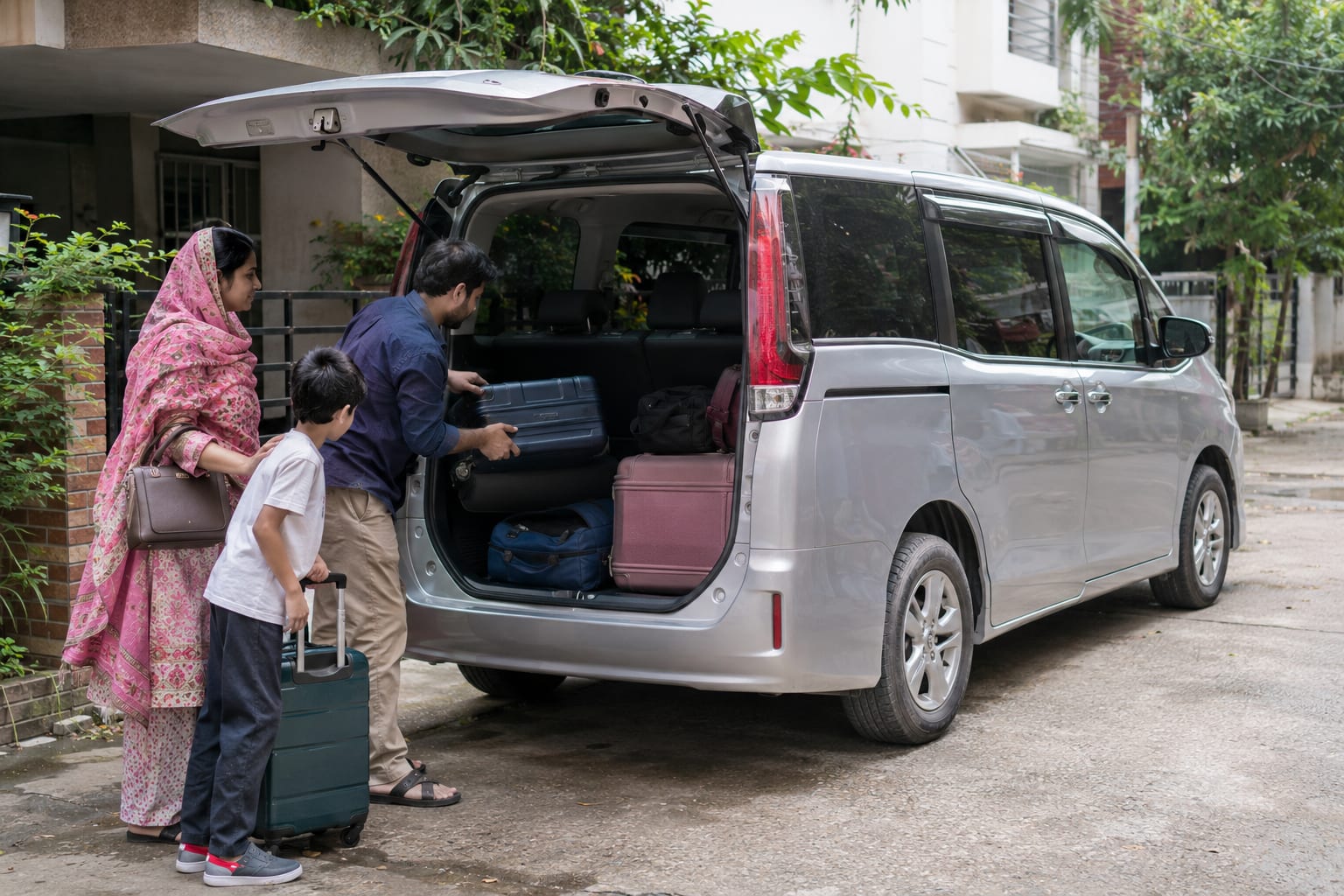 Illustration: A family packs suitcases into the open rear of a silver Toyota Noah.
How does Carbarn Bangladesh handle a people-mover import?
Carbarn Bangladesh sources people-movers from Japan for Bangladeshi buyers. Each listing shows the official auction sheet and a separate in-house Carbarn inspection report before you pay, so you see two independent condition checks. A JAAI pre-shipment inspection is completed before the vehicle leaves Japan.
The listed price covers the vehicle, shipping to Chattogram or Mongla and the inspection. It does not cover customs duty, VAT, registration or port clearance.
The how to buy guide walks through the six steps. The Toyota Voxy model page shows how the auction sheet and inspection notes appear for a people-mover. You can browse all Japanese used cars for import to Bangladesh and filter by model, year and auction grade.
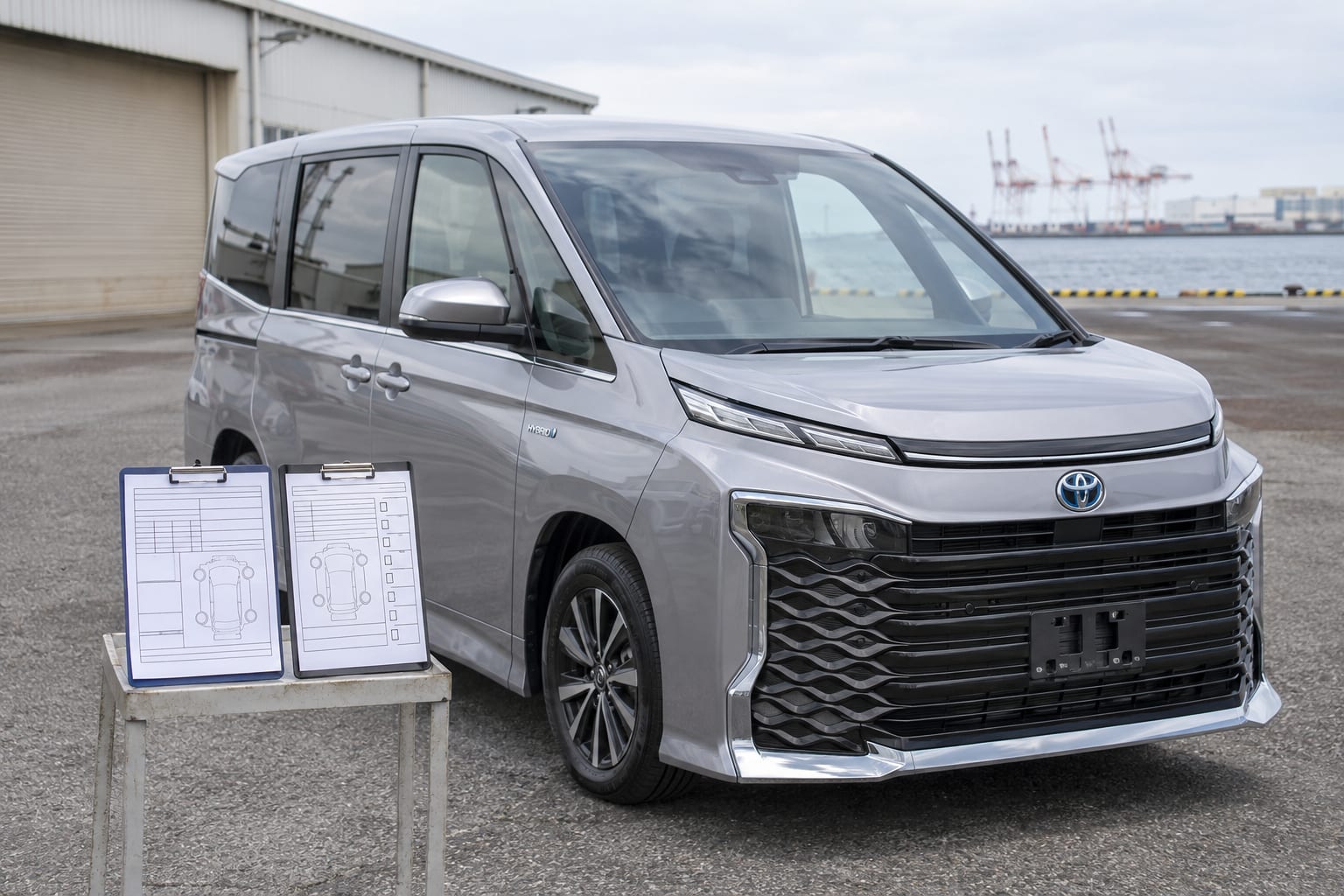 Illustration: a Toyota Voxy shown beside the two documents to read before paying, the auction sheet and the in-house inspection report.
What this does not show
The BRTA table answers one narrow question: how many registrations were recorded, in which class, in which period. It does not show:
- Which models were registered. There's no model split, so no Noah, Voxy or Hiace count can be drawn from the 5,014.
- How many microbuses are on the road. Registrations are events in a record, not a count of vehicles in use.
- How many were new and how many were reconditioned imports. Both land in the same row.
- The age of the vehicles registered.
- What the rest of 2026 will look like. Eight months of data can't project a full year.
Method and sources
- BRTA, "Number of Registered Motor Vehicles in Bangladesh (Yearwise)": source of the 5,014 figure, the 2022–2025 full-year Microbus figures, the 137,393 grand total and the Private Passenger Car and Jeep (Hard/Soft) rows. The page states it was last updated on 21 September 2026; checked on 21 November 2026, the date of this post.
- Carbarn model pages for the Toyota Noah, Toyota Voxy and Toyota Hiace: Japanese catalogue data for seat counts and engine types; checked on 21 November 2026.
- Carbarn import rules and regulations page: the right-hand-drive and 5-year build-date rules; checked on 21 November 2026.