You have narrowed it down to two cars. One is a hybrid and costs noticeably more upfront. The other is a familiar petrol model that saves you a few lakh at purchase but drinks more at the pump. Everyone has an opinion, almost nobody shows you the numbers side by side for Bangladeshi conditions.
Octane-95, the fuel most reconditioned petrol imports run on, currently sits at BDT 145 per litre (GlobalPetrolPrices.com, August 2026). Regular petrol trades a touch lower, around Tk 140 per litre, and since March 2024 the country has used an automatic pricing formula that adjusts both rates monthly, as reported by The Daily Star. So the fuel side of the equation is no longer fixed. This guide walks through three real hybrid-and-petrol pairs, using manufacturer fuel figures from Toyota and Honda, and shows which buyer each one actually suits.
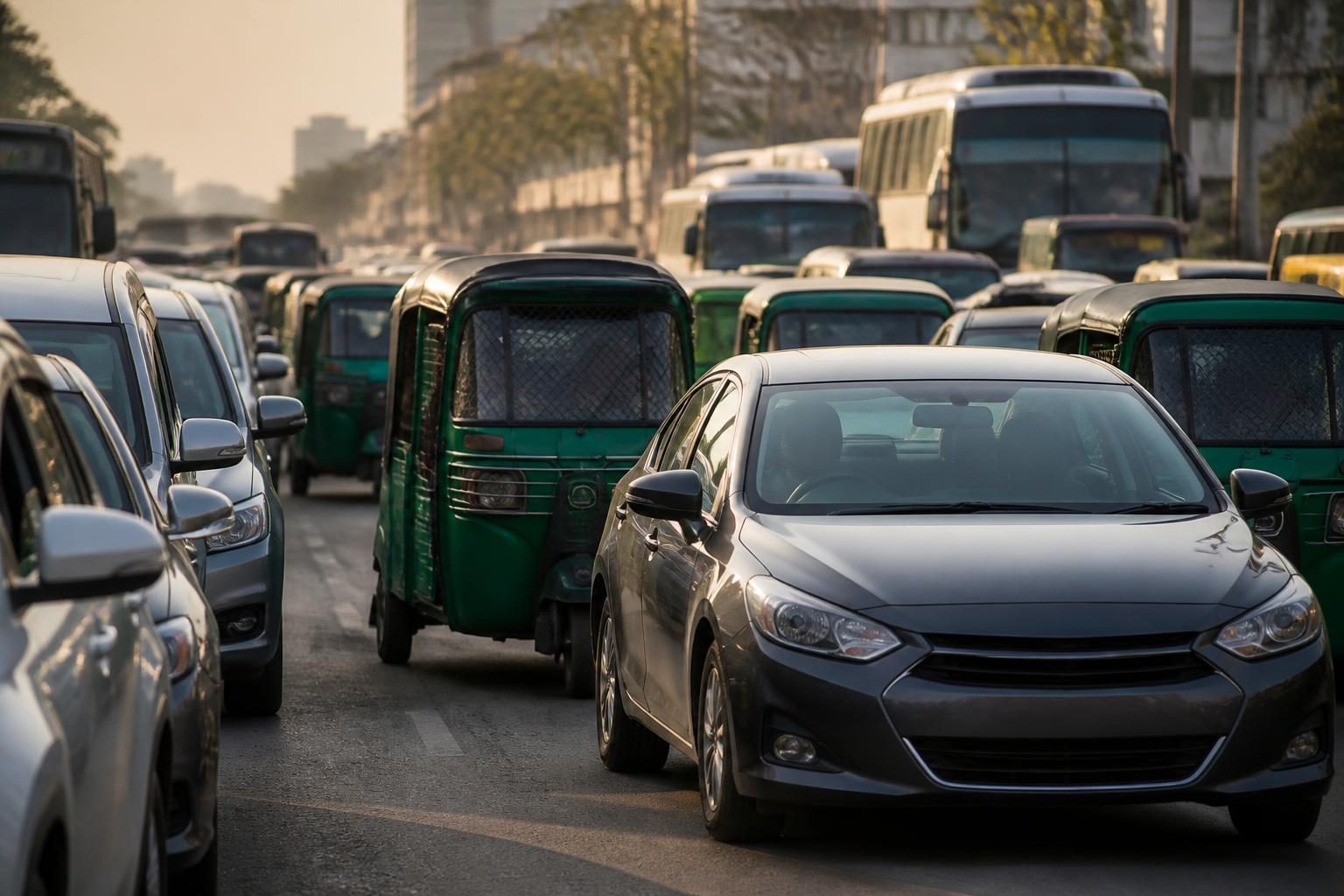 Bumper-to-bumper traffic with CNG rickshaws and buses in warm evening haze.
Quick Answer
- Hybrids cost more to buy and clearly less to fuel. Toyota's own Corolla figures show 29.0 km/L WLTC for the 1.8-litre hybrid against 14.6 km/L WLTC for the 1.8-litre petrol (Toyota Global Newsroom, September 2019).
- The gap is widest in stop-start city driving, because that is where the electric motor does most of the work (US Department of Energy).
- A Bangladesh-specific life-cycle study in the World Electric Vehicle Journal (MDPI, April 2024) found hybrids had the lowest acquisition cost of the vehicles compared, while petrol cars carried much higher running costs.
- Payback depends on your kilometres. Low annual mileage weakens the hybrid case considerably.
- Listed prices cover the vehicle, shipping and JEVIC inspection only. Duty, VAT, registration and port charges are separate: use the duty calculator.
What Actually Makes a Hybrid Cheaper to Run?
A hybrid pairs a petrol engine with one or more electric motors and a battery that recharges itself while you drive and brake. Nothing gets plugged in. In slow traffic the motor handles most of the load and the engine switches off, which is why hybrid figures improve in city conditions rather than on the highway. The US Department of Energy makes this point plainly: hybrid battery charge is highest under stop-and-go driving.
That mechanism matters more in Dhaka than almost anywhere. If your commute is 40 minutes of crawling to cover eight kilometres, a petrol engine spends most of that time idling and burning fuel for nothing. A hybrid spends much of it silent.
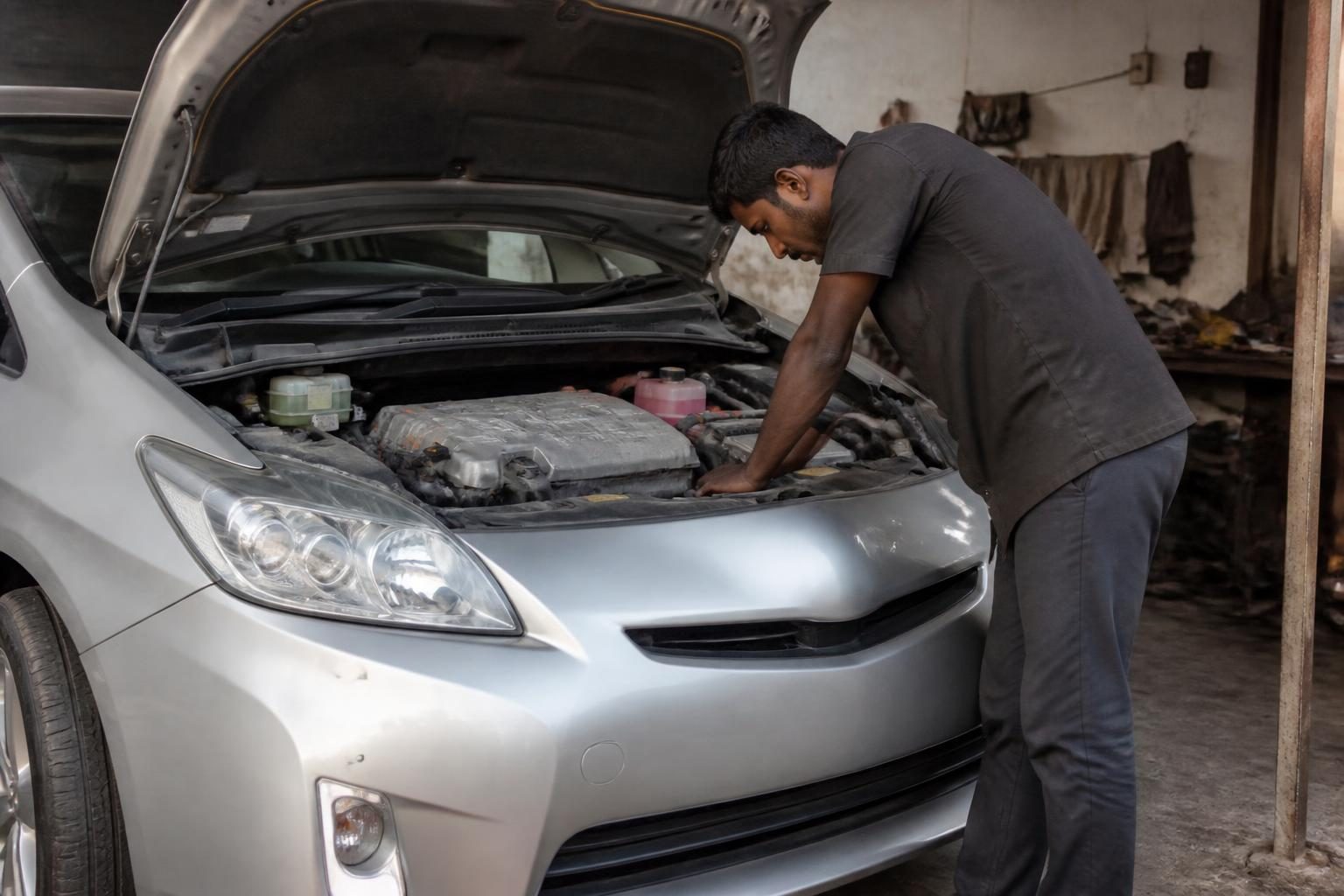 Mechanic inspects a silver hybrid car's engine bay in a small workshop.
We picked three pairs rather than a long list, because a fair comparison needs the same nameplate or the same segment on both sides. Every fuel figure below is a manufacturer WLTC number from Japan, tested by the Ministry of Land, Infrastructure, Transport and Tourism. Where a manufacturer did not publish a clean figure, we say so instead of estimating one.
At a Glance: The Three Pairs
| Model |
Powertrain |
Engine |
Fuel economy (WLTC) |
Body |
Typical price band |
| Toyota Aqua |
Hybrid |
1.5L M15A-FXE + THS II |
up to 35.8 km/L |
5-seat hatchback |
around the 10-lakh mark |
| Toyota Corolla |
Petrol |
1.8L 2ZR-FAE Valvematic |
14.6 km/L |
5-seat sedan |
mid-teens lakh |
| Honda Fit e:HEV |
Hybrid |
1.5L i-VTEC + 2-motor e:HEV |
28.8 km/L |
5-seat hatchback |
15 to 17 lakh |
| Honda Fit |
Petrol |
1.3L DOHC i-VTEC |
not published by Honda |
5-seat hatchback |
low-to-mid teens lakh |
| Toyota Noah |
Hybrid |
1.8L 2ZR-FXE series-parallel |
23.4 km/L |
7-seat van |
28 to 29 lakh |
| Toyota Noah / Voxy |
Petrol |
2.0L M20A-FKS Dynamic Force |
15.1 km/L |
7-seat van |
mid-20s lakh |
Price bands are indicative only. A listed price covers the vehicle, shipping and JEVIC inspection. It does not include customs duty, VAT, registration or port clearance, which you pay separately.
Toyota Aqua vs Toyota Corolla: Which City Commuter Wins?
This is the classic Dhaka shortlist: a small, frugal hybrid hatchback against a respected petrol sedan. On Toyota's own numbers, the fuel-economy gap here is the widest of the three pairs, and it is also the pair where the purchase-price gap is smallest in absolute Taka.
Toyota Aqua
The Toyota Aqua is the most single-minded fuel-saver in this comparison, and the current generation is the one that made the jump. Toyota rates it at up to 35.8 km/L under the WLTC cycle, roughly 20% better than the previous Aqua, as stated in its July 2021 launch release. That headline figure applies to the entry B grade, with other front-wheel-drive grades sitting slightly below it. It is also the world's first car to use a bipolar nickel-hydrogen drive battery, which roughly doubled output over the old pack and widened the speed range where the car can run on electricity alone.
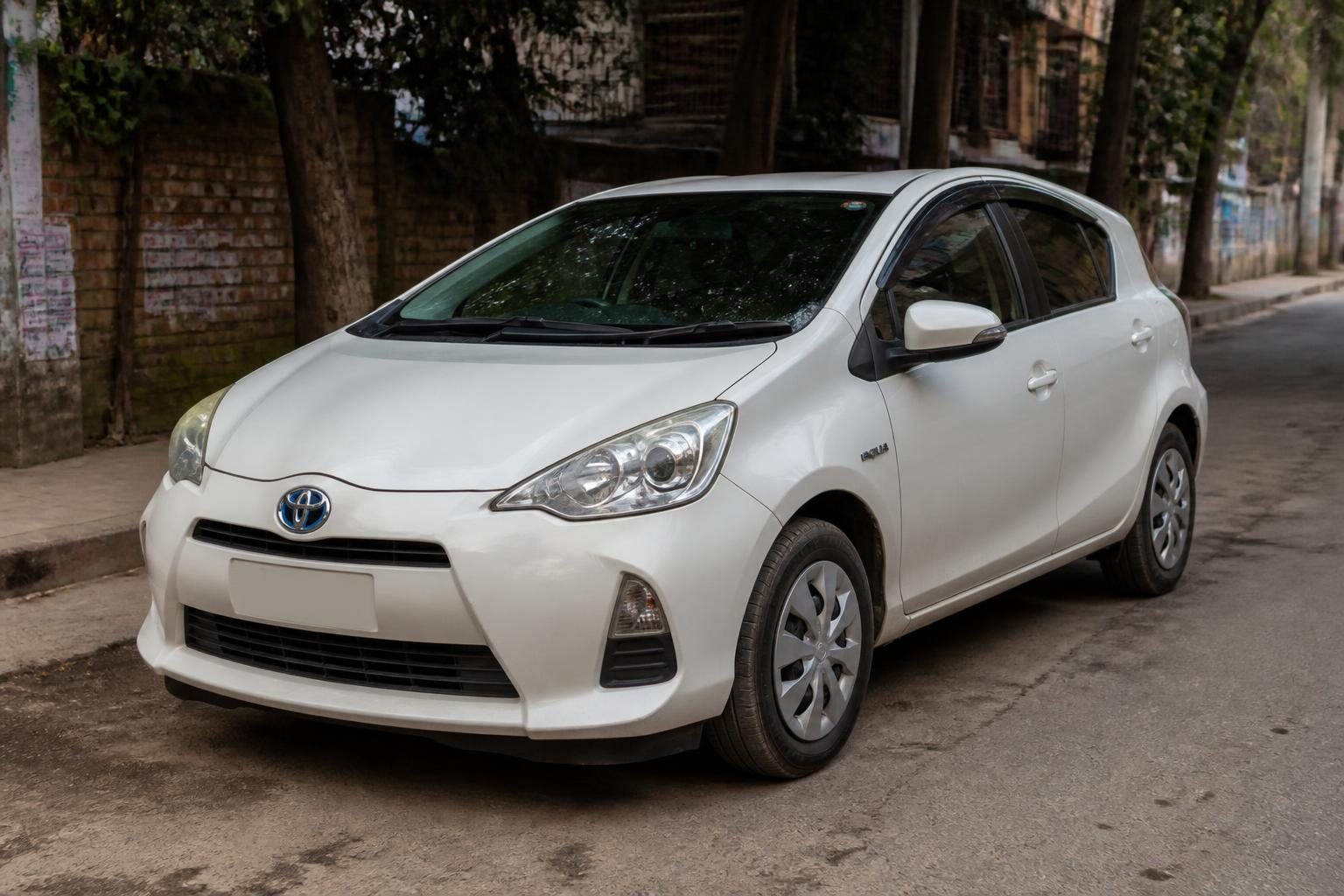 2022 Toyota Aqua
Mechanically it runs a 1.5-litre M15A-FXE Dynamic Force engine with THS II and a CVT, the engine rated at 67 kW (91 PS), driving the front wheels. Body dimensions are 4,050 x 1,695 x 1,485 mm on a 2,600 mm wheelbase, with five doors, five seats and a 36-litre tank. That small tank tells its own story: you simply do not stop for fuel often. A representative listing on the Bangladesh side is a 2022 X grade in model code MXPK11 with 104,000 km on the clock and an auction grade of 3.5, sitting around the 10-lakh mark before duty.
Every grade gets a 100V/1,500W accessory outlet and an emergency power supply mode, which is genuinely useful during a load-shedding evening. The Aqua suits a Dhaka commuter doing short, congested trips five or six days a week. It is less compelling if your driving is mostly open highway or if you regularly carry five adults and luggage.
Toyota Corolla
The Toyota Corolla petrol sedan is the sensible, familiar counterweight, and the Japanese sedan carried the Corolla Axio name before the 2019 redesign. Toyota's own launch data puts the 1.8-litre petrol version at 14.6 km/L WLTC against 29.0 km/L WLTC for the 1.8-litre hybrid of the same car. Two variants, one showroom, exactly double the distance per litre. That single comparison is the cleanest evidence in this whole article, because everything else about the car is held constant.
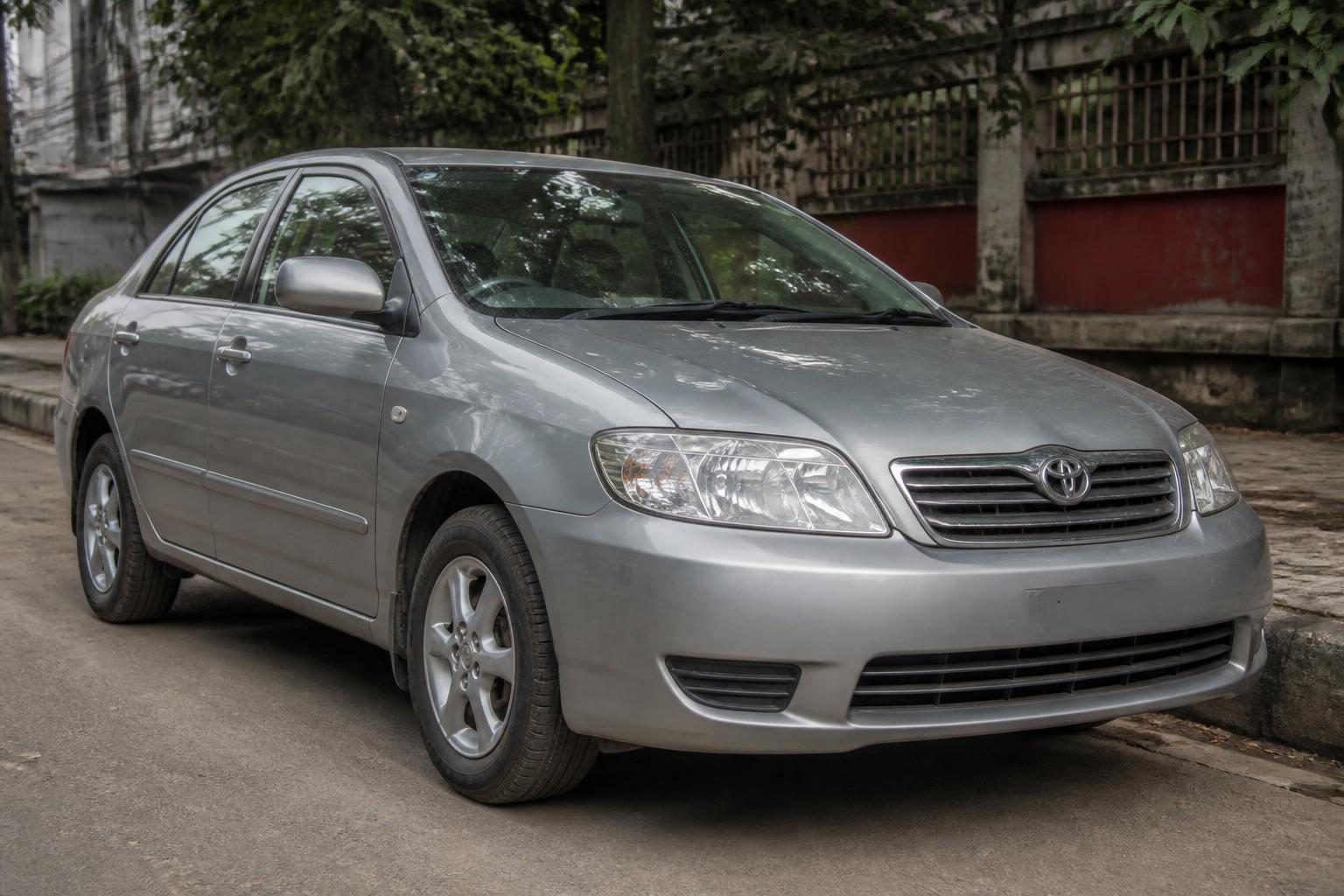 Toyota Corolla
The petrol car uses a 1.8-litre 2ZR-FAE Valvematic engine with Super CVT-i and a 7-speed sport sequential shiftmatic mode, on the TNGA platform. It measures 4,495 x 1,745 x 1,435 mm with a 2,640 mm wheelbase, so it is a size class up from the Aqua in cabin and boot space. The latest Toyota Safety Sense, with night-time pedestrian and cyclist detection, is standard across the range.
The purchase saving is real. At Japanese launch pricing, the petrol G-X listed at ¥1,936,000 against ¥2,403,500 for the hybrid G-X, a gap of roughly 24%. If you drive perhaps 8,000 km a year, mostly at weekends, that upfront saving is hard to claw back at the pump. If you commute daily in traffic, it disappears fast. Our wider car price guide for Bangladesh goes deeper on how these bands move.
Honda Fit e:HEV vs Honda Fit Petrol: Which One Fits You?
Here you get the fairest test available: identical body, identical cabin, identical CVT-style driving feel, two different powertrains. Nothing else changes, so the price gap buys you exactly one thing.
Honda Fit e:HEV
The Honda Fit in e:HEV form uses Honda's two-motor hybrid system, which drives the wheels electrically in almost all everyday situations and calls on the petrol engine mainly to generate power or to take over at cruising speed. Honda rates the e:HEV HOME (FF) at 28.8 km/L WLTC and 38.6 km/L on the older JC08 cycle, per its February 2020 launch release. The driving character is closer to an EV than to a conventional hybrid, which is a large part of why it feels calm in traffic.
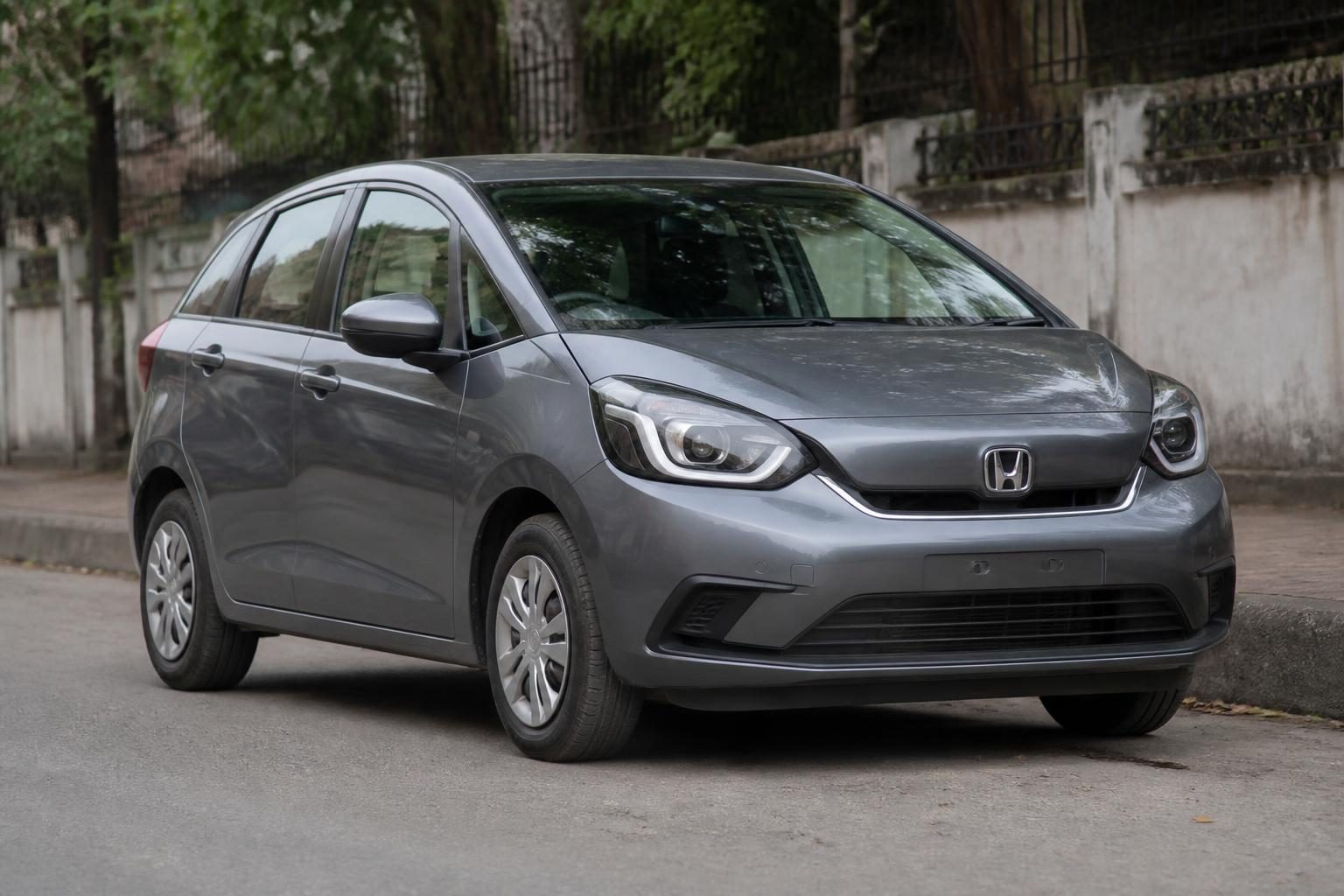 2022 Honda Fit
The hardware is a 1.5-litre DOHC i-VTEC engine paired with the two-motor system and an electric CVT. The fourth-generation Fit halved the thickness of its front pillars for visibility, adopted a body-stabilising front seat that supports the pelvis and lower spine, and made Honda Sensing standard on every type, including a new front wide-view camera and eight sonar sensors. A typical Bangladesh-bound example is a 2022 E:HEV RS with 1,500 cc, 66,000 km and an auction grade of 4, which is an excellent grade, in the 15 to 17 lakh band before duty.
For a family that wants one car for school runs, office traffic and occasional weekend trips, this is a strong option. The boot is smaller than a sedan's, so it is not the pick if you routinely carry bulky luggage.
Honda Fit Petrol
The petrol Honda Fit is the cheaper half of the same nameplate, and Honda's own pricing shows how much cheaper. At launch, the petrol HOME (FF) listed at ¥1,718,200 against ¥2,068,000 for the e:HEV HOME (FF), a premium of roughly 20% for the hybrid system. Both share the same five personality types: BASIC, HOME, NESS, CROSSTAR and LUXE.
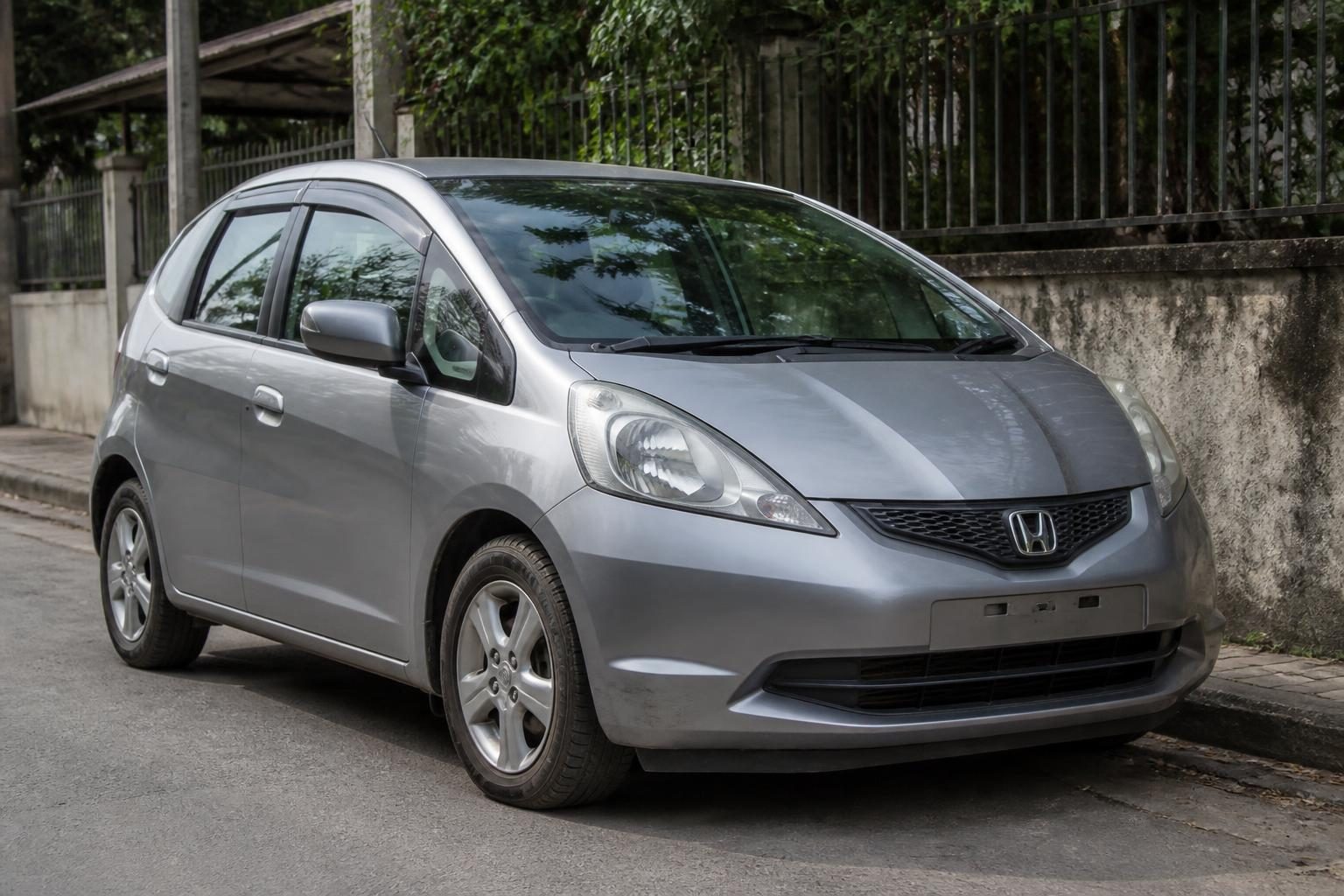 Honda Fit
Under the bonnet sits a 1.3-litre DOHC i-VTEC engine with a conventional torque-converter CVT, rather than the electric CVT used by the hybrid. Honda did not publish a headline WLTC figure for the petrol type in that same launch release, so we are not going to quote one. What we can say confidently is that a 1.3-litre naturally aspirated petrol engine cannot approach 28.8 km/L in city use, and the Corolla and Noah pairs above give you a realistic sense of the size of that gap.
The petrol Fit makes sense for a buyer who wants Honda packaging, a simpler drivetrain and the lowest entry price, and who does modest annual mileage. Choose it on purchase price, not on running cost.
Toyota Noah Hybrid vs Petrol: Which Suits a Growing Family?
This is where the arithmetic gets serious. Seven-seat vans do the highest annual mileage in most households, so a fuel gap here compounds faster than in any small car.
Toyota Noah Hybrid
The Toyota Noah hybrid is the best-documented pair in this article, because Toyota published both figures in the same release. The fourth-generation Noah and Voxy launched on 13 January 2022, and Toyota rated the hybrid at 23.4 km/L WLTC for the Noah X in two-wheel drive. For a 4.7-metre, seven-seat van, that is a striking number.
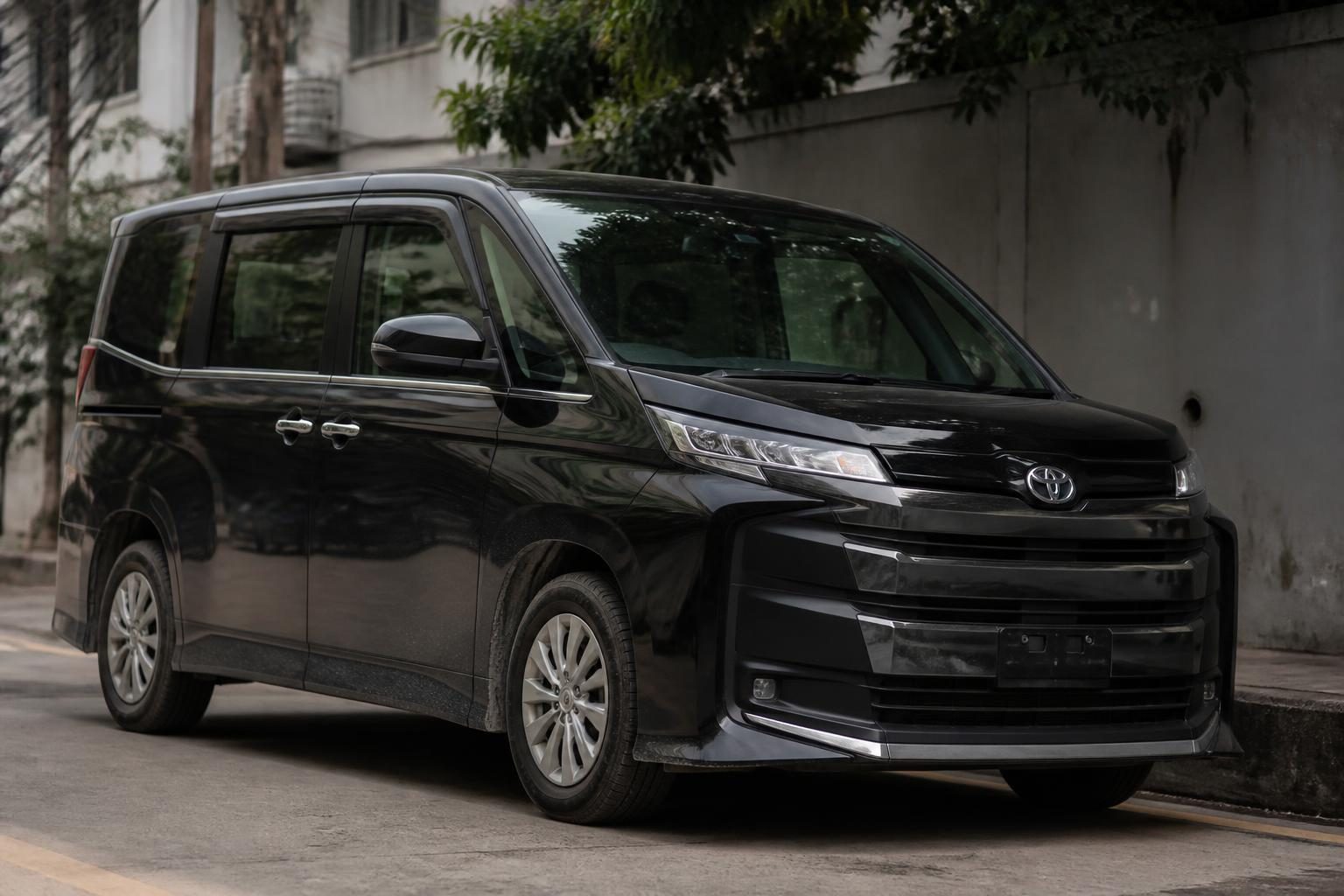 2024 Toyota Noah
It runs a 1.8-litre 2ZR-FXE inline-four with Toyota's new-generation series-parallel hybrid system, the engine rated at 72 kW (98 PS), on the GA-C platform. Dimensions are 4,695 x 1,730 x 1,895 mm on a 2,850 mm wheelbase, with seven seats. Practical touches are the real story: a karakuri universal step that extends below the sliding door, a free-stop rear hatch that stops at any angle, ottoman-equipped second-row captain seats, and third-row seats that slide 745 mm. A representative unit is a 2024 HYBRID S-Z in model code ZWR90W with just 26,000 km and an auction grade of 3.5, in the 28 to 29 lakh band before duty.
Hybrid Noah grades also get Toyota Teammate Advanced Park with a remote function, letting you park or exit a tight space from outside the car using a smartphone. For a family covering 15,000 km or more a year, this is the clearest payback case in the article.
Toyota Noah and Voxy Petrol
The petrol Toyota Noah, and its styling twin the Voxy, remain a completely reasonable choice, and Toyota still calls the petrol version class-leading on economy. The figure is 15.1 km/L WLTC for the Noah X and G in two-wheel drive, from the same January 2022 release. Set against the hybrid's 23.4 km/L, that is about 55% more distance per litre for the hybrid, measured on the same cycle by the same authority.
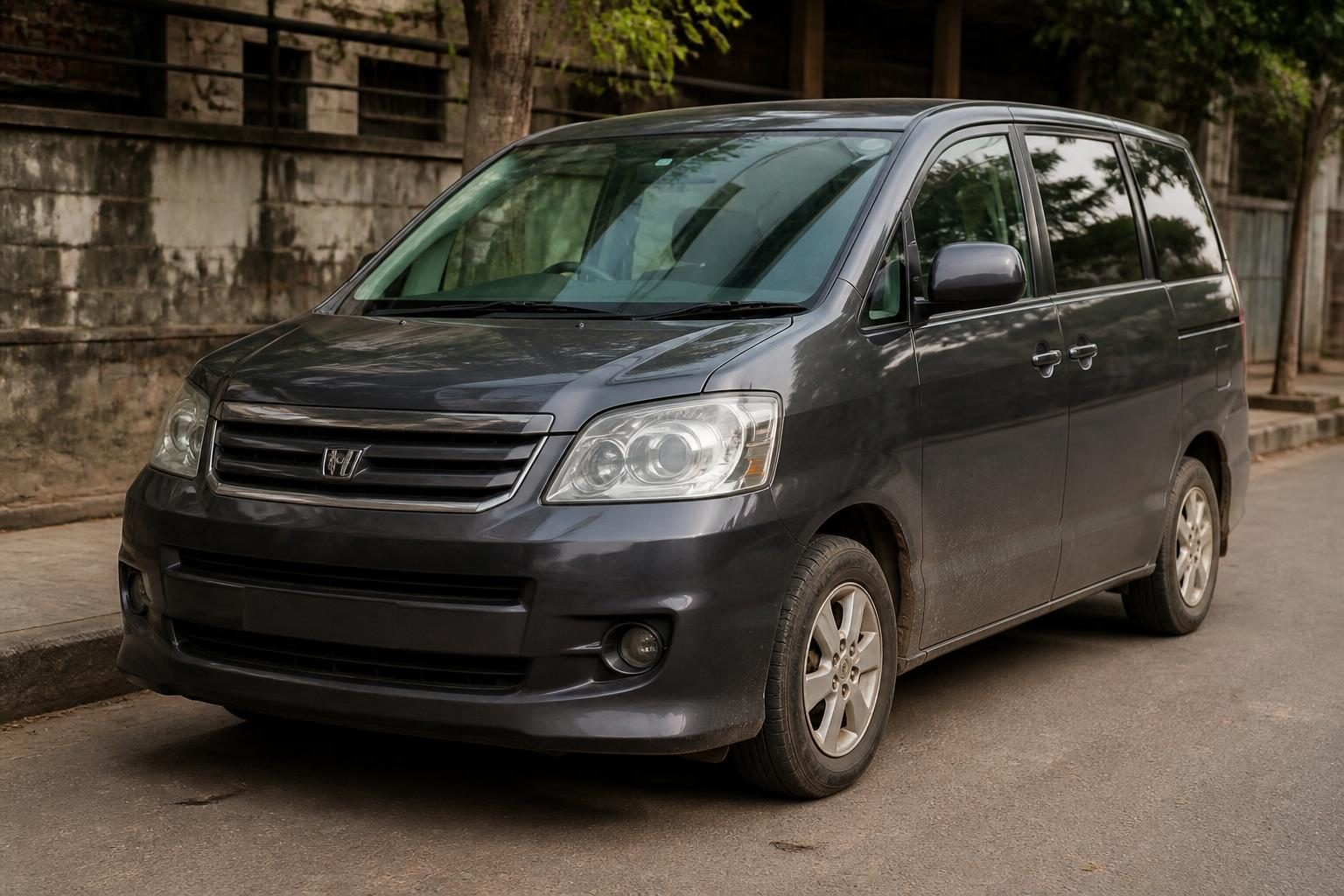 Toyota Noah
The petrol van uses a 2.0-litre M20A-FKS Dynamic Force engine with Direct Shift-CVT, including a 10-speed sport sequential shiftmatic mode that gives it a more manual feel than the hybrid. Everything else is shared: the same GA-C platform, the same universal step and free-stop hatch, the same Toyota Safety Sense package with Proactive Driving Assist, and the same cabin dimensions. The larger engine also feels more relaxed when the van is fully loaded on a long highway run.
Where it loses ground is precisely where Bangladeshi families drive most. A 2.0-litre petrol engine idling through Dhaka traffic with seven people aboard is working hard for very little distance. If most of your kilometres are intercity rather than urban, the petrol Noah closes much of that gap and costs less to buy.
So Which One Actually Costs You Less?
There is no single answer, and anyone giving you one is selling something. The honest version is that hybrid savings scale directly with how much slow city driving you do.
 A car owner checks receipts and notes in a warm home setting.
- Daily Dhaka commuter, tight budget: the Aqua. Highest km/L in this group and the lowest entry price of the three hybrids.
- Small family wanting one car for everything: the Fit e:HEV. Roughly 28.8 km/L WLTC with a cabin that punches above its footprint.
- Family covering 15,000 km or more a year: the Noah Hybrid. The 23.4 versus 15.1 km/L gap compounds fastest here.
- Low annual mileage, mostly weekends: a petrol Corolla or petrol Fit. You will not burn enough fuel to recover the hybrid premium.
- Long intercity runs with a full load: the petrol Noah or Voxy. Cheaper to buy, and the highway gap is much narrower than the city one.
One caution worth stating plainly. The Bangladesh life-cycle study published in the World Electric Vehicle Journal (MDPI, April 2024) found hybrid maintenance made up a larger share of total ownership cost than it did for petrol cars, even though hybrids came out cheaper overall. Budget for that, and buy a car with a documented history.
Buying Either Way, Checked Before You Pay
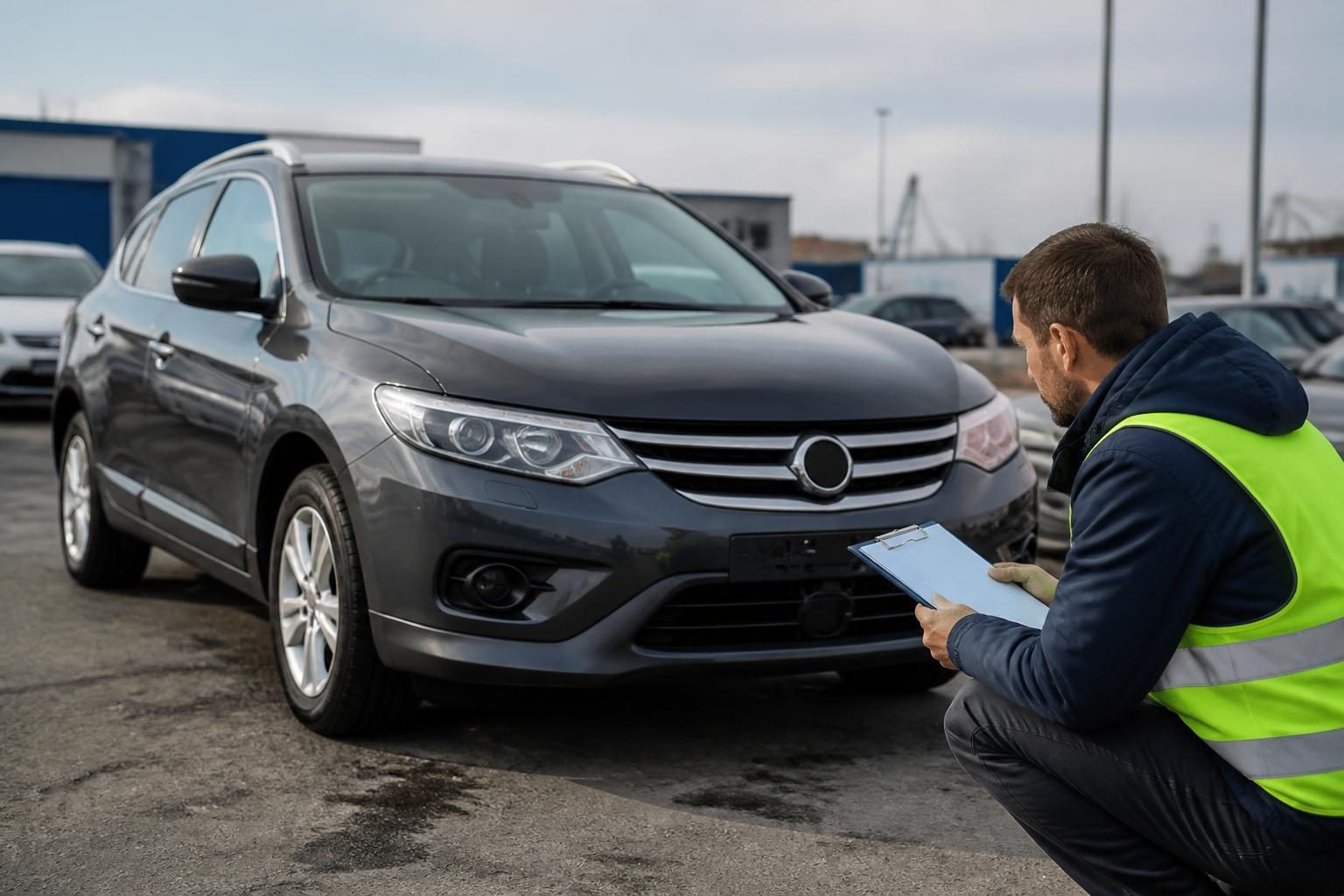 Inspector records details while examining a gray SUV.
Whichever side of the hybrid-petrol question you land on, the risk in a reconditioned Japanese import is condition, not powertrain. Odometer history, accident repair and battery-state uncertainty are what turn a good decision into an expensive one.
Carbarn Bangladesh owns every vehicle it lists, buying directly at Japanese auctions with no middleman in between. Each car comes with two condition reports before you pay anything: the official Japanese auction sheet with its grade, plus an in-house Carbarn inspector report covering paint thickness, underbody, interior and smell. JEVIC pre-shipment certification is completed before the car leaves Japan. Vessels depart weekly, sea transit runs 20 to 25 days, and the whole process from order to pickup takes about four to six weeks, tracked from your dashboard. Payment is in full by international bank transfer, secure card payment or in person at the Banasree office in Dhaka, with Bangla consultation available. Listed prices cover the vehicle, shipping and JEVIC inspection, so estimate the rest with the duty calculator, read the import rules, and see the full process at Carbarn Bangladesh.
The Bottom Line
Hybrids cost more to buy and clearly less to fuel. Toyota's own figures show the gap: 29.0 against 14.6 km/L for the Corolla, 23.4 against 15.1 km/L for the Noah, both on the WLTC cycle. How quickly that pays back is entirely a function of your own kilometres and how many of them are spent crawling.
Work out your realistic annual distance first, then pick the powertrain. Browse the current listings to compare specs and grades, and read how to buy when you are ready for the next step.