


Fuel has become one of the sharpest running costs for car owners in Bangladesh. Octane rose again in June 2026 to Tk 145 per litre, the second increase in six weeks, according to The Daily Star. For anyone driving in Dhaka, that hurts twice over. Dhaka was ranked the slowest major city in the world in a 2023 study of more than 1,200 cities (NBER, via The Week). A separate 2022 study by BUET (Bangladesh University of Engineering and Technology) put Dhaka's average traffic speed at around 4.8 km/h — a figure that aligns with that NBER research. A petrol engine crawling through that congestion spends more time burning fuel at idle than actually moving.
Over three to four years, the gap between a thirsty petrol car and an efficient hybrid adds up to lakhs of taka. The question most buyers reach is not whether a hybrid makes sense. It's which one, and what it actually costs to get one here from Japan.
Key Takeaways
- Octane sits at Tk 145/litre as of June 2026 (The Daily Star). A 30+ km/L hybrid can roughly halve your fuel bill against a 12 km/L petrol car over the same distance.
- Bangladesh only allows vehicles within 5 years of manufacture, so every eligible Japanese hybrid is a 2021 model or newer with a modern hybrid system in good health.
- Only right-hand drive (RHD) cars are permitted, and every reconditioned Japanese hybrid qualifies.
- The four models best suited to Bangladesh roads are the Toyota Aqua, Toyota Prius, Honda Fit e:HEV and Nissan Note e-POWER.
- The vehicle price is only part of the cost. Customs duty, VAT and registration are all separate, so estimate them with the duty calculator before deciding.
Why Does Dhaka Traffic Make Hybrids the Logical Choice?
Hybrids are built for stop-start urban driving, and Dhaka is the world's most extreme version of that condition. At an average speed of around 4.8 km/h (BUET, 2022), Dhaka traffic is exactly where petrol engines waste the most energy and hybrid systems save the most. A petrol-only car idles and crawls, burning fuel while going nowhere. A hybrid switches to its electric motor at low speed, or shuts the petrol engine off entirely. The worse the congestion, the bigger the relative saving.
 Heavy traffic fills a multi-lane city road lined with trees and buildings.
The clever part is regenerative braking. In a normal car, braking throws away energy as heat in the brake pads. In a hybrid, the electric motor runs in reverse when you brake and turns that motion back into electricity, recharging the battery. Every stop in a Dhaka jam becomes a small top-up rather than pure waste.
That is why hybrids often perform close to, or even above, their official city ratings in heavy traffic. Test figures are measured under controlled conditions, but stop-start driving gives the system more chances to recover energy. The result is a fuel bill that behaves very differently from a conventional car's.
Over a year of Dhaka commuting, the difference is real money. At Tk 145 per litre, a car doing 30 km/L simply spends far less than one doing 12 km/L. Our hybrid battery life guide works through the full fuel-savings maths and battery longevity data, so we will not repeat the calculation here.
Which Hybrid Models Make Sense for Bangladesh?
Four hybrids stand out for Bangladeshi buyers importing from Japan. All four clear the 5-year eligibility rule, all are right-hand drive, and all ship by RoRo vessel — RoRo (roll-on/roll-off) car carriers where vehicles drive aboard in Japan and off at a Bangladesh port. Each suits a slightly different buyer, from the fuel-first commuter to the family wanting more space.
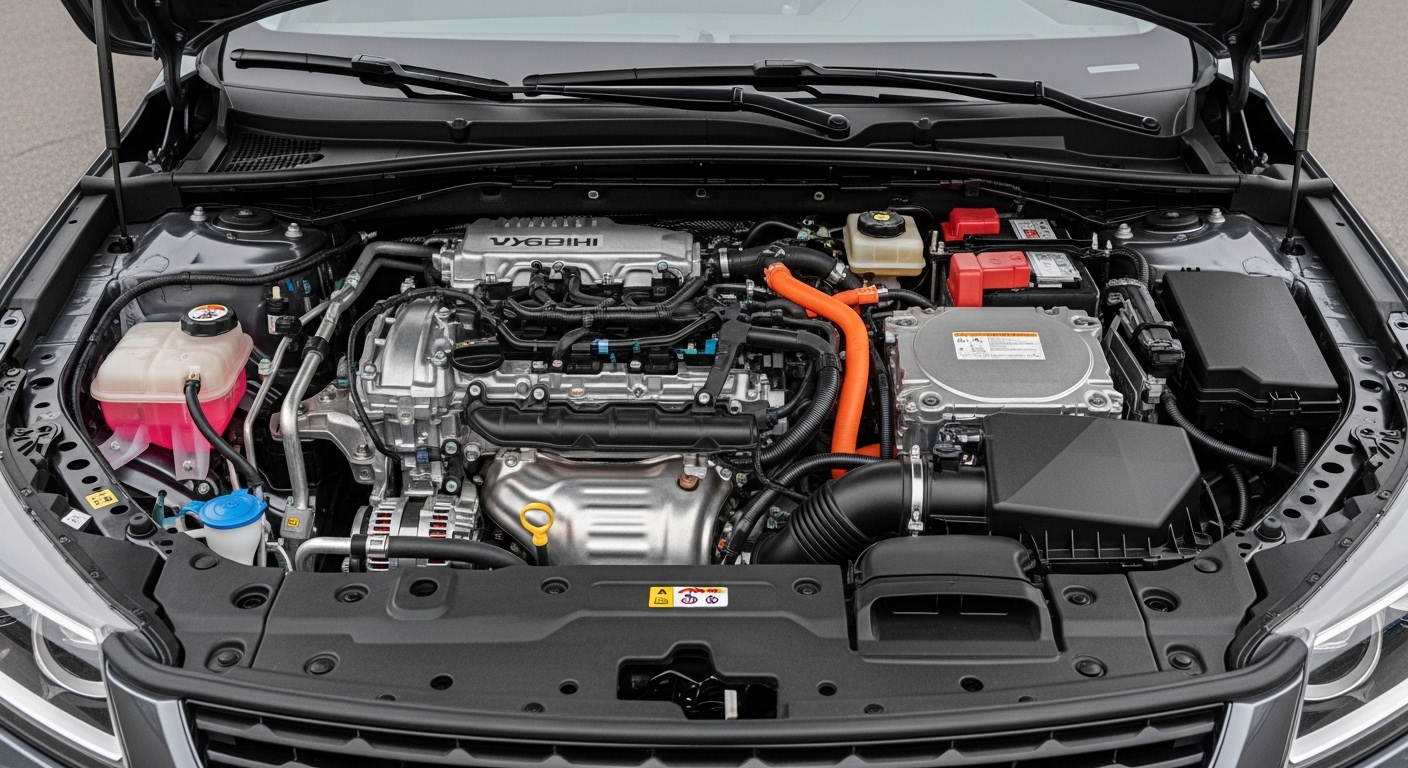 Every hybrid pairs a petrol engine with an electric motor and battery, though each brand does it differently.
One important distinction before you choose: the Nissan Note e-POWER is not a conventional hybrid. Its petrol engine never drives the wheels. It only generates electricity, and an electric motor does all the driving. There is no plug and no charging to worry about. The other three are self-charging hybrids that blend petrol and electric power together.
| Model | Body type | Engine / system | Official fuel economy | Best for |
|---|---|---|---|---|
| Toyota Aqua | Compact hatchback | 1.5L petrol + electric (self-charging) | Up to 35.8 km/L WLTC | Fuel-first buyers, solo commuters, tight budgets |
| Toyota Prius (2023, 60 series) | Sedan | 2.0L petrol + electric (self-charging) | 28.6 km/L WLTC | A larger, more premium and powerful car |
| Honda Fit e:HEV | Compact hatchback | 1.5L petrol + dual-motor e:HEV | 28.8 km/L WLTC | Interior space and everyday versatility |
| Nissan Note e-POWER | Compact hatchback | 1.2L petrol generator + electric drive | 29.5 km/L WLTC | A near-EV feel with no plug |
All figures are official manufacturer WLTC ratings, sourced in each model section below. They refer to specific grades, so real listings may vary.
Toyota Aqua
The Toyota Aqua is the fuel-economy leader of this group and usually the most accessible on price, which is why it is one of the most commonly imported hybrids from Japan. It is a compact hatchback built for exactly the kind of tight, congested driving that defines Dhaka.
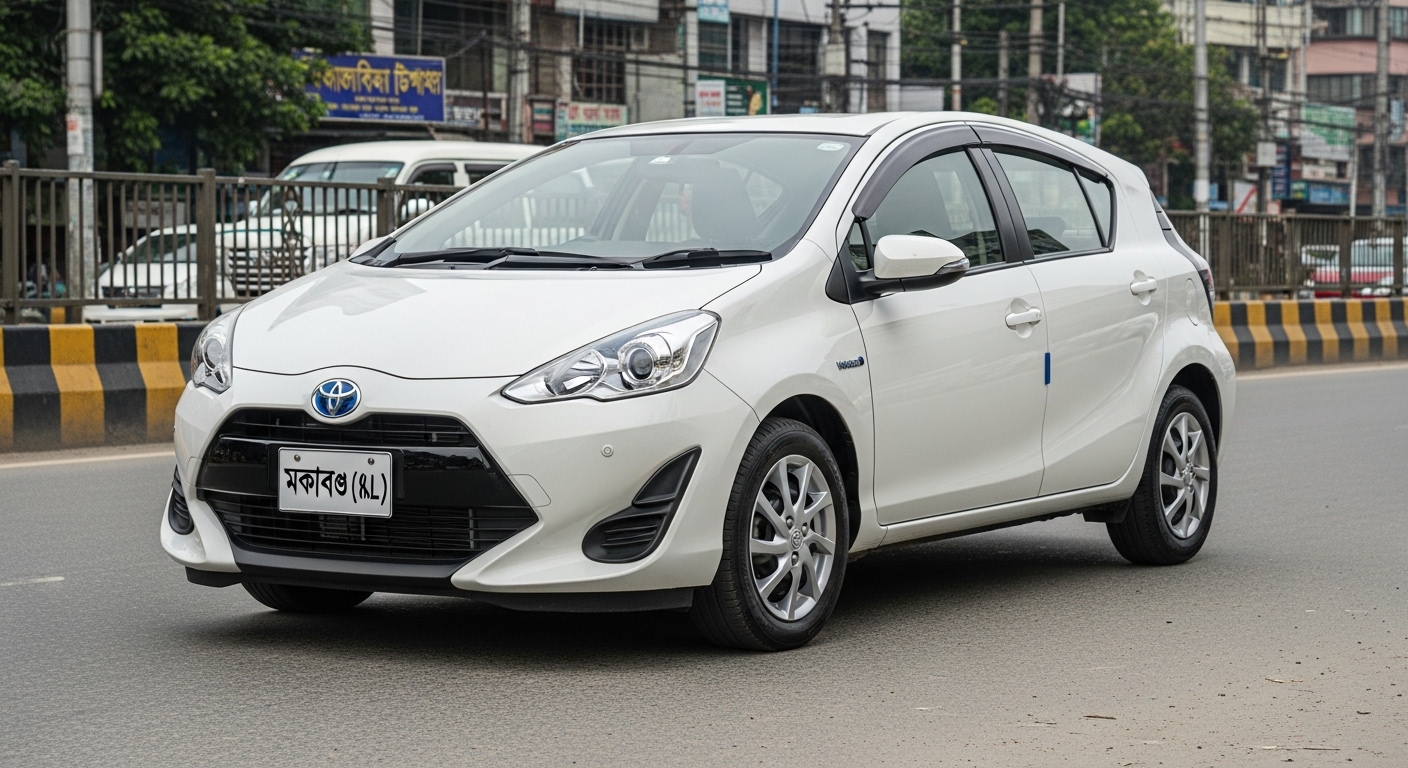 2022 Toyota Aqua
Under the bonnet is a 1.5-litre three-cylinder Atkinson-cycle petrol engine paired with an electric motor, for a system output of about 91 kW (roughly 122 PS). The 2021-onward generation introduced a bipolar nickel-metal hydride battery, a newer chemistry that Toyota says handles a wider temperature range than earlier packs. In its most efficient B grade, the Aqua is rated at up to 35.8 km/L on the WLTC cycle (Toyota, 2021); higher-equipment grades sit a little below that.
You will see grades X, G, Z and the sportier GR Sport come through as imports. The GR Sport trades some economy for firmer suspension and cosmetic trim, while the Z grade is the sweet spot for most buyers, with full equipment and no real fuel penalty. The Aqua suits solo commuters and couples who want maximum fuel savings and a small footprint. It is less ideal for families who need generous rear legroom. Carbarn's listed price for the Aqua — covering the vehicle, shipping and pre-shipment inspection — typically sits in the 18–24 lakh range; duty, VAT and registration are paid separately.
Toyota Prius (2023 60 Series)
The Toyota Prius in its 2023 60-series form is a ground-up redesign, and it is a very different car from the older Prius shapes many Bangladeshi buyers still picture. It is lower, wider and far more driver-focused, with a combined system output of around 196 PS against roughly 121 PS in the previous generation.
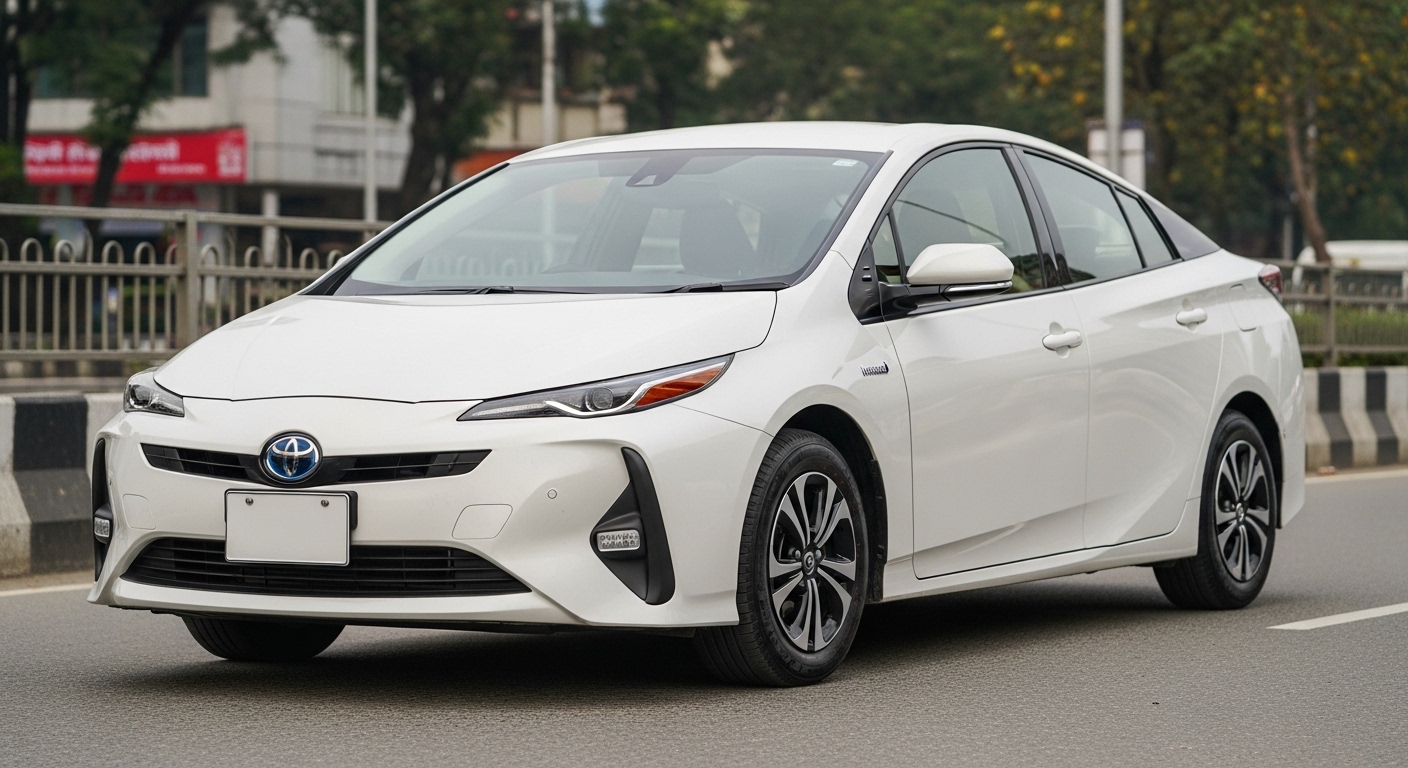 2023 Toyota Prius
The headline 2.0-litre Atkinson-cycle hybrid returns 28.6 km/L on the WLTC cycle in 2WD Z form, while the 1.8-litre grade is rated higher at 32.6 km/L (Toyota, 2023). Both are available as 2WD, with an AWD-e option on some grades. One practical note: the sloping new roofline looks sharp, but rear visibility is tighter than the old shape, which is worth checking if you often park in tight spaces.
The Prius suits buyers who want a premium sedan feel, more power and extra space, and who are comfortable paying into a higher price band. It is not the cheapest of the four, but it is the most complete package. The listed price typically sits in the 30–40 lakh range before duty, reflecting the newer generation and larger platform.
What Makes the Honda Fit e:HEV Worth Considering?
The Honda Fit e:HEV uses a hybrid system that feels noticeably different from Toyota's. Honda's e:HEV is a series-parallel setup running two electric motors — one to generate electricity and one to drive the wheels — with the petrol engine acting mainly as a generator at city speeds. The result is smoother, more electric-like acceleration around town.
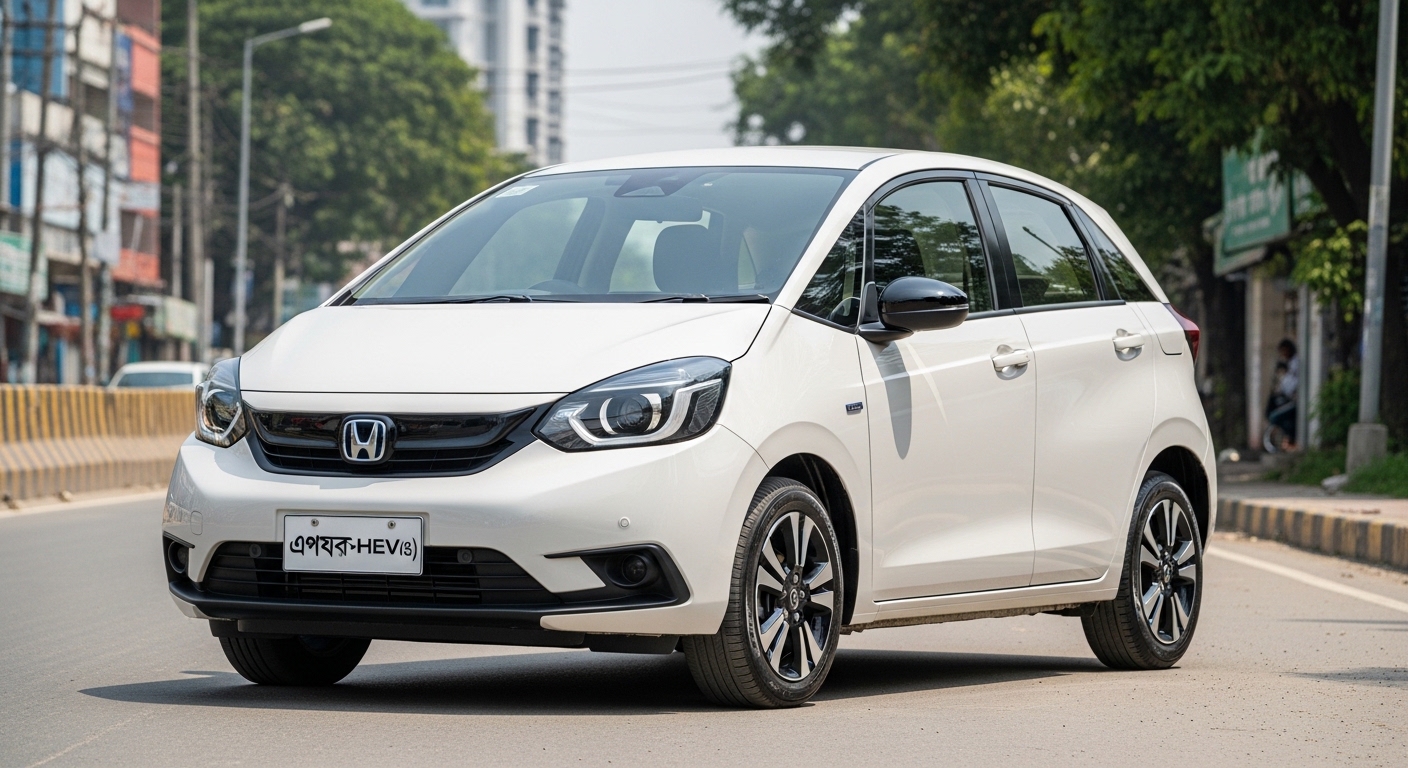 2022 Honda Fit e:HEV
The system pairs a 1.5-litre DOHC i-VTEC petrol engine with the dual-motor e:HEV drive, and Honda's official overall WLTC rating for the Fit e:HEV HOME grade is 28.8 km/L (Honda, 2020), very close to the Aqua on a slightly larger body. Where the Fit really pulls ahead is inside. Its Magic Seat system folds the rear floor completely flat, giving estate-car load space in a compact hatchback. None of the other three offers anything like it.
That space-to-size ratio is better than the Aqua's, which makes the Fit a practical pick for couples who occasionally carry bulky items. It suits buyers who want strong fuel economy and genuine interior flexibility, and anyone who simply prefers Honda's lighter, more eager driving feel to Toyota's. The listed price typically sits in the 20–26 lakh range before duty.
Nissan Note e-POWER
The Nissan Note e-POWER works in a way worth understanding before you buy, because it is not a conventional hybrid at all. Its 1.2-litre petrol engine never turns the wheels — it only runs a generator. A front electric motor of about 85 kW (116 PS) does all the driving, all of the time.
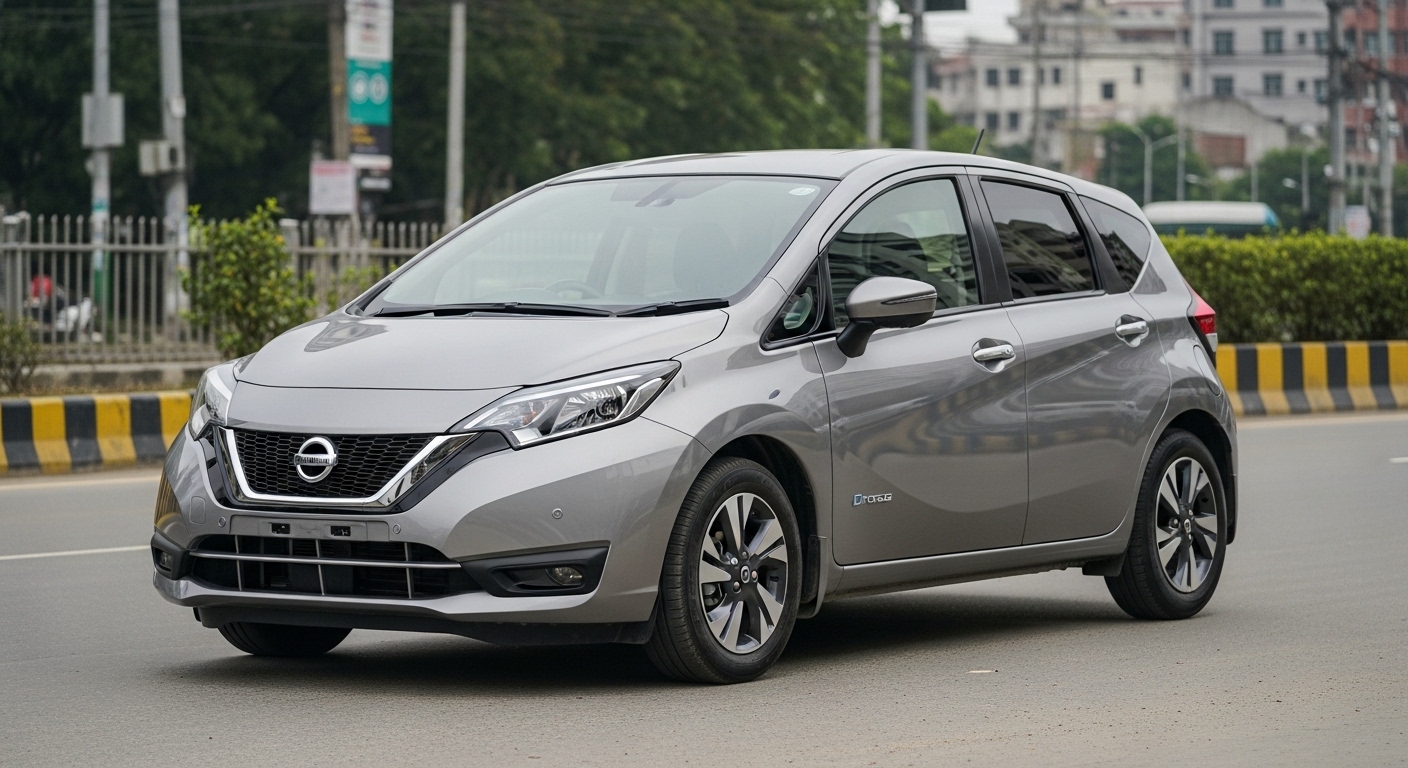 2022 Nissan Note e-POWER
Because power is always electric, the Note drives like an EV: strong, linear pull from a standstill, no gear shifts and a very quiet cabin. The base FWD E13 model is rated at 29.5 km/L on the WLTC cycle (Nissan Japan, 2020), while the AWD version is lower at 23.8 km/L, so confirm the drivetrain on any listing. Crucially, there is no plug. The car charges itself from the petrol engine and from regenerative braking, so you need no charging infrastructure in Bangladesh.
The Note suits drivers who want the closest thing to an EV feel without any charging concerns. Parts availability in Dhaka is more limited than for Toyota or Honda, so line up a trusted workshop before committing. The listed price typically sits in the 20–26 lakh range before duty.
What Does It Cost to Import a Hybrid to Bangladesh?
The listed price on a reconditioned hybrid is not the on-road cost. The listed price covers three things: the vehicle bought at Japanese auction, international shipping to Chattogram or Mongla, and the JEVIC pre-shipment inspection. JEVIC — the Japan Export Vehicle Inspection Centre — is the Japanese government-authorised body that certifies a vehicle's condition, odometer and roadworthiness before it leaves Japan. That gets the car to a Bangladesh port and no further.
What comes next is paid separately at customs: customs duty, supplementary duty, VAT, advance income tax and regulatory duty. After clearance, BRTA (Bangladesh Road Transport Authority) registration is a further separate cost before the car can legally drive on Bangladeshi roads.
Duty is assessed on the vehicle's Yellow Book value — Japan's standardised appraisal figure used for customs purposes. It scales mainly with engine size. Smaller-engine hybrids of 1.2 to 1.5 litres generally fall into lower duty tiers than large-engine cars. The exact rates change with every national budget, which is why quoting a percentage here would only mislead you. Use the duty calculator to get a real number for your specific car.
On timing, plan for about 4 to 6 weeks from confirming your order to collecting the car. The sea crossing itself takes roughly 20 to 25 days. RoRo vessels depart Japan weekly.
What Are the Six Steps from Japan to Your Driveway?
The import journey is more straightforward than most first-time buyers expect. Here are the six steps.
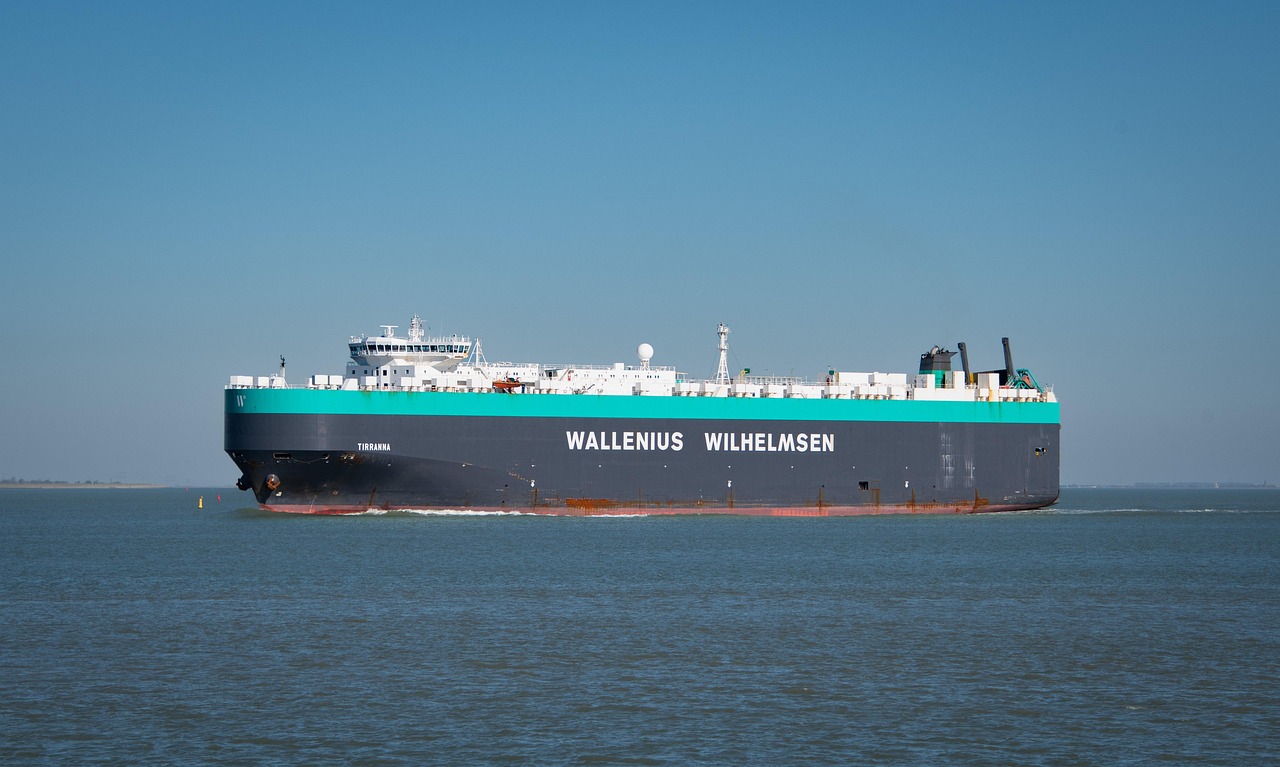 Cars ship from Japan to Chattogram or Mongla on weekly RoRo vessels.
- Browse verified listings. You review the official auction sheet and the in-house inspection report before paying a taka.
- Choose your destination port, either Chattogram or Mongla.
- Pay in full, by international bank transfer, secure card payment, or in person at the Dhaka office in Banasree.
- Inspection and shipping. Carbarn completes JEVIC pre-shipment certification and loads the car onto the next weekly RoRo vessel.
- Track your shipment through the online dashboard. Invoice, bill of lading and inspection documents are available to download at any stage.
- Customs and delivery. Your clearing agent handles customs, with all required paperwork supplied.
The full process is covered step by step at carbarn.com.bd/how-to-buy.
Which Hybrid Suits You?
Once the economics are clear, the choice usually comes down to how you drive and what you carry.
Tightest budget and best fuel economy: the Toyota Aqua. The listed price typically sits in the 18–24 lakh range before duty. It holds the highest verified economy of the group, and its compact size is a genuine advantage on Dhaka's narrower roads.
Premium feel and more power: the Toyota Prius 2023. The listed price is typically in the 30–40 lakh range before duty — a meaningful step up. It is the largest and most capable car here, worth the premium if interior space and driving feel matter to you.
Interior space in a compact: the Honda Fit e:HEV. The listed price typically sits in the 20–26 lakh range before duty. The Magic Seat is a real practical bonus, economy is close to the Aqua's, and it suits anyone who occasionally needs to carry bulky items.
Most EV-like to drive: the Nissan Note e-POWER. The listed price is also typically in the 20–26 lakh range before duty. If conventional automatics feel flat to you, this changes the experience completely, with no plug required.
Still unsure? Our team in Dhaka can talk through your daily route, family size and budget in Bangla or English.
How Do You Buy a Japanese Hybrid Through Carbarn Bangladesh?
Carbarn Bangladesh is a direct importer, which means it owns every vehicle it lists, sourced straight from Japanese auctions with no brokers or third parties in the chain. Before you pay, you see two independent inspections: the official Japanese auction sheet, graded by the auction house, plus Carbarn's own in-house inspector report covering paint, body panels, odour, tyre tread and visible condition. JEVIC pre-shipment certification is included, and you track everything through a real-time customer dashboard.
The listed price is all-inclusive for getting the car to a Bangladesh port, covering the vehicle, shipping and inspection. Customs duty, VAT and registration remain the buyer's responsibility, and you can estimate them any time with the duty calculator. Payment is by bank transfer, secure card, or in person at the Banasree office, open Monday to Saturday, 08:00 to 17:00, with Bangla consultation available. You can browse current hybrid listings by model on the Carbarn website.