An Aqua can look like the sensible choice for Dhaka. It is compact, easy to park and designed around efficient city driving. The Yaris Cross, however, promises a higher driving position and a more useful shape for family life.
That makes this comparison more than a simple SUV-versus-hatchback question. The real issue is whether a Yaris Cross example gives you enough practical benefit to justify any price difference from a comparable Aqua. We’ll compare fuel economy, dimensions, seating position, condition, import eligibility and everyday buyer fit. For wider context, see this guide to hybrid cars in Bangladesh.
Quick Answer
- The Yaris Cross Hybrid G suits buyers who want a higher seating position and crossover practicality.
- The Aqua is likely better for tight Dhaka parking and cost-focused commuting.
- In Toyota Japan’s 2022 Hybrid G catalogue, the Yaris Cross is rated at 30.2 km/L WLTC and 31.3 km/L JC08.
- Across second-generation Aqua versions sold from 2021 onward, Toyota lists WLTC figures from 29.3 to 35.8 km/L. Toyota lists the current 2026 Aqua at 30.0–34.3 km/L, depending on grade and drivetrain.
- The specific 2022 Yaris Cross needs a chassis-date check before it can be treated as importable in 2026.
What is the Toyota Yaris Cross Hybrid G?
The Toyota Yaris Cross Hybrid G is a compact, front-wheel-drive crossover with a 1,490cc hybrid engine and a taller body than the Aqua. Toyota Japan’s 2022 catalogue lists 91 PS, 120 Nm and dimensions of 4,180 × 1,765 × 1,590mm (Toyota Japan, Yaris Cross Hybrid G catalogue, 2022).
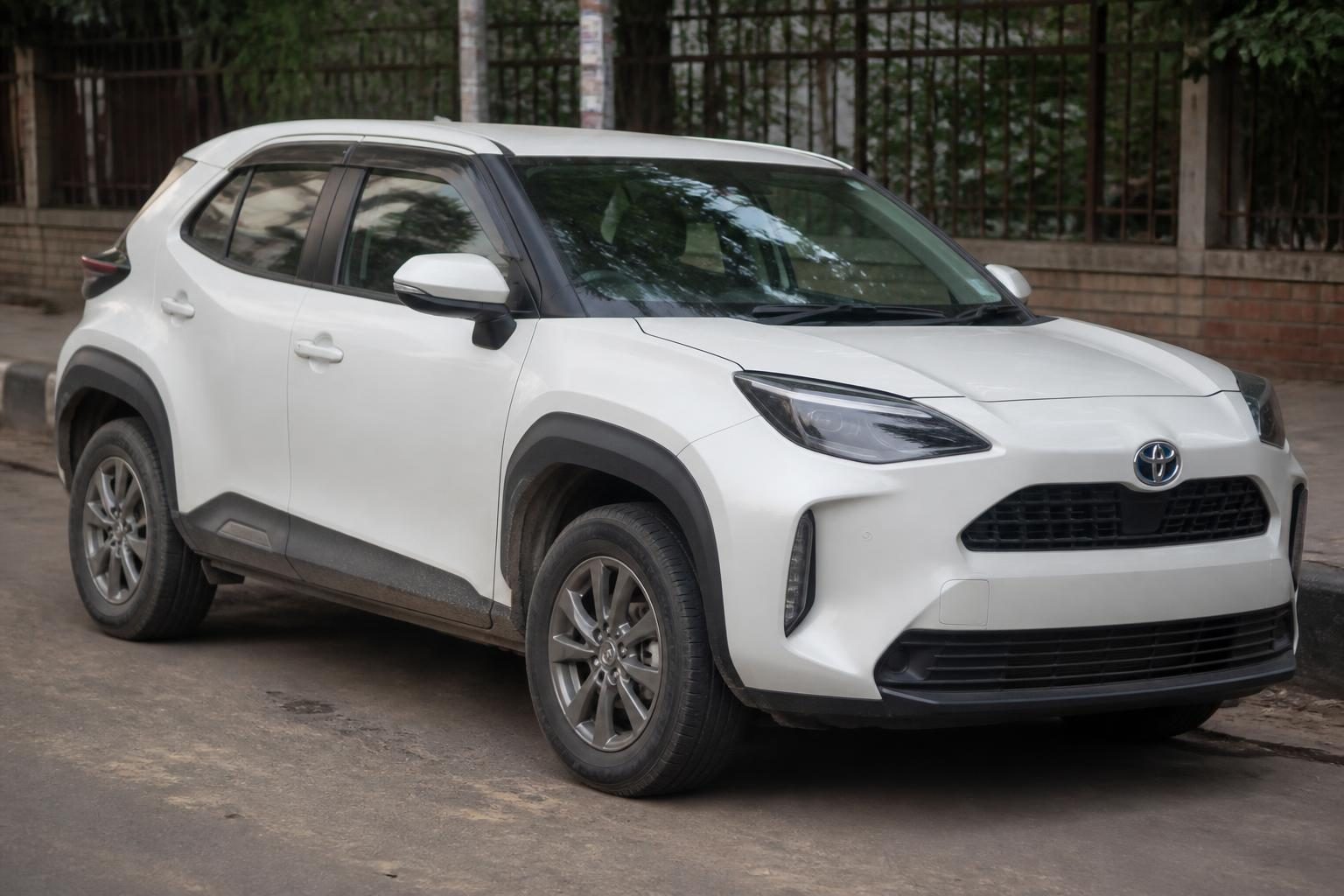 2022 Toyota Yaris Cross
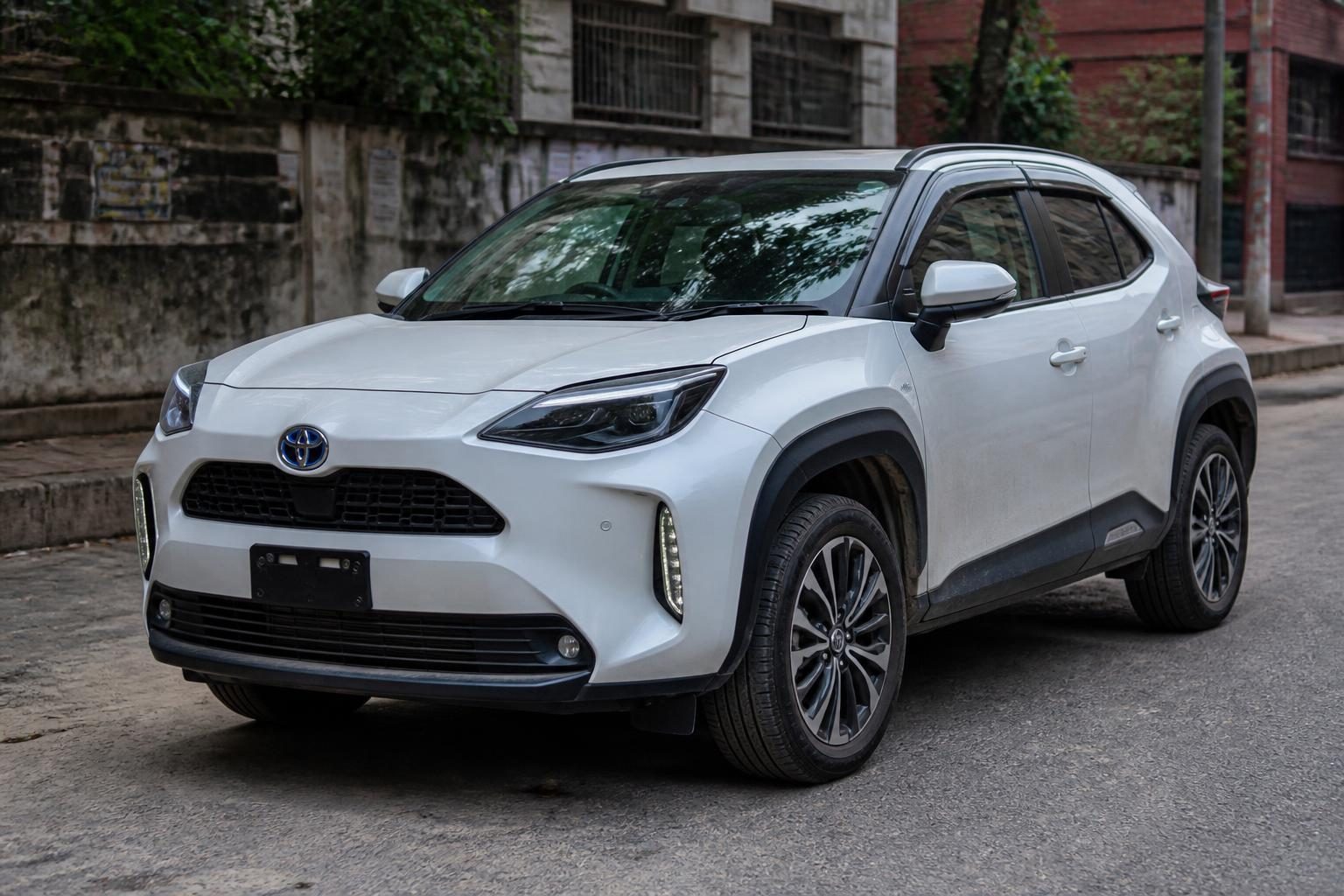 2022 Toyota Yaris Cross Hybrid G
The supplied vehicle is a 2022 Hybrid G with the MXPJ10 model code, front-wheel drive, automatic electric CVT and 67,000 kilometres. Its auction grade is 3, and the vehicle page records a 1,500cc M15A-FXE engine. These are stock details from the 2022 Toyota Yaris Cross vehicle page, not general claims about every Yaris Cross.
The crossover body gives you a more upright seating position and easier cabin access. Compared with a 2022 Aqua G, which measures 4,050 × 1,695 × 1,485mm, the 2022 Yaris Cross Hybrid G is 105mm taller and 70mm wider. Aqua dimensions vary by grade, so this is not a universal comparison. The difference can still feel useful when loading children, shopping or larger bags.
In Toyota Japan’s 2022 catalogue, the Hybrid G returns 30.2 km/L under WLTC testing and 31.3 km/L under the older JC08 test. These are laboratory figures, not expected Dhaka mileage. Traffic, air-conditioning use, tyre condition and driving style will change the result.
The model year alone does not confirm import eligibility. Carbarn currently marks the listing as eligible, subject to confirmation of the chassis date, current import rules and required documentation. Check those points before ordering in 2026.
The Toyota Aqua’s strengths
The Toyota Aqua remains the more rational choice when compact size, easy parking and efficient urban driving matter most. Toyota Japan's model-level summary lists the current-generation Aqua at 4,100 × 1,695 × 1,485mm, with five seats. Grade-specific dimensions vary, while second-generation Aqua versions sold from 2021 onward span 29.3–35.8 km/L WLTC; Toyota lists the current 2026 model at 30.0–34.3 km/L (Toyota Japan, Aqua fuel-economy information, 2021-present).
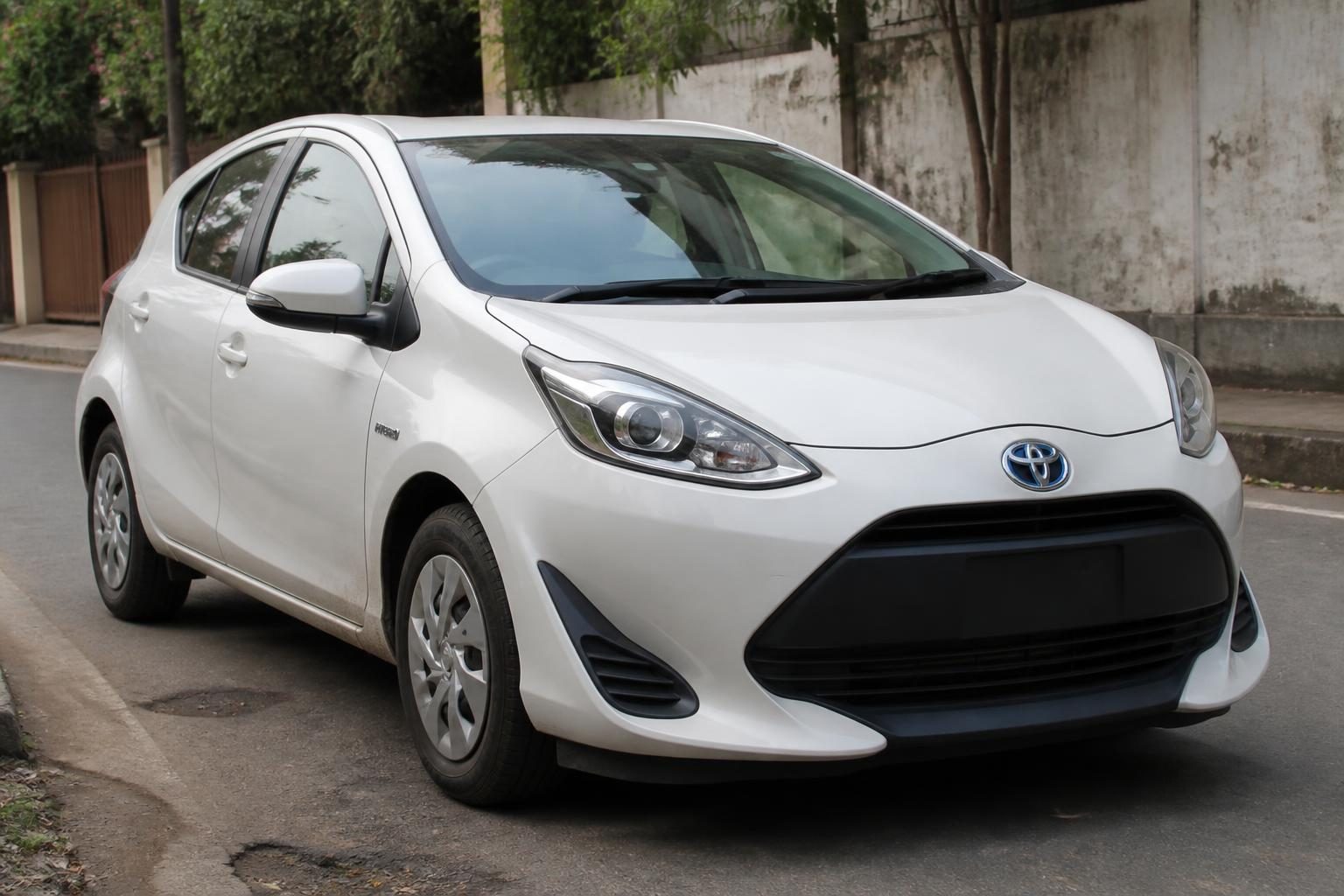 2021 Toyota Aqua
Against the 2022 Yaris Cross Hybrid G, a 2022 Aqua G is 130mm shorter and 70mm narrower. Those differences sound modest, but they matter when you are turning into a crowded lane or squeezing into parking beside a market. Other Aqua grades and model years can differ, so check the exact specification. The lower body also feels more familiar if you prefer a conventional hatchback driving position.
Toyota’s official figures vary by Aqua grade, model year and drivetrain. The current generation includes front-wheel-drive and full-time four-wheel-drive versions, while the previous generation used different dimensions, powertrains and test figures. A 2022 Aqua G measures 4,050 × 1,695 × 1,485mm, while some 2022 grades are 1,505mm tall. Comparing a 2022 Yaris Cross with an older Aqua without identifying the Aqua generation can produce a misleading result.
Aqua fuel economy may beat the Yaris Cross in some versions. That makes it attractive for solo commuting, school runs and stop-start traffic. It is not, however, a seven-seater or a substitute for a larger family vehicle.
No dedicated Aqua vehicle listing has been confirmed in the live Bangladesh stock feed used for this article. Treat the Aqua as a general import recommendation, and check any individual example for its grade, drivetrain, condition and chassis date.
Toyota Yaris Cross Hybrid vs Aqua: what does the extra money buy?
Whether a Yaris Cross example costs more than a comparable Aqua in the Bangladesh market depends on the matched year, grade, condition and import costs. If it does, the extra spend buys a taller and wider crossover body, not necessarily a major fuel-economy advantage. Toyota’s official 2022 figures show 30.2 km/L WLTC for the Hybrid G, while the current Aqua range spans 29.3–35.8 km/L WLTC depending on version (Toyota Japan, Yaris Cross Hybrid G catalogue, 2022; Toyota Japan, Aqua fuel-economy information, 2021-present).
| Factor |
Toyota Yaris Cross Hybrid G |
Toyota Aqua, current generation |
Why it matters in Bangladesh |
| Body style |
Compact crossover |
Compact hatchback |
The Yaris Cross gives a more upright driving position |
| Seats |
5 |
5 |
Neither is a seven-seater |
| Length |
4,180mm |
4,050mm (2022 Aqua G) |
The Aqua G is shorter, but check the exact grade |
| Width |
1,765mm |
1,695mm (2022 Aqua G) |
The Aqua may feel less demanding in narrow parking areas |
| Height |
1,590mm |
1,485mm (2022 Aqua G); some grades 1,505mm |
The Yaris Cross has a taller crossover shape |
| Engine |
1,490cc M15A-FXE hybrid |
Generation and grade dependent |
Confirm the individual Aqua specification |
| Official economy |
30.2 km/L WLTC; 31.3 km/L JC08 |
29.3–35.8 km/L WLTC across second-generation versions; 30.0–34.3 km/L for the current 2026 model |
Compare the same model year, grade and test cycle |
| Drivetrain |
Front-wheel drive |
FF or full-time 4WD by grade |
Four-wheel drive can affect economy and cost |
| Ground clearance |
Exact stock figure not verified |
Varies by grade and generation |
Do not rely on unsupported figures |
| Boot layout |
Exact stock capacity not verified |
Varies by generation |
Shape and folding seats matter in practice |
| Import age |
Chassis-date check required |
Same rule applies |
Model year alone is insufficient |
The Yaris Cross is only slightly longer, so its advantage is not simply size. Its wider, taller shape changes how you enter, sit and load the vehicle. That may matter more to a small family than a few extra millimetres of length.
The Aqua makes more sense when your main needs are fuel efficiency and easy city manoeuvring. The Yaris Cross makes more sense when you will use the taller body every week. Why pay for crossover packaging if you mostly drive alone and park in tight spaces?
Which hybrid makes more sense for Dhaka driving?
Choose the Yaris Cross when its 105mm height advantage and wider crossover packaging solve a regular problem. Toyota’s 2022 specification confirms the 1,590mm body height, but it does not provide a verified ground-clearance figure for the specific stock vehicle (Toyota Japan, Yaris Cross Hybrid G catalogue, 2022).
The Yaris Cross is worth considering if:
- You regularly carry children, shopping or luggage.
- You prefer a higher seating position.
- You find low hatchbacks uncomfortable to enter and exit.
- You want a compact vehicle with crossover styling.
- You face uneven road edges and speed breakers, but understand that body height is not the same as ground clearance.
- You can verify the vehicle’s eligibility and condition.
The Aqua is probably the better fit if:
- Most journeys involve solo commuting or school runs.
- You often use narrow streets and crowded parking areas.
- The lowest practical running cost matters most.
- You prefer a smaller, lighter-feeling hatchback.
- Paying more for the Yaris Cross would mean accepting weaker condition or higher mileage.
Both vehicles suit stop-start hybrid driving. Neither should be selected on the hybrid badge alone. The Yaris Cross does not automatically deliver dramatically lower fuel costs, and the Aqua is not automatically too small for every family.
What should you check before importing either hybrid?
For a 2026 import, the chassis date matters as much as the model year. In its 2016 enquiry, Bangladesh Customs stated that a used vehicle more than five years old is not importable, with age calculated from the first day of the year after chassis manufacture (NBR Customs, Enquiry 115 on determining vehicle age, 2016). Because that source is historical, confirm the current Import Policy Order and Customs requirements before treating any 2022 vehicle as importable in September 2026.
Confirm the vehicle’s eligibility
Check the exact chassis or manufacture date first. Then confirm the applicable age calculation, right-hand-drive configuration, export documents and pre-shipment inspection requirements. A vehicle described as a 2022 model may still fall outside the permitted window, depending on its chassis date and the point of shipment.
The supplied Yaris Cross listing records 67,000 kilometres and auction grade 3. Those facts help you assess the vehicle, but they do not remove the need for an independent eligibility and condition review. The listing also records two exterior paint-condition notes involving the roof and bonnet.
Check the hybrid condition
Review the auction sheet, odometer consistency, hybrid battery condition, accident history, underbody, suspension and tyres. Confirm that the quoted fuel figure matches the exact grade and drivetrain. A current Aqua example needs the same checks, even if its model year looks newer.
For costs, use the vehicle duty calculator. Customs duty, VAT, registration and port-clearance charges depend on the individual vehicle and are separate from the vehicle’s Japan-side price.
Choosing between the Toyota hybrids
The Yaris Cross Hybrid G produces 30.2 km/L WLTC. Across second-generation Aqua versions sold from 2021 onward, Toyota lists up to 35.8 km/L WLTC, while the current 2026 Aqua is listed at 30.0–34.3 km/L. Toyota says these catalogue figures vary by grade and driving conditions (Toyota Japan, Yaris Cross Hybrid G catalogue, 2022; Toyota Japan, Aqua fuel-economy information, 2021-present).
| Your priority |
Better fit |
Reason |
| Easy city parking |
Aqua |
Smaller footprint and narrower body |
| Higher seating position |
Yaris Cross |
Taller crossover packaging |
| Family loading |
Yaris Cross |
More upright shape and easier access |
| Maximum official economy |
Aqua, depending on grade |
Some versions have higher WLTC figures |
| Compact urban transport |
Aqua |
Easier to place in dense traffic |
| Uneven roads |
Yaris Cross, subject to verified clearance |
Taller body may feel more suitable |
| Valid 2026 import status |
Whichever has the valid chassis date |
Model year alone is not enough |
Choose the Yaris Cross if family loading, seating position and crossover practicality matter every week. Choose the Aqua if compact urban transport and parking ease matter more. Do not pay extra for the Yaris Cross simply because it looks like an SUV.
How does Carbarn help you compare a Japan-sourced hybrid?
In 2026, the How to Buy guide describes a six-stage process covering vehicle selection, ordering, payment, inspection and shipping, shipment tracking, and customs delivery. That process is useful when the car is in Japan rather than sitting in a local showroom.
Carbarn’s Japan-sourced vehicle process lists Japan-sourced vehicles with the official auction sheet and an in-house inspection report. Its stated service also includes JAAI pre-shipment certification, shipping documentation and dashboard shipment tracking. Vehicles are in Japan, so local test drives and same-day purchases do not apply.
The listed price covers the vehicle, shipping and JAAI inspection. It does not cover Bangladesh customs duty, VAT, registration or port-clearance charges. Review the Toyota Yaris Cross listings, Toyota vehicles available from Japan and Bangladesh import eligibility rules before making a decision.
The specific 2022 Yaris Cross remains subject to a chassis-date check before it can be treated as importable in 2026. The same age, right-hand-drive and documentation checks apply to any Aqua example.
The Yaris Cross is the stronger choice when its taller body and family-friendly shape solve a real weekly need, and when a comparable example is priced fairly. The Aqua is the sharper fit for tight Dhaka parking, compact dimensions and cost-focused commuting. Check condition, generation and eligibility before comparing badges, and use the Toyota Yaris Cross model page only after confirming that the individual vehicle meets the current rules.