Park a Toyota C-HR next to almost anything else in its price bracket and the difference is obvious from fifty metres away. The boomerang LED headlights, the deep creases along the doors, the roofline that drops away like a coupé: nothing else coming out of a Japanese auction at this money looks remotely like it.
That same roofline is also the reason a fair number of owners end up with regrets.
This guide is for buyers weighing that trade-off honestly. Three 2022 C-HR units are listed for import to Bangladesh right now, all first-generation hybrids, all eligible under the five-year rule, and all with very different stories on their inspection reports. We will go through the real specifications, label the fuel economy figures properly instead of repeating the lab number everyone quotes, read all three auction grades plainly, and finish with a straight answer on who this car suits and who should walk away.
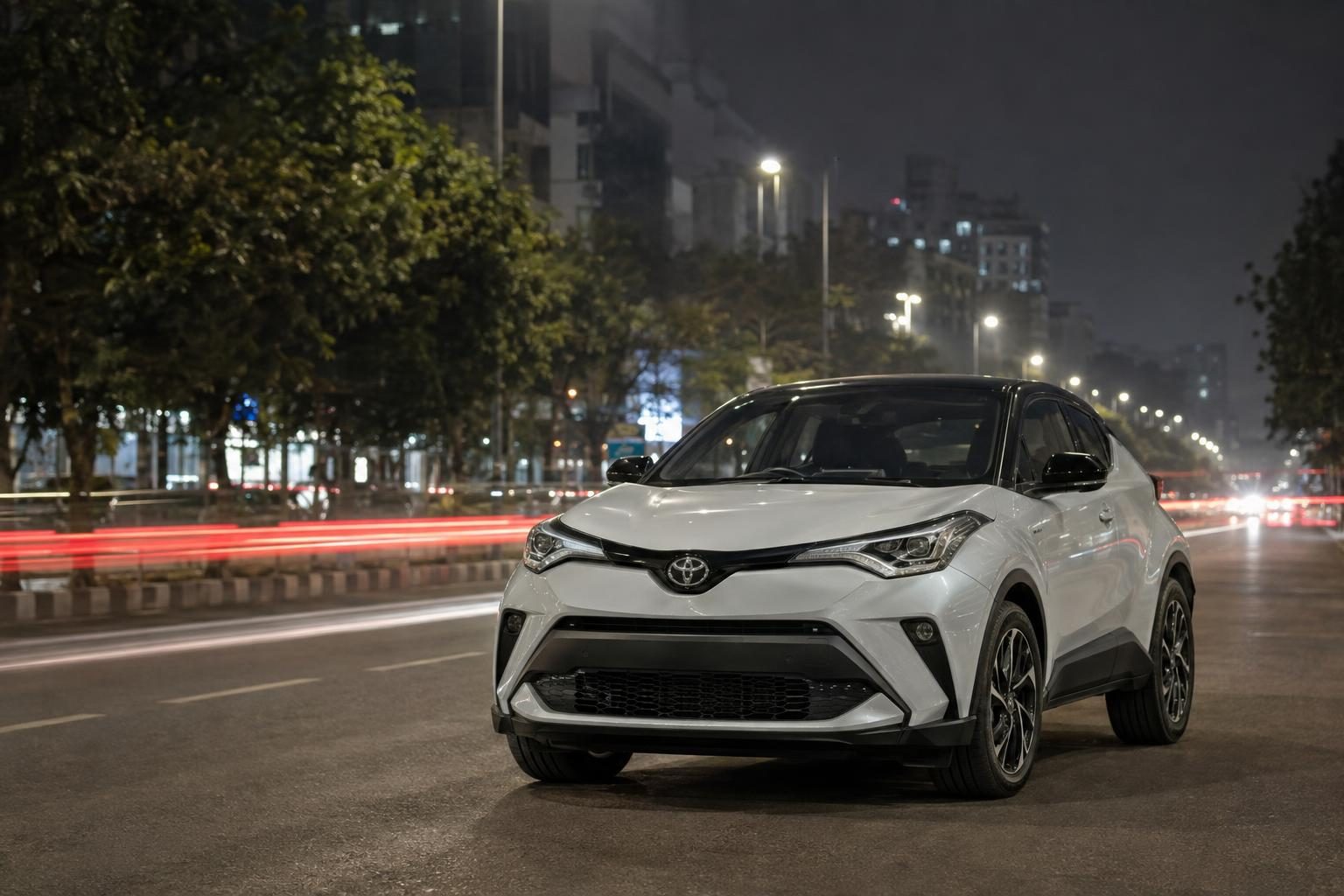
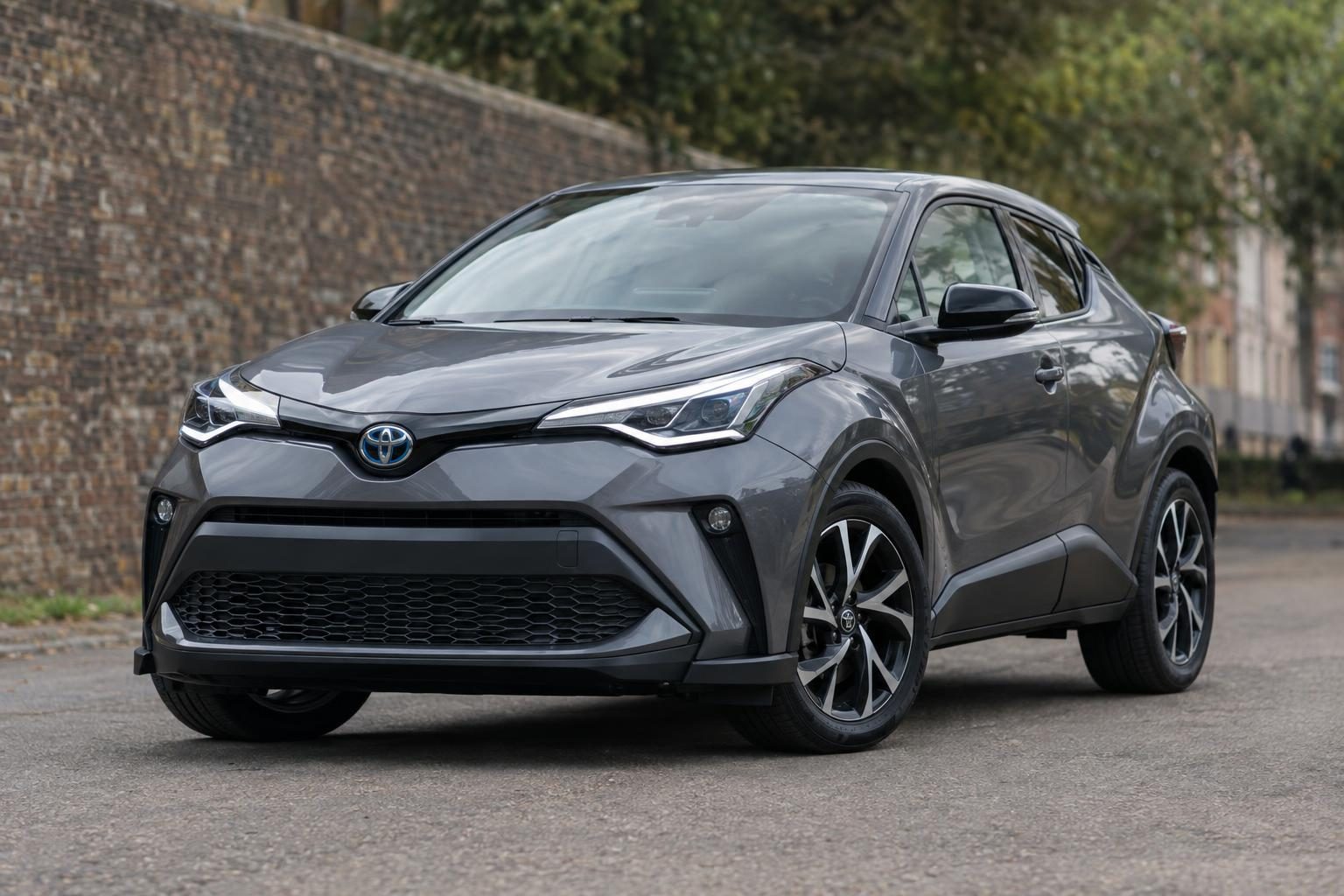 Front-quarter view of a grey Toyota C-HR.
At a Glance: the 2022 Toyota C-HR 1.8 Hybrid
- Listed price band: the ৳17 to ৳19 lakh range. That covers the vehicle, shipping and pre-export inspection only. Customs duty, VAT, AIT and BRTA registration are separate and paid by you. calculate your C-HR's import duty and VAT.
- Real-world fuel use in Dhaka: roughly 18 to 20 km/L from owner reports. The 30.2 km/L figure on spec sheets is a JC08 laboratory rating, not a driving result.
- Boot: 377 litres (auto-data.net). Fine for a weekly shop, tight for airport runs.
- Rear headroom: genuinely limited by the coupé roofline. This is the car's main compromise.
- What you can import: first generation only, 2016 to 2022. The second-generation car never went on sale in Japan.
- Market context: reconditioned SUV imports into Bangladesh rose from 1,209 units in FY2019-20 to 5,392 in FY2024-25, a 346% jump, according to BARVIDA figures reported by Prothom Alo in 2025.
What Is the Toyota C-HR, and Which Generation Can You Import?
Only one C-HR generation is legally importable into Bangladesh: the first, built from 2016 to 2022. Toyota accounted for more than 23,000 of Bangladesh's SUV registrations between 2020 and October 2024, far ahead of Nissan's roughly 6,000, on BRTA data reported by Prothom Alo. The C-HR is the style-led entry in that Toyota line-up.
Toyota built the C-HR on the TNGA-C platform, the same underpinnings as the Corolla, and aimed it squarely at buyers who found the RAV4 too big and the Yaris too plain. The name is short for Coupé High-Rider, which tells you the priority order straight away: the silhouette came first, and the packaging worked around it.
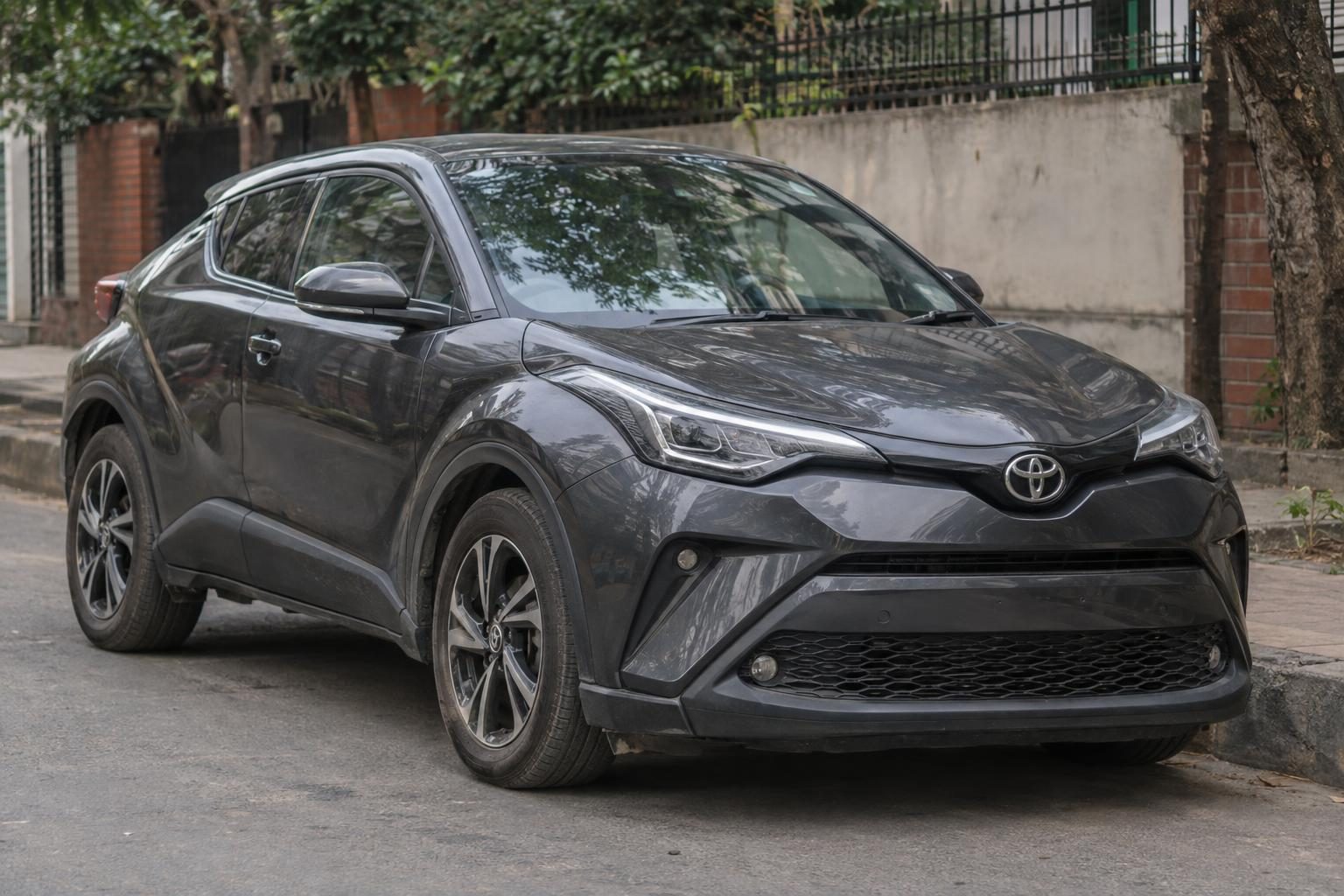 2022 Toyota C-HR
First generation or second generation, and why the difference matters
The first-generation C-HR was sold in Japan in right-hand drive, which is what makes it eligible here. Bangladesh permits reconditioned imports under five years old, and 2022 first-generation cars sit comfortably inside that window.
The second-generation C-HR, launched in 2023, is a different situation. Toyota sold it in Europe and Australia but never put it on the Japanese domestic market, so there is no Japan-auction right-hand-drive stock to buy. If you read a Bangladeshi article quoting a 2.0-litre hybrid C-HR, it is describing a car you cannot import.
All three units covered here carry the model code ZYX11, the facelifted first-generation hybrid. That is the correct scope, and it is worth checking on any listing you look at elsewhere.
The one engine you will actually find here
Every Bangladesh-eligible C-HR uses the same drivetrain, so there is no engine decision to make. The listings confirm engine code 2ZR-FXE, 1,798 cc, an inline four-cylinder DOHC petrol unit paired with an electric motor through a CVT automatic, driving the front wheels.
The petrol engine produces 98 hp on the listing specification. The electric motor adds 72 hp, and Toyota rates the combined system output at 122 hp, with the petrol engine contributing 142 Nm of torque (auto-data.net). That same source records 0 to 100 km/h in about 11 seconds and a top speed near 170 km/h. If you see a C-HR advertised locally at 200 km/h, that number is invented.
Front-wheel drive is the only option on these cars. Toyota offered all-wheel drive on the turbocharged petrol C-HR, which was not produced for the Japanese market in this form, so no 1.8 hybrid you import will have it.
Design and Specs: What the C-HR's Styling Actually Costs You
The C-HR's dimensions are modest for something marketed as an SUV: 4,385 mm long, 1,795 mm wide and 1,550 mm tall on the listing specifications, riding on a 2,640 mm wheelbase. Those numbers matter more than the badge. It is Corolla-length, which is why it threads through Dhaka side streets better than most crossovers wearing the same label.
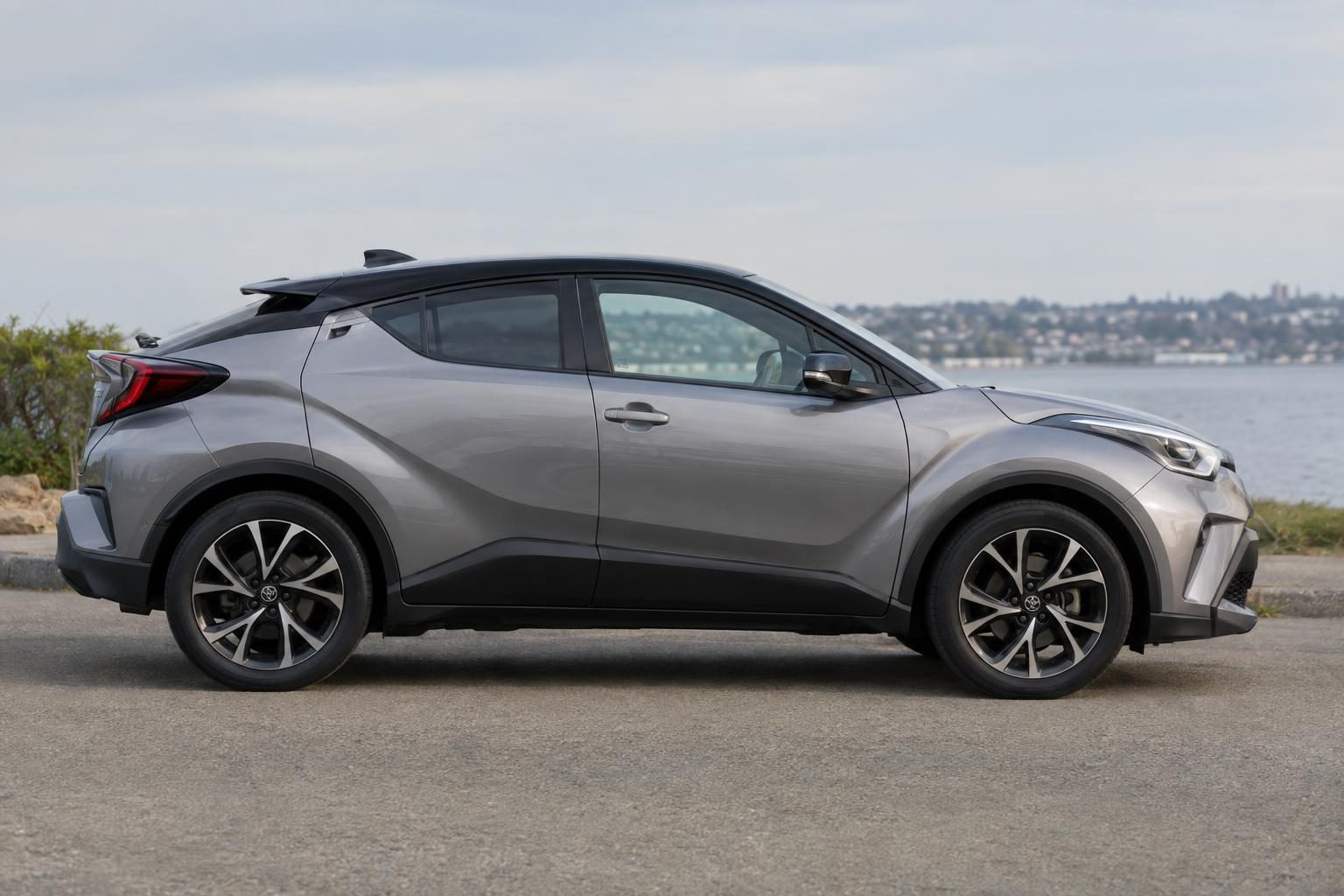 Toyota C-HR side profile with its sharply sloping roofline and high rear door handles.
Exterior: the roofline that defines everything else
The sloping roof is not a styling flourish added late. It is the starting point of the whole design, and every other decision follows from it.
Toyota hid the rear door handles high in the C-pillar so the car reads as a two-door from the side. The doors themselves are deeply sculpted, with a crease that runs from the front wheel arch up into the rear haunch. The boomerang-shaped LED headlamps and the wraparound tail lights complete a look that has aged unusually well for a 2016 design.
The 2020 facelift, which covers all 2022 cars, brought a revised front bumper, updated lighting graphics and minor trim changes. The silhouette is unchanged from launch.
At 1,795 mm wide, the C-HR is not a narrow car. It handles most Dhaka lanes fine, but if your regular route includes genuinely tight gullies or a cramped basement car park, measure before you commit. Rear visibility is the other practical cost of the design. The rear glass is small and high, and the thick C-pillars create real blind spots when reversing.
Interior: excellent up front, honest about the back
The front cabin is the C-HR's strongest room. Toyota angled the centre console towards the driver, used soft-touch materials on the upper dash and gave the whole thing a cockpit feel that a Vezel does not quite match at this money.
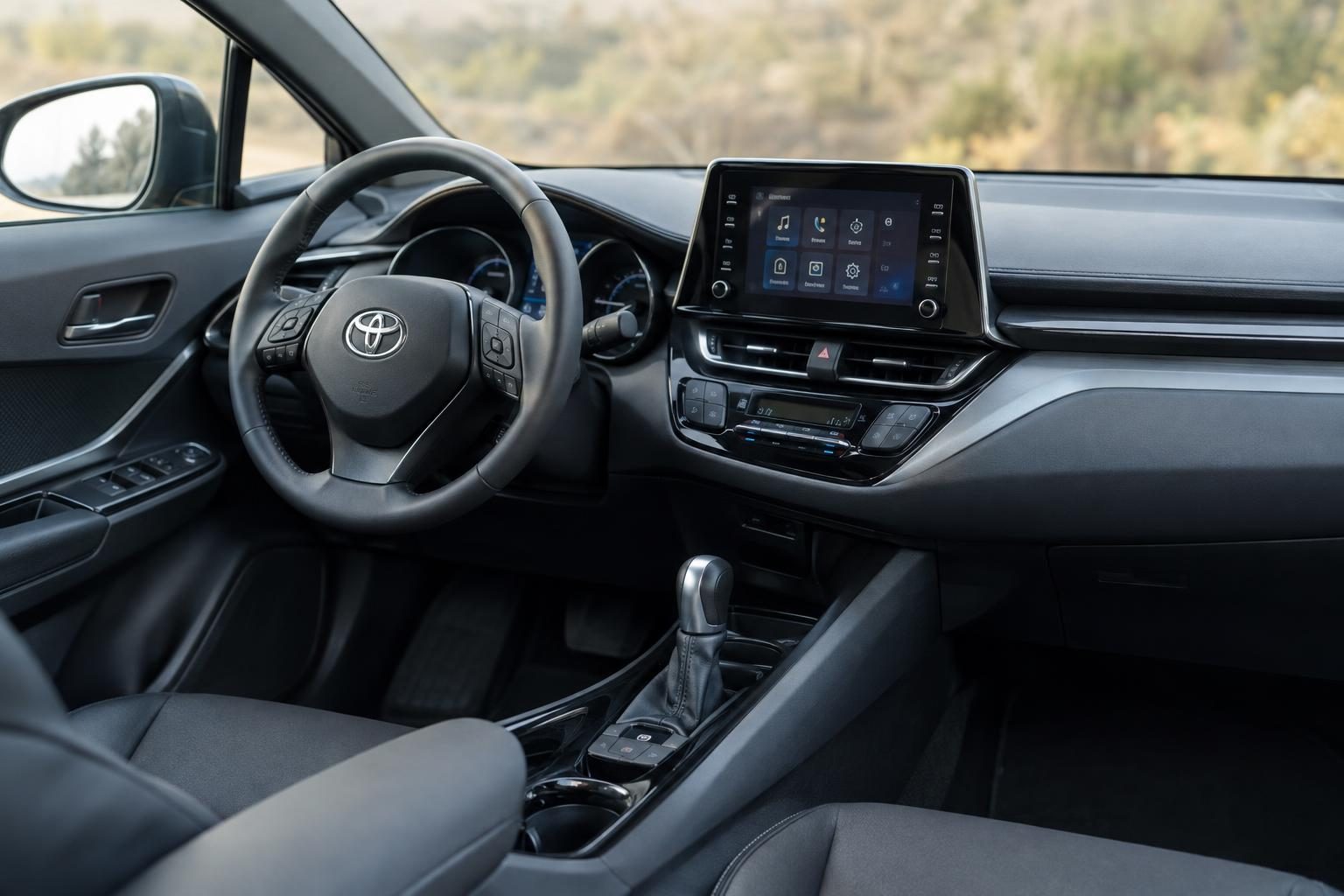 Toyota C-HR dashboard, touchscreen and centre console viewed from the front seats.
Standard equipment across all three listed units includes air conditioning, power windows, steering adjustment, UV filter glass, foldable rear seats and toned glass. On safety, the listings record multiple airbags, anti-lock brakes, electronic brake-force distribution, brake assist, traction control and an anti-theft system. One of the three also lists fog lights.
Now the part competing articles skip. Rear headroom is genuinely compromised. The listings record a cabin height of 1,210 mm, and the roofline is at its lowest exactly where a rear passenger's head sits. Adults over roughly 170 cm will have their hair brushing the lining, and they will notice it on any trip longer than twenty minutes. Children and shorter adults are fine. Three adults across the back on a regular basis is not what this car is for.
Boot space is 377 litres. That is 73 litres more than the third-generation Vezel e:HEV (RV5, ~304 L) but 16 litres less than the second-generation Vezel (RU, 393 L) — generation matters when you are comparing boot space. That is enough for a full weekly shop or two cabin bags. It is not enough for four people's airport luggage without folding a rear seat down.
Fuel economy: the numbers, labelled properly
This is where most C-HR articles in Bangladesh go wrong. The figure you see quoted everywhere, 30.2 km/L, is real, but it is a JC08 rating: Japan's old laboratory test cycle, now discontinued, certified through the Japanese Ministry of Transport and listed on cars-japan.net. JC08 typically overstates real driving by 25 to 35%.
The European WLTP figure for the same 1.8 hybrid is 4.9 L/100 km combined, around 20.4 km/L, per wltpinfo.com. WLTP is a tougher, more modern cycle and lands much closer to reality.
| Test cycle |
Figure |
What it is |
Use it for |
| JC08 (Japan, discontinued) |
30.2 km/L |
Old laboratory cycle |
Historical comparison only |
| WLTP (Europe, current) |
~20.4 km/L (4.9 L/100 km) |
Modern laboratory cycle |
A realistic benchmark |
| Owner reports, Dhaka city |
18 to 20 km/L |
Actual driving |
Budgeting your monthly fuel |
Sources: cars-japan.net (JC08), wltpinfo.com (WLTP), Bangladeshi owner reports for real-world figures.
Plan your fuel budget on 18 to 20 km/L and you will not be disappointed. Anything above that is a bonus on a good week.
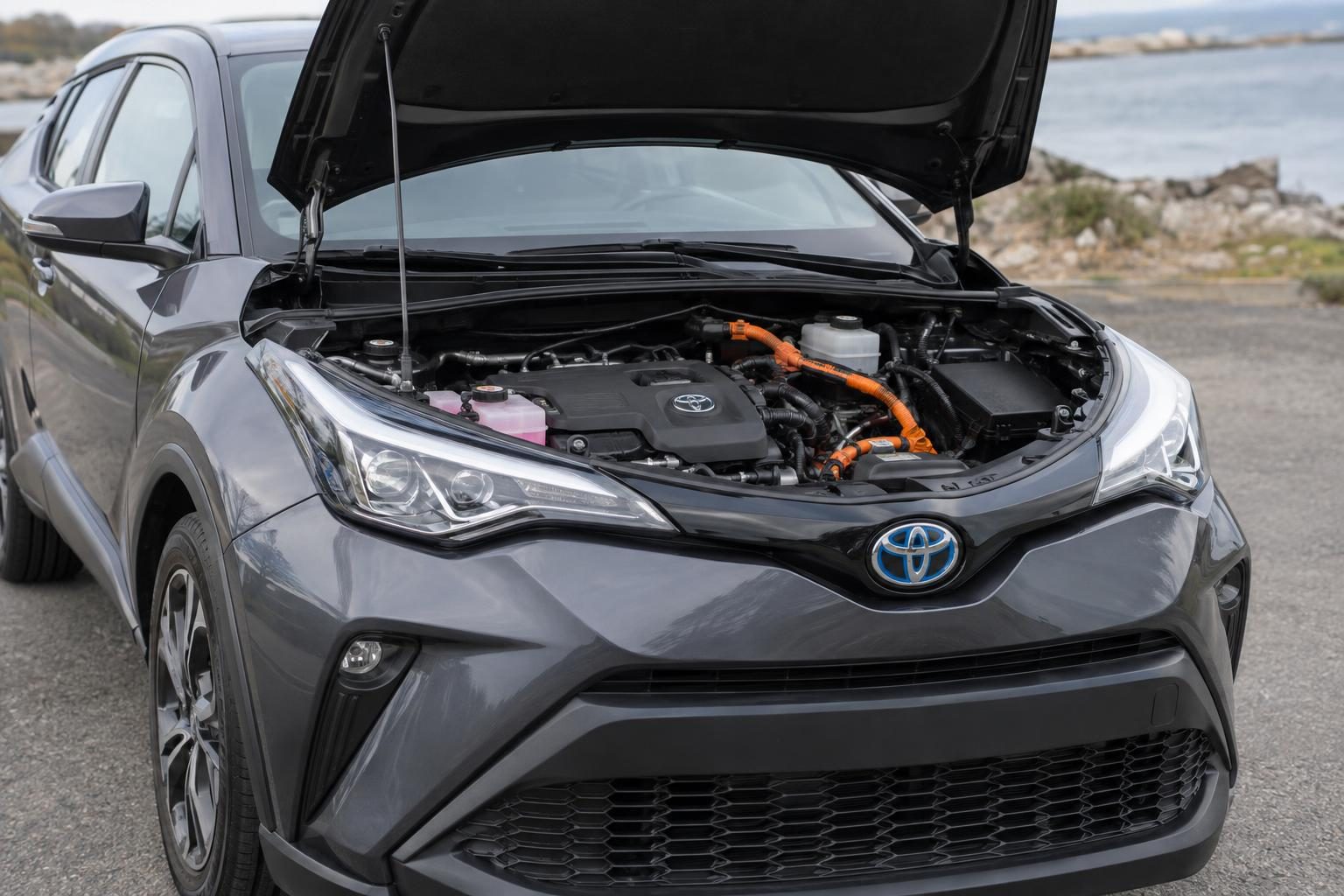 Toyota C-HR hybrid engine bay with orange high-voltage cabling.
Worth understanding why the C-HR does so well in Dhaka specifically. Hybrids recover energy under braking and run on the motor alone at crawling speeds. Gulshan-to-Motijheel at 8am, which destroys a conventional petrol car's economy, is the condition this drivetrain was designed around. On a clear highway run the advantage narrows considerably.
Which JDM Trim Did Your C-HR Leave Japan In?
Japanese-market C-HRs came in several grades, and the difference shows up in the cabin rather than under the bonnet. Every grade uses the same 1.8 hybrid drivetrain, so trim affects equipment and resale appeal, not performance or economy.
S is the base hybrid grade: fabric seats, the standard safety package, a smaller display and steel-look wheel covers or basic alloys depending on the year.
G adds the visible upgrades most buyers notice: better seat material, a larger touchscreen, auto-folding mirrors and larger alloy wheels.
G-LED layers premium LED headlamps on top of G specification, which is the single most noticeable exterior upgrade on a C-HR.
Mode Nero is a Japan-market appearance package with blacked-out exterior detailing. It is cosmetic, popular domestically, and does not change equipment meaningfully.
GR Sport brings a body kit, retuned suspension and unique wheels. These are rare in the Bangladesh import stream and generally sit above the price band discussed here.
One practical note: do not assume a trim from photographs. Grade badging is inconsistent and sellers sometimes guess. The auction sheet issued in Japan records the exact grade, and you should ask to see it before you agree a price. Two C-HRs at the same odometer reading can be a grade apart, and that gap is worth real money at resale.
Three 2022 Toyota C-HRs Listed for Import to Bangladesh
All three units on the Toyota listings page are 2022 facelift first-generation ZYX11 hybrids, identical mechanically, identical in dimensions, and all confirmed eligible under the five-year import age limit. What separates them is odometer reading, auction grade and what the inspection reports actually record. Read those three things and you have read the whole decision.
A quick word on the grading scale, since it drives everything below. Japanese auction houses score cars from 1 to 6, where 4 and above is very good, 3.5 is sound with normal age-related marks, and R is a separate category meaning repaired.
The 90,000 km Grade 3.5 Unit in Yellow
The 2022 Toyota C-HR at 90,000 km is the sensible default for most buyers, and it is the one we would point a first-time importer towards. Its auction sheet reads grade 3.5, and the in-house inspection carried out after purchase recorded no damage at all: no dents, no scratches worth listing, clean underbody, no windscreen damage, normal interior smell, no cigarette burns and an undamaged dashboard. That is an unusually quiet report for a car with 90,000 km behind it.
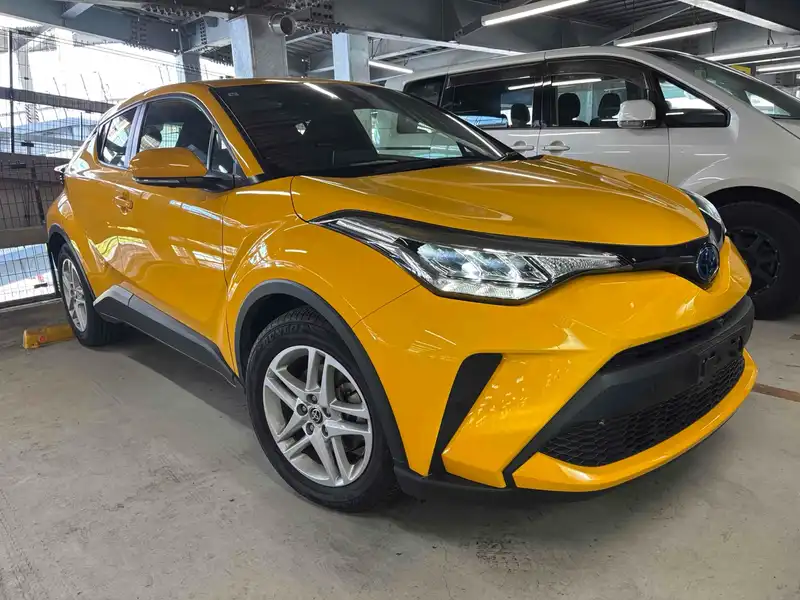 Yellow Toyota C-HR photographed from the front left.
On specification it is the standard car: 2ZR-FXE 1,798 cc hybrid, 98 hp from the petrol engine and 122 hp combined system output, CVT automatic, front-wheel drive, five seats, 4,385 mm long on a 2,640 mm wheelbase. Tyre tread measures 3 mm front and rear, which is serviceable rather than new. Budget a set within the first year or so, but it is not an immediate job.
At 90,000 km this car sits in the sweet spot of the Japanese auction market. It is high enough that the first owner absorbed the steep part of the depreciation curve, and low enough that the 2ZR-FXE, an engine with a long record of running past 200,000 km without drama, has plenty left. Listed in the ৳17 lakh band, it is also the cheapest of the three by a small margin. Best suited to buyers who want the cleanest paperwork and no first-year surprises.
The 54,000 km Grade R Unit in Yellow
The 2022 Toyota C-HR at 54,000 km has the lowest odometer of the three by a wide margin, and it carries an auction grade of R. That letter deserves a proper explanation rather than a footnote, because it is the single most misunderstood thing on a Japanese auction sheet.
R means repaired. At some point in the car's life it sustained damage that was fixed, and the auction inspector recorded that fact. The crucial point is that R is a disclosure, not a warning. Japan's auction system requires the inspector to flag repair history, which means an R-grade car is documented, not hidden. The genuinely risky purchase is an undocumented car with no sheet at all, and that describes a great deal of what circulates in the local market.
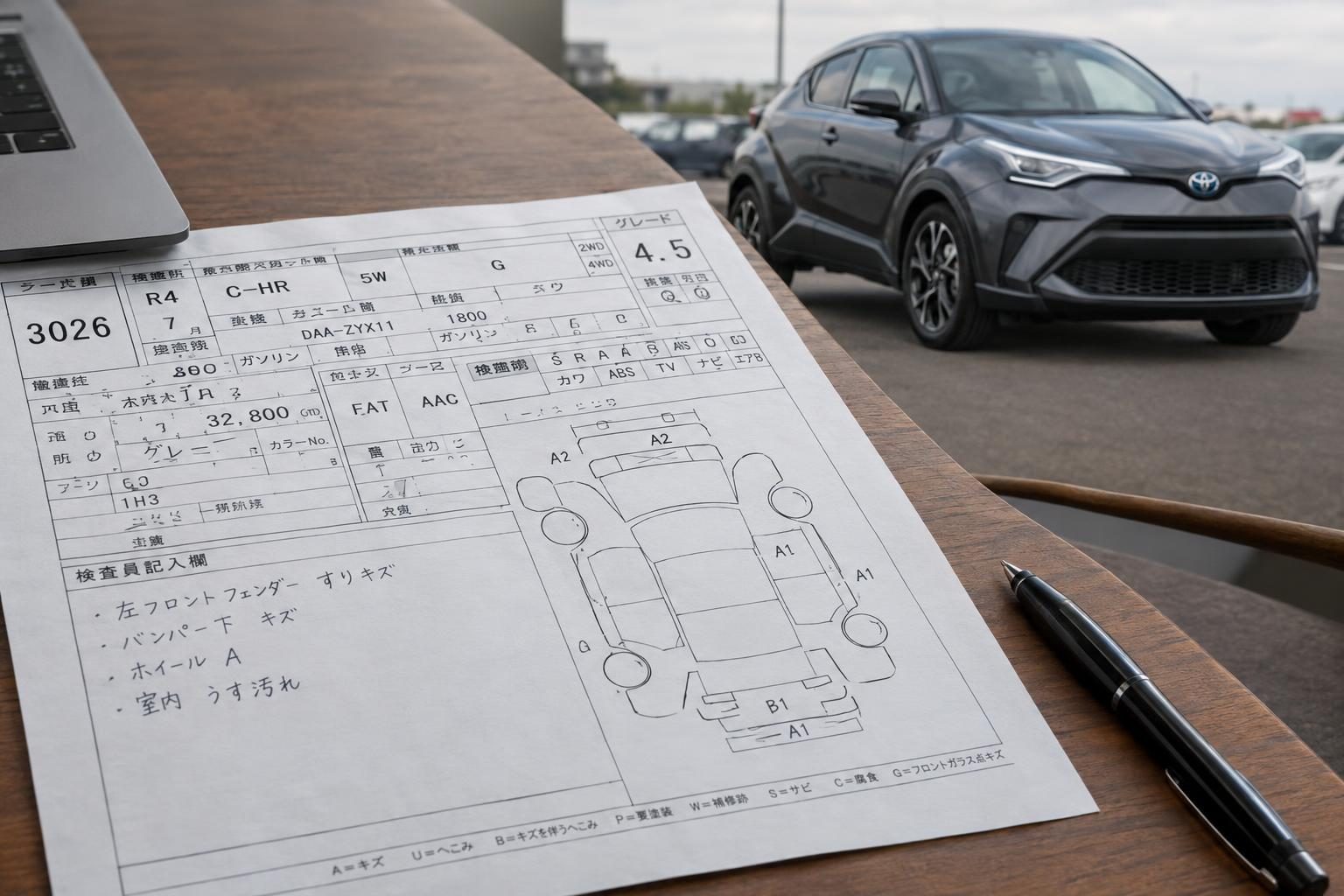 The auction sheet is the document that decides whether a grade R car is a fair buy or a mistake.
Here is what the reports on this specific car say. The in-house inspection logged four notes, all cosmetic and all exterior: a noticeable dent with scratches on the passenger door; minor surface marks and a small dent low on the door; light scratches on the lower side panel; and a minor crack on the door sill. Nothing mechanical was flagged. The underbody is recorded as clean, the windscreen undamaged, the dashboard undamaged and the interior free of burns or odour.
Two things a buyer should price in. First, tyre tread measures 2 mm front and rear, which is at the practical replacement threshold. Treat a full set as a first-year cost, not an optional extra. Second, the cosmetic panel work is real and visible, so get a body shop quote before you decide whether the lower odometer is worth it.
This unit is listed in the ৳19 lakh band, the highest of the three, which reflects the 36,000 km it has over the cheapest car. Whether that maths works depends entirely on how you value mileage against a clean grade.
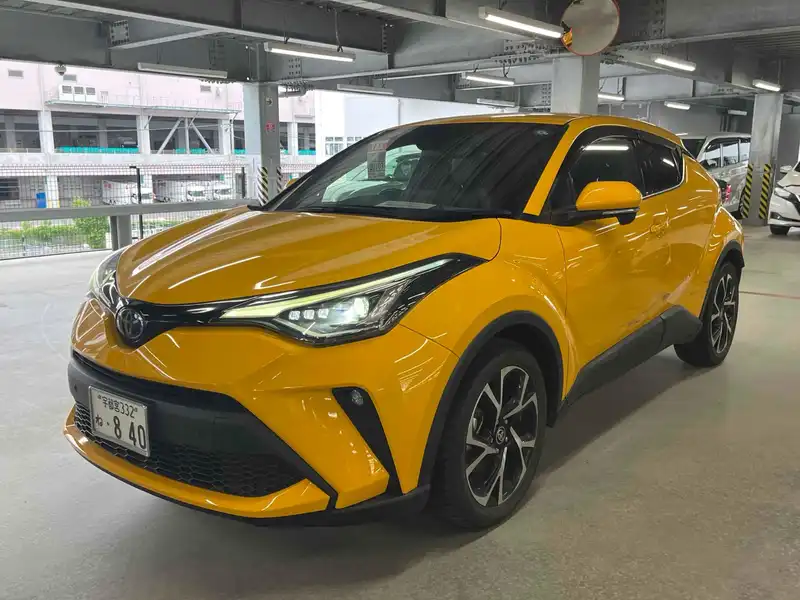 Yellow Toyota C-HR shown from the front three-quarter angle in a covered garage.
Who this suits: buyers who will genuinely sit down with the auction sheet, understand what R means, budget for tyres and cosmetic tidying, and want the lowest kilometres available. Who should pass: anyone who wants a straightforward clean-grade car without that homework, or who intends to resell quickly, since R grade does affect resale conversations in Bangladesh.
The 113,659 km Grade 3.5 Unit in Blue
The 2022 Toyota C-HR at 113,659 km is the value entry, and its inspection report is stronger than its odometer suggests. Auction grade is 3.5, and the in-house inspection recorded exactly one note: minor surface marks near the door handle. Underbody clean, no windscreen damage, no dashboard damage, no interior burns, normal smell.
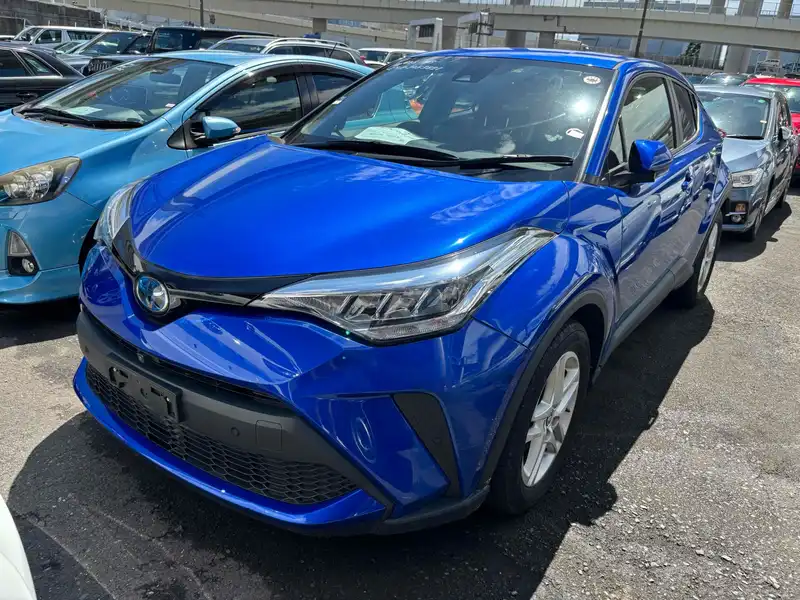 Blue Toyota C-HR shown from the front in an import vehicle lot.
It also has the best tyres of the three at 5 mm front and rear, which removes a cost the other two cars carry. Mechanically it is identical to its siblings: 2ZR-FXE 1,798 cc, 122 hp combined, CVT, front-wheel drive, 2,640 mm wheelbase, five seats. Blue is a less polarising colour than the yellow on the other two, which matters more at resale than people admit.
The odometer is the honest catch. At 113,659 km this car is priced almost identically to the 90,000 km unit, which tells you the market has already discounted the extra distance. The 2ZR-FXE and Toyota's hybrid system both have strong reliability records well beyond this point, and the condition score reflects what an inspector physically assessed rather than what the clock says. Ask for a hybrid battery health reading before committing, though. At this mileage that number tells you more than the odometer does.
Best suited to buyers who want the lowest entry cost on a well-documented car and plan to keep it for several years. Less suitable if you expect a strong resale figure within two or three years.
How Does the C-HR Compare With the Vezel and Yaris Cross?
The C-HR sits between the Honda Vezel and the Toyota Yaris Cross on both price and practicality, and it beats both comfortably on visual distinctiveness. Given that reconditioned imports make up the large majority of Bangladesh's car market, these three are genuine cross-shopping rivals rather than theoretical ones.
|
Toyota C-HR |
Honda Vezel |
Toyota Yaris Cross |
| Engine |
1.8 L hybrid (2ZR-FXE) |
1.5 L hybrid |
1.5 L hybrid |
| Combined output |
122 hp |
~131 hp |
~116 hp |
| Boot |
377 L |
393 L (2nd gen) / ~304 L (3rd gen) |
320 L |
| Real-world km/L |
18 to 20 |
20 to 23 |
20 to 23 |
| Rear headroom |
Limited |
Better |
Good |
| AWD available |
No |
Yes (e:HEV 4WD) |
Yes (E-Four) |
| Typical listed band |
৳17 to ৳19 lakh |
around ৳21 lakh |
৳20 lakh and up |
Listed price bands reflect vehicle, shipping and inspection only, and shift with auction results and exchange rates. Check current listings for actual figures.
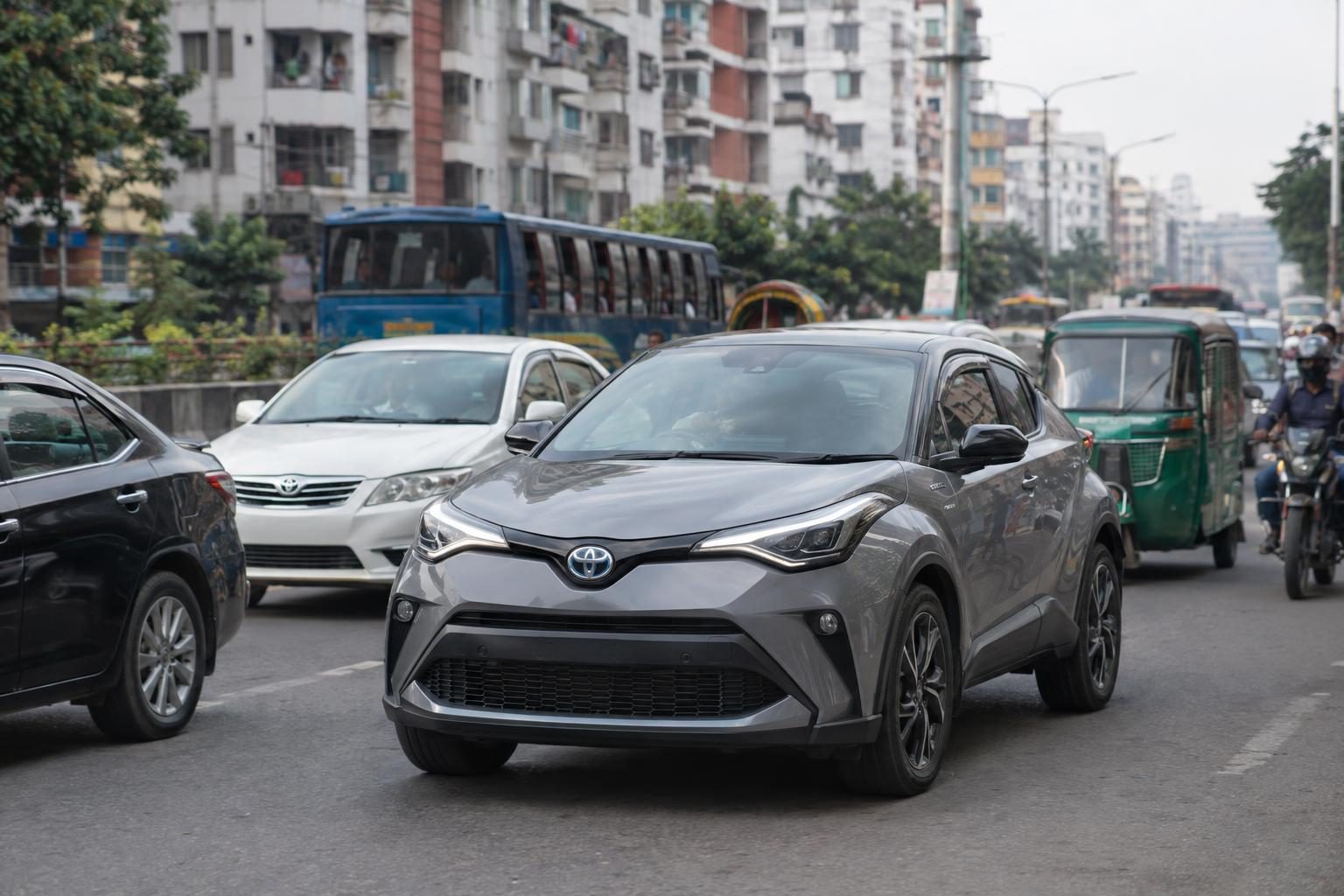 A Toyota C-HR moves through dense Dhaka traffic.
C-HR against the Honda Vezel
The Honda Vezel is the more practical car, and it is not especially close. On boot space the comparison depends on generation: the second-generation Vezel (RU, 2013–2021) has 393 L, giving it 16 litres more than the C-HR; the third-generation e:HEV (RV5, 2021–present) has approximately 304 L, which is 73 litres less. Either way, the Vezel offers noticeably better rear headroom, an available all-wheel-drive version and slightly better real-world economy from its smaller 1.5-litre hybrid. It also has a far larger owner base in Bangladesh, which means more independent workshops know it well.
The C-HR answers with a more interesting design, a more driver-focused cabin and a lower entry price at the moment. If you carry rear passengers or luggage regularly, take the Vezel. If the back seat is mostly empty, the C-HR gives you more car for the money and a great deal more presence.
C-HR against the Toyota Yaris Cross
The Toyota Yaris Cross is the newer design and the more upright one, which gives it better rear headroom and easier access. It also offers E-Four all-wheel drive.
Against that, it is smaller inside where it counts. Its 320-litre boot is 57 litres down on the C-HR, and its 1.5-litre hybrid produces around 116 hp combined against the C-HR's 122 hp — a much narrower gap than engine-only figures suggest, though you still feel it on a motorway overtake. Yaris Cross units also tend to be listed higher. On pure value for a Toyota hybrid crossover, the C-HR is the stronger buy. On family practicality, the Yaris Cross gets closer than its size suggests.
What Should You Budget Beyond the Listed Price?
The listed price on any imported car covers the vehicle, international shipping and the pre-export inspection. Bangladesh customs duty, supplementary duty, VAT, advance income tax and BRTA registration all come on top and are paid separately. On these C-HR listings the estimated tax and duty component is in the same order of magnitude as the vehicle price itself, so it is not a rounding error in your planning.
Rates change with each national budget and with the customs schedule in force on the day of assessment, which is why quoting a percentage here would be misleading within months. Run your own numbers instead: Carbarn's vehicle duty calculator works from the model and year and reflects the current schedule.
Two policy points worth knowing. Duty is assessed on the official Japanese Yellow Book value for the exact model and year, not on what you paid, so a cheaper unit does not automatically mean a cheaper duty bill. And the National Board of Revenue's VAT relief on hybrid vehicles currently runs through June 2030, which improves the landed position of a C-HR against an equivalent petrol-only crossover.
On running costs, budget realistically rather than optimistically:
- Routine servicing: roughly ৳8,000 to ৳15,000 per visit at independent Toyota specialists in Dhaka, per an April 2026 estimate published by Aurobil Cars. Treat that as market indicative and get a current quote from your own workshop.
- Hybrid battery replacement: new Japan-origin units typically run into the two to three lakh range at Dhaka hybrid specialists, based on multiple service centre estimates. That is a worst-case figure on a 2022 car, not a routine expense, but it is the number people forget to consider.
- Tyres: a full set on this size wheel runs roughly ৳30,000 to ৳50,000 depending on brand. On the 2 mm grade R unit, plan for it in year one.
- Fuel: at 18 to 20 km/L in city use, the C-HR is meaningfully cheaper to run than a comparable 1.5 petrol crossover, and that gap widens the worse the traffic gets.
Who Should Buy a Toyota C-HR, and Who Should Look Elsewhere?
The honest summary is that the C-HR is an excellent car for one or two people and a mediocre one for four. Everything below follows from that.
The C-HR makes a lot of sense if
You drive mostly in Dhaka. Corolla-sized footprint, hybrid economy in crawling traffic, light steering and good visibility forward: the C-HR is at its best in exactly the conditions that make other cars miserable.
You are usually the only person in the car, or there are two of you. Front-seat comfort and material quality are genuinely good, and the driving position is one of the better ones at this price.
Fuel economy is high on your list. Eighteen to twenty km/L in real city driving is a strong figure for a crossover, and it compounds over a few years of Dhaka commuting.
You care how the car looks. Nothing else importable at this money has the same visual identity, and the design has held up far better than most 2016-era styling.
You are willing to read an inspection report properly. Every one of these cars comes with documentation, and buyers who actually read it end up with better outcomes than buyers who look at photographs.
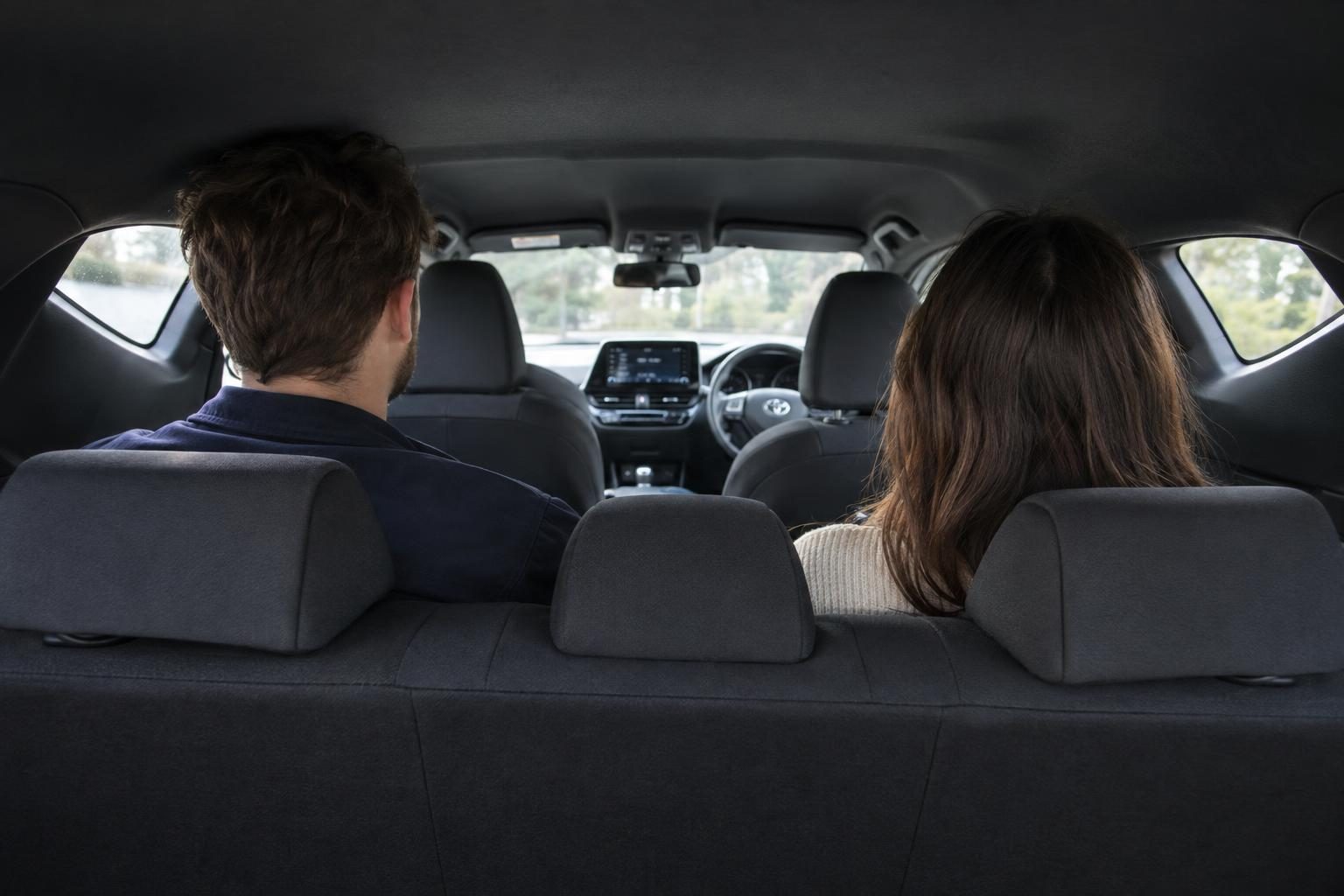 Rear headroom in the C-HR is the trade-off for the roofline. Adults over about 170 cm feel it.
The C-HR probably is not right if
You regularly carry adults in the back. This is the most common owner regret with the C-HR, and it is not something a seat adjustment fixes. The roofline is where it is. Passengers over roughly 170 cm will be uncomfortable on longer trips, and three across is cramped.
You need real luggage capacity. The 377-litre boot is fine for daily life and not fine for a family airport run. If you make that trip often, a Vezel or an Aqua will serve you better.
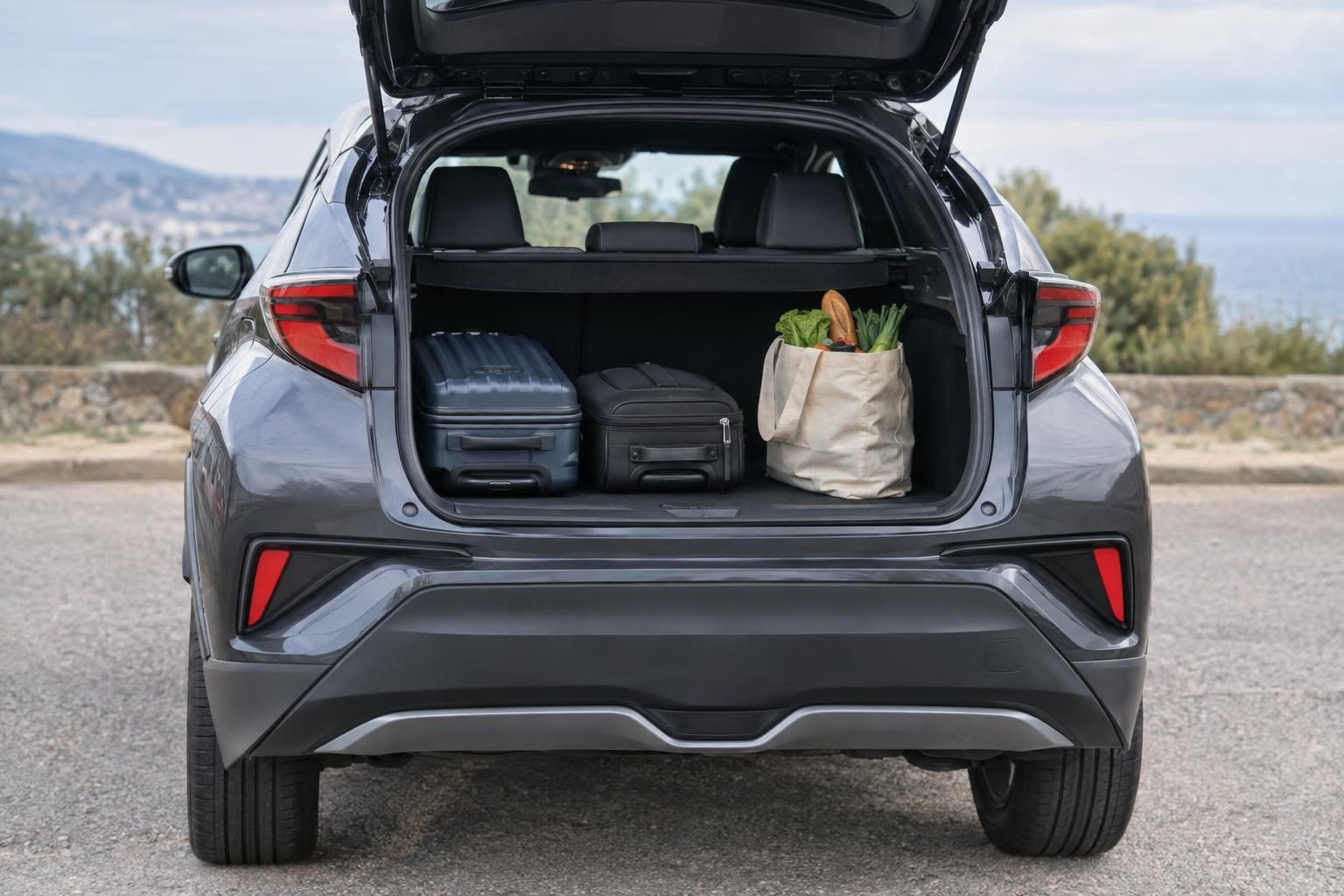 377 litres handles a weekly shop and a couple of bags. Airport runs for four adults are a stretch.
You want all-wheel drive. Every Bangladesh-eligible 1.8 hybrid C-HR is front-wheel drive, with no exceptions.
You want the easiest possible servicing. The C-HR shares most of its mechanical parts with the Corolla, so parts availability is fine, but the Aqua and Vezel have far larger owner communities here and more workshops with hands-on familiarity.
How Carbarn Sources and Inspects These C-HRs
Every vehicle described above is bought at a Japanese auction and owned outright by Carbarn Bangladesh before it is listed. That ownership model is the difference between a curated import business and a broker: there is no third-party seller in the chain whose description you have to trust on faith.
Two independent condition records exist for each unit. The first is the official Japanese auction sheet, written by the auction house inspector before the car is purchased, which is the source of the grade 3.5 and grade R ratings discussed above. The second is an in-house inspection carried out in Japan after purchase and before listing, which is where the tyre tread measurements, underbody notes and individual cosmetic defects come from. Both are published on the listing page rather than shared on request.
Before leaving Japan, each car passes JAAI inspection, carried out by the Japan Automobile Appraisal Institute. JAAI and JEVIC are the two main independent pre-shipment inspection bodies used for Japanese exports, and both perform a physical check in Japan before loading. All three C-HR units here are JAAI-inspected, which the listings state plainly.
Shipping runs from Japan to Chattogram, with Mongla also served, and the full process from order to collection usually takes about four to six weeks. Progress is visible through the customer dashboard after booking. Payment is full payment only, with no financing or instalment options, through international bank transfer, secure online card payment or in person at the Banasree office in Dhaka. Bangla-language consultation is available from the Dhaka team, and the listed price covers the vehicle, shipping and inspection while duty, VAT, AIT and BRTA registration remain separate. To see the current C-HR units, specifications and full inspection reports, browse the Toyota range at Carbarn or read the step-by-step process on the Carbarn's step-by-step import process page.
Is the C-HR the Right Compact SUV for You?
The Toyota C-HR is the most distinctive compact hybrid crossover you can import into Bangladesh under the five-year rule, and that distinctiveness has a price measured in rear headroom and boot litres. If those two things matter to your daily life, buy something else and be happier. If they do not, very little else at this money is as good to look at, as cheap to run in traffic, or as well documented.
Of the three units, the 90,000 km grade 3.5 car is the low-friction choice for most buyers: clean report, fair mileage, no immediate costs. The grade R car offers 36,000 fewer kilometres at a transparent price, and rewards the buyer who reads the sheet and budgets for tyres and paint. The 113,659 km car is the value pick on a drivetrain with a long service record and the best tyres of the three.
 A Toyota C-HR on a city street at night.