A long Dhaka commute can make fuel spending feel like a daily tax. Stop-start traffic, air conditioning and crowded roads all work against the mileage figure shown in a Japanese brochure.
Japanese hybrids use regenerative braking to recover some energy while slowing, and their electric motors can reduce petrol use in stop-start urban driving (Nissan, 2026). This guide compares the most fuel-efficient Japanese cars in Bangladesh using official Japanese figures, vehicle condition, space, driving feel and import eligibility.
Bangladesh import eligibility rules
Quick Answer
- Selected Toyota Aqua versions from the 2022–2024 period reach up to 35.8 km/L WLTC, according to Toyota Japan’s historical grade listings.
- Selected Toyota Prius versions reach up to 32.6 km/L WLTC.
- Honda Fit, Nissan Note and Toyota Corolla offer different combinations of space, comfort and efficiency.
- Real Dhaka fuel economy will vary with traffic, air conditioning, load, tyres and vehicle condition.
- Treat official figures as a comparison tool, not a promise of daily mileage.
Which Japanese cars are the most fuel-efficient in Bangladesh?
Selected Toyota Aqua versions lead this shortlist at up to 35.8 km/L WLTC in Toyota Japan’s 2022 to 2024 fuel-economy catalogue. The Prius follows at up to 32.6 km/L, while the Fit, Note and Corolla offer different practical strengths for Bangladeshi buyers.
WLTC is Japan’s newer test cycle, combining city, suburban and motorway testing. JC08 is an older Japanese test cycle, so its figures should not be compared directly with WLTC results. Grade, wheel size, drivetrain and model year can also change the official result.
For this comparison, Toyota’s historical Aqua listings and 2023 Prius catalogue, Honda’s 2022 Fit archive, Nissan’s E13 environmental specification and Toyota’s 2022 Corolla specification provide the figures below.
| Model |
Official Japanese figure |
Body style |
Strongest buyer fit |
| Toyota Aqua |
Up to 35.8 km/L WLTC |
Hatchback |
Compact city commuting |
| Toyota Prius |
Up to 32.6 km/L WLTC |
Sedan-style liftback |
Economy with more space |
| Honda Fit e:HEV |
29.4 km/L WLTC |
Hatchback |
Small families |
| Nissan Note e-POWER |
28.4 km/L WLTC |
Hatchback |
Smooth urban driving |
| Toyota Corolla Hybrid |
27.9 km/L WLTC, sedan reference grade |
Sedan reference grade |
Familiar Toyota practicality |
The figures are selected Japanese-market values, not universal results for every example. Toyota’s official Aqua fuel-economy information lists the 29.3 to 35.8 km/L WLTC range. Toyota’s Prius fuel-economy information lists a 25.9 to 32.6 km/L range for the current generation.
The most fuel-efficient car on paper is not automatically the cheapest or easiest car to own. A smaller hatchback may use less fuel, while a larger liftback may better suit your family.
Is Toyota Aqua the strongest compact city fuel-saver?
The Toyota Aqua is probably the best fit if compact dimensions and city efficiency matter most. Toyota Japan’s 2022 to 2024 catalogue lists selected Aqua versions at up to 35.8 km/L WLTC, although that figure does not apply automatically to every grade or drivetrain.
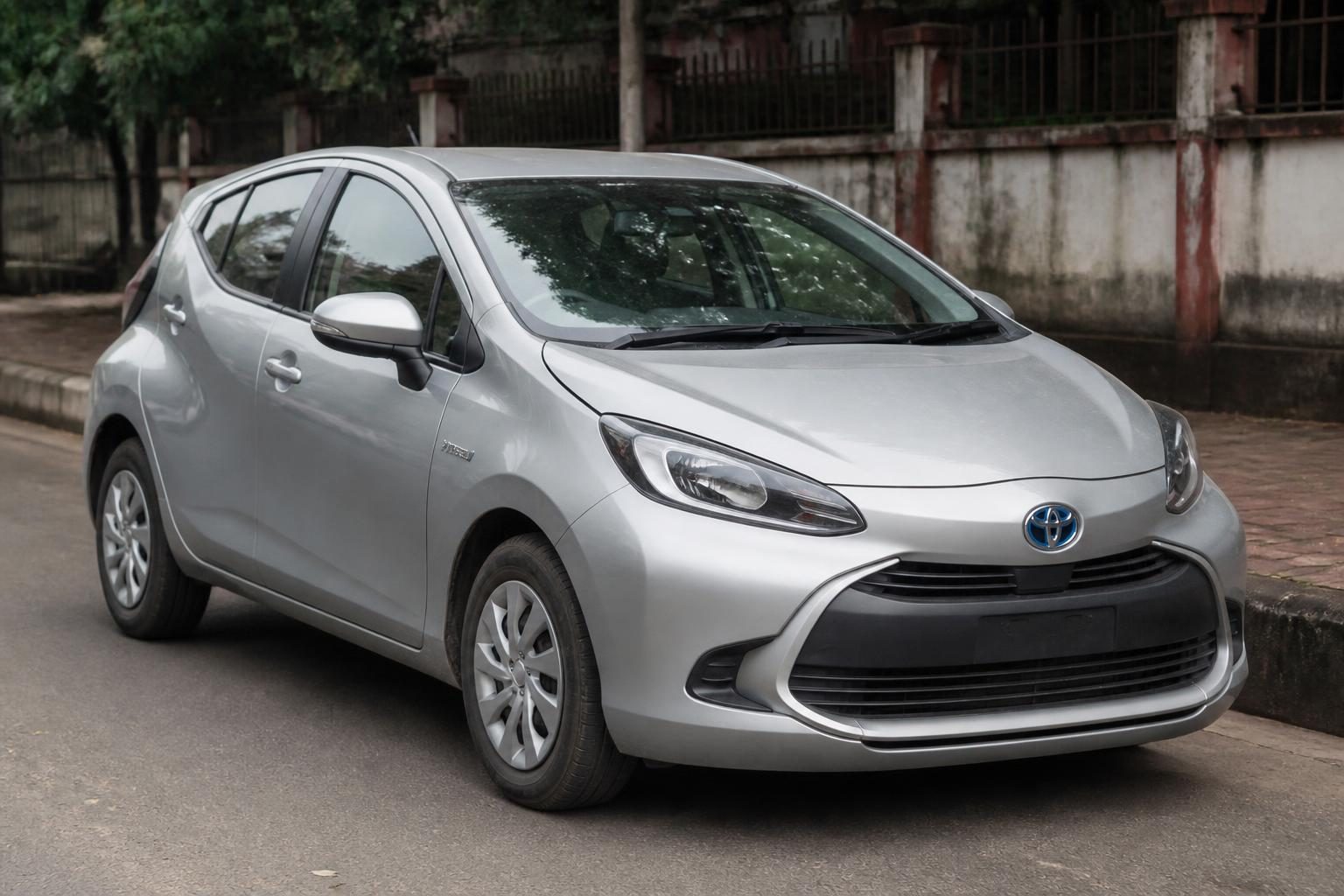 2022 Toyota Aqua
The cited 2022 X-grade example is a five-seat hatchback with a 1.5-litre hybrid system, 2WD, automatic CVT transmission and 91 PS (67 kW) of engine power. Do not assign the 35.8 km/L maximum to this X grade. Toyota’s relevant listings show that maximum for selected earlier B versions, while relevant 2WD X versions are listed at 34.6 km/L. Its M15A-FXE engine is an inline three-cylinder unit. The vehicle measures 4,050 mm long, 1,695 mm wide and 1,485 mm high. The listing records 104,000 km and auction grade 3.5 on its 2022 Toyota Aqua vehicle page.
Its small footprint helps on narrow roads and in tight parking areas. The trade-off is rear-seat and luggage space, which are more limited than in a Prius. The listed Japan-stock example should therefore be judged by its exact auction sheet, inspection findings and grade, not by the maximum catalogue figure alone.
According to Toyota Japan’s official Aqua fuel-economy catalogue, selected versions reach 35.8 km/L WLTC in the 2022 to 2024 range. The Aqua suits Dhaka buyers who value a compact hatchback, but the exact grade and driving conditions determine actual fuel use.
Does Toyota Prius add efficiency with more usable space?
The Toyota Prius makes more sense when you want strong economy without moving into a larger SUV. Toyota Japan’s 2023 Prius catalogue lists selected versions at up to 32.6 km/L WLTC, combining a strong official figure with more cabin and luggage flexibility than a small hatchback.
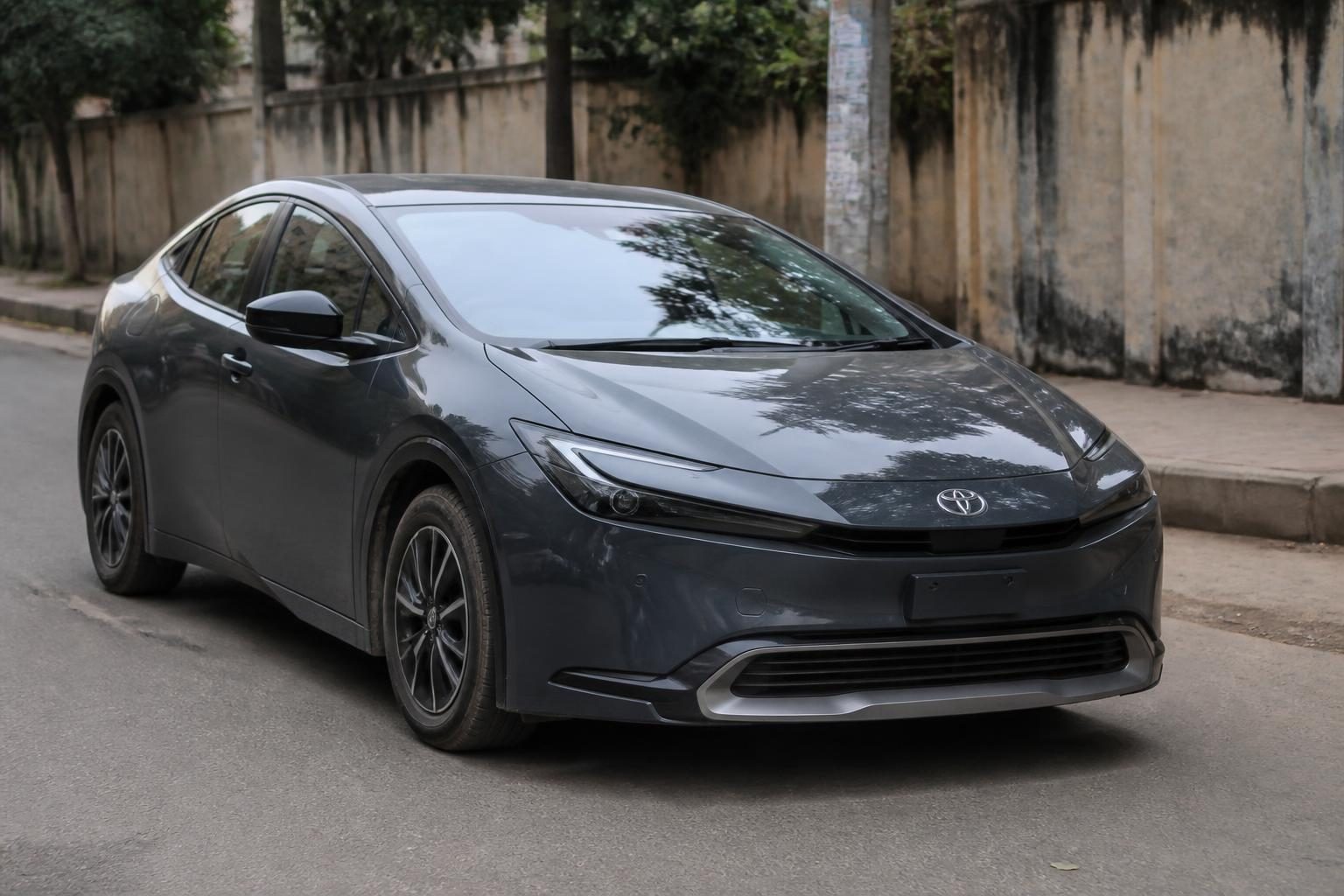 2023 Toyota Prius
The cited 2023 example uses a 1.8-litre hybrid system with the 2ZR-FXE inline four-cylinder engine, 98 PS (72 kW) of engine power, front-wheel drive and automatic CVT transmission. It seats five and measures 4,600 mm long, 1,780 mm wide and 1,420 mm high. Confirm the exact odometer, auction grade and model code against the vehicle page and auction documents before ordering.
The Prius offers useful rear access for luggage and a more spacious feel for regular passengers. Its larger body can be less convenient in crowded areas, and the total import cost may sit higher than a compact hatchback. Older examples also deserve careful checks of odometer consistency, auction history and hybrid-system notes.
Toyota Japan’s official Prius fuel-economy catalogue records up to 32.6 km/L WLTC for selected 2023-generation versions. The Prius is a strong efficiency-plus-space choice, but buyers must match the published figure to the exact engine, grade and drivetrain.
Nissan Note e-POWER suits smooth urban driving
The Nissan Note is a sensible option if you want compact dimensions and an electric-motor driving feel. Nissan Japan’s March 2026 environmental specification rates the cited 2WD E13 version at 28.4 km/L WLTC, with a 28.3 km/L city-mode result.
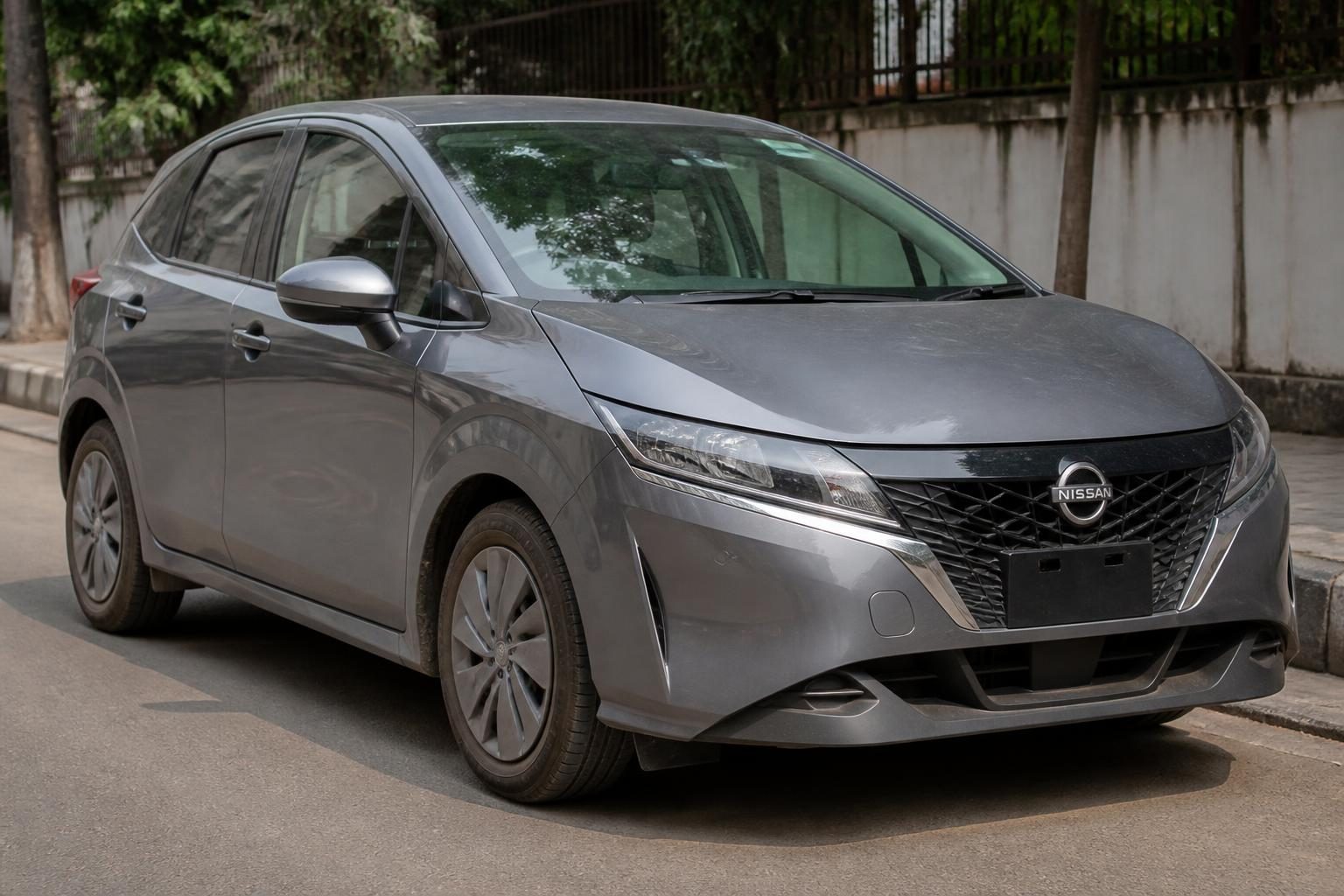 2022 Nissan Note
e-POWER is Nissan’s system in which a petrol engine generates electricity while an electric motor drives the wheels. The listed 2022 S-grade example has a 1.2-litre HR12DE inline three-cylinder engine, 82 PS (60 kW) of engine power, front-wheel drive, automatic operation and five seats. It measures 4,045 mm long, 1,695 mm wide and 1,505 mm high.
The vehicle page records 105,000 km, auction grade 4 and model code E13. Its compact size suits urban routes, while the motor-driven response can feel smooth during repeated starts and stops. Compare the exact 2WD or 4WD version carefully, because Nissan’s official specification shows lower figures for heavier configurations.
Nissan Japan’s Note environmental specification, issued March 2026, lists 28.4 km/L WLTC and 28.3 km/L in city mode for the cited 2WD configuration. The Note offers a different driving experience from Toyota’s conventional hybrid systems.
Honda Fit is a flexible small-family hatchback
The Honda Fit is a strong small-family choice because it combines a compact footprint with flexible cabin use. Honda Japan’s 2022 archive rates the specified e:HEV BASIC FF version at 29.4 km/L WLTC, but that figure should not be assigned automatically to every Fit grade.
 2022 Honda Fit
The listed example is a 2022 e:HEV RS with hybrid power, 2WD, automatic transmission, 66,000 km and auction grade 4. Its vehicle page does not return the engine code, power output, body type or seat count. Those missing fields should be confirmed from the auction documents or inspection information before ordering.
The Fit is easy to place on crowded roads and can make sense for a small family that values everyday flexibility. The key caution is specification matching. Honda’s published 29.4 km/L figure applies to the BASIC FF specification, not necessarily to the RS version or larger wheel options.
Honda’s official 2022 Fit fuel-economy archive records 29.4 km/L WLTC for the e:HEV BASIC FF grade. The Fit remains a practical alternative, but precise comparison requires the exact grade, drivetrain and wheel specification.
Toyota Corolla balances efficiency and luggage practicality
The Toyota Corolla is worth considering if you prefer a familiar Toyota format and more everyday luggage flexibility. Toyota Japan’s 2022 Corolla specification gives a cited hybrid grade a 27.9 km/L WLTC result, lower than the Aqua and Prius headline figures.
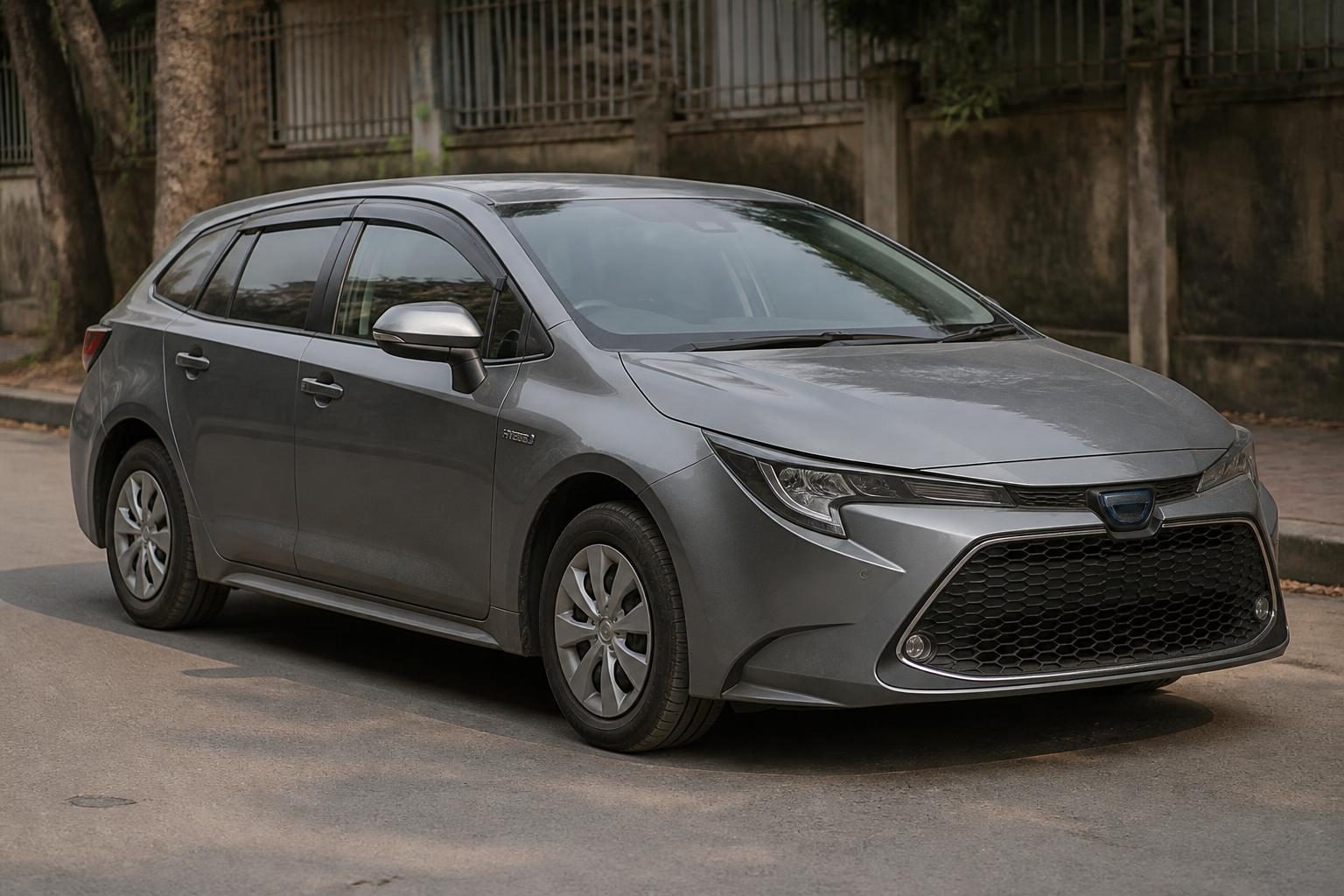 2022 Toyota Corolla
The listed Touring Hybrid G-X example is a five-seat wagon with an 1.8-litre 2ZR-FXE inline four-cylinder engine, 98 PS (72 kW) of engine power, front-wheel drive and automatic transmission. It measures 4,495 mm long, 1,745 mm wide and 1,460 mm high. The page records 115,000 km, auction grade 4 and model code ZWE211W.
This is a wagon, not the conventional sedan used in Toyota’s cited Double Bybee specification. That difference matters. The wagon can offer more useful luggage space, while the sedan reference figure should not be treated as the guaranteed economy of every Corolla body style or grade.
Toyota Japan’s official 2022 Corolla Hybrid vehicle specification lists 27.9 km/L WLTC for a specific 1.8-litre FF grade. The Corolla is not the mileage leader, but it may be the better family choice when luggage flexibility matters more.
What mileage can you realistically expect in Dhaka?
Official Japanese figures help compare models, but they cannot predict your daily Dhaka fuel economy. In August 2026, petrol was reported at Tk140 per litre by Bangladesh Sangbad Sangstha’s “Government Fixes Fuel Price for August” report, although prices and consumption conditions can change.
WLTC is a comparison test that combines city, suburban and motorway conditions. It is not a promise of the result on your route. JC08 is an older Japanese cycle and should not be compared directly with WLTC. Dhaka queues, air conditioning and frequent acceleration can all increase fuel use.
Passengers, luggage, tyre pressure, maintenance and hybrid-battery condition also matter. Smooth acceleration and early braking may help, but no model delivers one fixed result for every journey. That is why the Aqua’s 35.8 km/L and the Corolla’s 27.9 km/L should be read as selected catalogue figures, not expected daily mileage.
The following illustration uses 15,000 km per year and the August 2026 petrol reference. It divides annual distance by each official test figure, then multiplies the result by Tk140.
| Model |
Official figure |
Approximate cost per 100 km |
Illustrative annual fuel cost |
| Toyota Aqua |
35.8 km/L WLTC |
Tk391 |
Tk58,700 |
| Toyota Prius |
32.6 km/L WLTC |
Tk429 |
Tk64,400 |
| Honda Fit |
29.4 km/L WLTC |
Tk476 |
Tk71,400 |
| Nissan Note |
28.4 km/L WLTC |
Tk493 |
Tk73,900 |
| Toyota Corolla |
27.9 km/L WLTC |
Tk502 |
Tk75,300 |
These are arithmetic examples, not predicted Dhaka costs. They also exclude customs duty, VAT, registration, port clearance and other ownership expenses.
How should you choose the right fuel-efficient Japanese import?
Choose according to your route, passengers and budget rather than the largest kilometre-per-litre number. The 2026 shortlist points to five different buyer fits: Aqua for compact efficiency, Prius for space, Fit for flexibility, Note for motor-driven response and Corolla for wagon practicality.
Auction grade is an inspection rating recorded on the auction sheet, not a guarantee of mechanical condition. An inspection-led buying lesson is simple: review the auction sheet, odometer history, warning-light notes, hybrid-system information and detailed inspection report before payment.
| Your priority |
Strongest fit |
| Smallest city-friendly package |
Toyota Aqua |
| Economy with more luggage space |
Toyota Prius |
| Flexible small-family hatchback |
Honda Fit |
| Electric-motor driving feel |
Nissan Note e-POWER |
| Familiar Toyota format |
Toyota Corolla |
Check the exact model year, steering position, drivetrain and vehicle type against the current Bangladesh import eligibility rules. Then review how the Japan-to-Bangladesh import process works and estimate duty and additional import costs.
How can Carbarn help you compare eligible Japanese cars?
The selected Japan-stock examples discussed in this guide show why buyers should compare the exact vehicle page, auction sheet, odometer, grade and inspection evidence rather than rely on a mileage headline. Verify each vehicle’s eligibility against the current Bangladesh rules before ordering.
Carbarn Bangladesh’s Japanese car import service owns the vehicles it lists and provides the Japanese auction sheet, an in-house Carbarn inspection report and JEVIC pre-shipment inspection. Its listed vehicle price covers the vehicle, shipping and JEVIC inspection only. Customs duty, VAT, registration and port-clearance costs remain separate. Buyers can compare eligible model pages, pay by bank transfer, secure card payment or at the Dhaka office, and follow shipment progress through dashboard tracking.
Which model makes the most sense for you?
In 2026, the selected official figures range from 27.9 km/L WLTC for the cited Corolla grade to 35.8 km/L for selected Aqua versions. That range shows why the right choice depends on more than fuel economy, especially when passenger space, luggage needs and import costs also matter.
The Aqua is the compact city fuel-saver. The Prius is the better efficiency-plus-space option. The Fit suits a flexible small family, while the Note offers smooth motor-driven urban response. The Corolla makes sense when familiar Toyota packaging and luggage space matter more than the highest figure.
Review the exact grade, auction sheet, inspection findings, eligibility and current import costs before choosing. A slightly less efficient car can still be the better purchase if it fits your daily life more comfortably.
Conclusion: Which Japanese car gives the best mileage in Bangladesh?
Selected Toyota Aqua versions from the 2022–2024 period lead this comparison at up to 35.8 km/L WLTC, while the Prius, Fit, Note and Corolla serve different practical needs. Current 2025–2026 Aqua versions reach a lower published maximum, so the 35.8 figure should not be treated as a current 2026 result or a promise on Dhaka roads.
Use official WLTC data to compare models, then examine traffic conditions, air conditioning, load, tyres and vehicle condition. Check current import costs, review the Japan-to-Bangladesh buying process and judge each vehicle on evidence rather than advertising claims.